LEADER 03718nam a22005175i 4500
001 608836
003 TR_AnAIT
005 20250627072003
007 cr nn 008mamaa
008 221212s2023 sz | s |||| 0|eng d
020 |a9783031121203|9978-3-031-12120-3
024 7 |a10.1007/978-3-031-12120-3|2doi
041 |aeng
049 |aTürk Tarih Kurumu Kütüphanesi
050 4|aD203.2-475
072 7|aHBJD|2bicssc
072 7|aHBLH|2bicssc
072 7|aHIS010000|2bisacsh
072 7|aNHD|x3M|2thema
082 04|a940.903|223
090 |aDK/1509
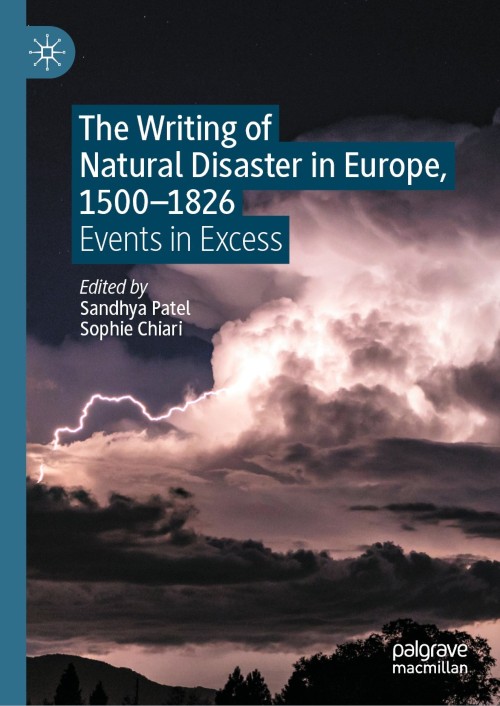
245 14|aThe Writing of Natural Disaster in Europe, 1500–1826|h[electronic resource] :|bEvents in Excess /|cedited by Sandhya Patel, Sophie Chiari.
250 |a1st ed. 2023.
264 1|aCham :|bSpringer International Publishing :|bImprint: Palgrave Macmillan,|c2023.
300 |aIX, 182 p. 1 illus.|bonline resource.
336 |atext|btxt|2rdacontent
337 |acomputer|bc|2rdamedia
338 |aonline resource|bcr|2rdacarrier
347 |atext file|bPDF|2rda
505 0 |aChapter 1: Introduction -- Part I: Elucidating Events in Excess in Early Modern Manuals, Pamphlets and Pastorals -- Chapter 2: Prognosticating Tempests in The Arte of Navigation by Richard Eden -- Chapter 3: Tending One’s Own Garden: Husbandry, Weather Lore and Prognostication in Early Modern England -- Chapter 4: Pests, Plagues and Pastoral Husbandry: Representing Ovine Disease in Early Modern England -- Part II: Directed Discussions of Disaster -- Chapter 5: Acqua Alta, Silting, and Plague: Representing Venetian Resilience from an Early Modern British Perspective -- Chapter 6: The Advent of Natural Disaster. The Earthquake in the Philosophical Transactions (1664/5-1700) -- Chapter 7: ‘Improving this terrible Visitation’: The Three Thomases and the 1755 Lisbon Earthquake -- Part III: Poetics of Disaster -- Chapter 8: The Illusive Elements in Purcell and Dryden’s King Arthur -- Chapter 9: Mary Shelley, Natural Disasters and ‘Catastrophes’ -- Chapter 10: Comparative Collapsology: From Shakespeare to George R. R. Martin.
520 |aThis book explores reactions to and representations of natural disasters in early modern Europe. The contributors illustrate how the cultural production of the period - in manuals, treatises, sermons, travelogues and fiction - grappled with environmental catastrophe. Crucially, they interrogate how people in the early modern era rationalized and mediated the threat of events like plagues, great frosts, storms, floods and earthquakes. A vital contribution to environmental history, this book highlights the parallels between early modern responses to natural disaster and climate anxiety in our own era. Sandhya Patel is Senior Lecturer in Eighteenth-Century Studies at Université Clermont Auvergne, France. Sophie Chiari-Lasserre is Professor of Early Modern English Literature at Université Clermont Auvergne, France.
650 0|aEurope|xHistory|x1492-.
650 0|aHuman ecology|xHistory.
650 0|aCivilization|xHistory.
650 14|aHistory of Early Modern Europe.
650 24|aEnvironmental History.
650 24|aCultural History.
700 1 |aPatel, Sandhya.|eeditor.|4edt|4http://id.loc.gov/vocabulary/relators/edt
700 1 |aChiari, Sophie.|eeditor.|4edt|4http://id.loc.gov/vocabulary/relators/edt
773 0 |tSpringer Nature eBook
776 08|iPrinted edition:|z9783031121197
776 08|iPrinted edition:|z9783031121210
776 08|iPrinted edition:|z9783031121227
856 40|uhttps://doi.org/10.1007/978-3-031-12120-3
912 |aZDB-2-HTY
912 |aZDB-2-SXH
950 |aHistory (SpringerNature-41172)
950 |aHistory (R0) (SpringerNature-43722)