LEADER 04002nam a22005775i 4500
001 608889
003 TR_AnAIT
005 20250627071818
007 cr nn 008mamaa
008 190824s2019 sz | s |||| 0|eng d
020 |a9783030209735|9978-3-030-20973-5
024 7 |a10.1007/978-3-030-20973-5|2doi
041 |aeng
049 |aTürk Tarih Kurumu Kütüphanesi
050 4|aD17-24.5
072 7|aHBG|2bicssc
072 7|aHIS037000|2bisacsh
072 7|aNHB|2thema
082 04|a909|223
090 |aDK/1562
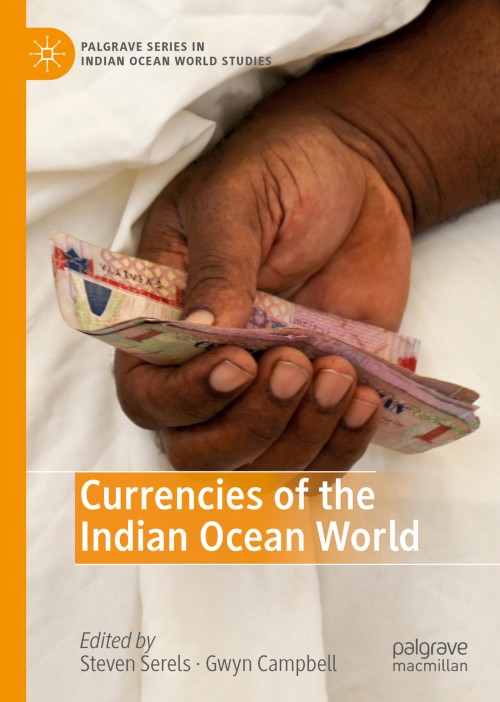
245 10|aCurrencies of the Indian Ocean World|h[electronic resource] /|cedited by Steven Serels, Gwyn Campbell.
250 |a1st ed. 2019.
264 1|aCham :|bSpringer International Publishing :|bImprint: Palgrave Macmillan,|c2019.
300 |aXV, 230 p. 8 illus., 3 illus. in color.|bonline resource.
336 |atext|btxt|2rdacontent
337 |acomputer|bc|2rdamedia
338 |aonline resource|bcr|2rdacarrier
347 |atext file|bPDF|2rda
490 1 |aPalgrave Series in Indian Ocean World Studies,|x2730-9711
505 0 |a1. Introduction: The Indian Ocean World Currency System -- 2. Major "International" Currencies of China and Japan: The Use of Copper Coins, Silver Ingots and Paper Money -- 3. Indian Kingdoms, 1200–1500 and the Maritime Trade in Monetary Commodities -- 4. What East Africans Got for their Ivory and Slaves: The Nature, Working and Circulation of Commodity Currencies in Nineteenth-Century East Africa -- 5. Currency and Currency Problems in Imperial Madagascar, 1820–1895 -- 6. Currency as Commodity, as Symbol of Sovereignty and as Subject of Legal Dispute: Henri Greffülhe and the Coinage of Zanzibar in the Late Nineteenth Century -- 7. The Circulation of Modern Currencies and the Impoverishment of the Red Sea World, 1882–2010 -- 8. Gilding the Waves: Gold Smuggling and Monetary Policies around the Arabian Sea, 1939–1967 -- 9. Dollar, Sovereign and Rupee: Money in Mauritius.
520 |aThis book is the first to trace the unique monetary history of the Indian Ocean World. Long-distance trade across the region was facilitated by a highly complex multi-currency system undergirded by shared ideas that transcended ethno-linguistic, religious and class divisions. Currencies also occupied key roles in local spiritual, aesthetic and affective practices. Foregrounding these tensions between the global/universalistic and the local/particularistic, the volume shows how this traditional currency system remained in place until the middle of the twentieth century, and how aspects of the system continue to inform monetary practices throughout the region. With case studies covering China, India, the Arabian Sea, the Red Sea, East Africa, Zanzibar, Madagascar and Mauritius from the thirteenth to the twenty-first centuries, this volume explores the central role currencies played in economic exchange as well as in establishing communal bonds, defining state power and expressing religious sentiments.
650 0|aWorld history.
650 0|aImperialism.
650 0|aAsia|xHistory.
650 0|aChina|xHistory.
650 0|aAfrica, Sub-Saharan|xHistory.
650 14|aWorld History, Global and Transnational History.
650 24|aImperialism and Colonialism.
650 24|aHistory of South Asia.
650 24|aHistory of China.
650 24|aHistory of Sub-Saharan Africa.
700 1 |aSerels, Steven.|eeditor.|4edt|4http://id.loc.gov/vocabulary/relators/edt
700 1 |aCampbell, Gwyn.|eeditor.|4edt|4http://id.loc.gov/vocabulary/relators/edt
773 0 |tSpringer Nature eBook
776 08|iPrinted edition:|z9783030209728
776 08|iPrinted edition:|z9783030209742
776 08|iPrinted edition:|z9783030209759
830 0|aPalgrave Series in Indian Ocean World Studies,|x2730-9711
856 40|uhttps://doi.org/10.1007/978-3-030-20973-5
912 |aZDB-2-HTY
912 |aZDB-2-SXH
950 |aHistory (SpringerNature-41172)
950 |aHistory (R0) (SpringerNature-43722)