

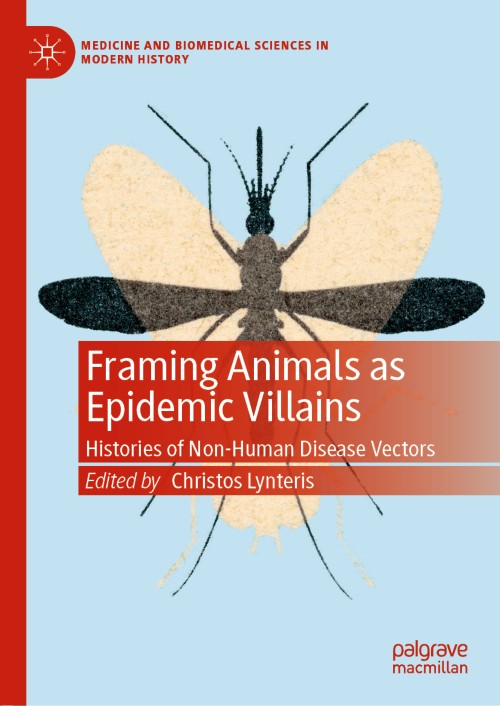
Framing Animals as Epidemic Villains [electronic resource] : Histories of Non-Human Disease Vectors / edited by Christos Lynteris.
Erişim Adresi
ISBN
9783030267957
Dil Kodu
İngilizce
Yer Numarası
DK/1566
Basım Bildirimi
1st ed. 2019.
Yayın Bilgisi
Cham : Springer International Publishing : Imprint: Palgrave Macmillan, 2019.
Fiziksel Niteleme
XX, 247 p. 16 illus., 1 illus. in color. online resource.
Dizi
Medicine and Biomedical Sciences in Modern History, 2947-9150
İçindekiler Notu
Introduction: Infectious Animals and Epidemic Blame, Christos Lynteris -- Chapter 1. Vermin Landscapes: Suffolk, England, Shaped by Plague, Rat and Flea 1906-1920, Karen Sayer -- Chapter 2. Tarbagan’s Winter Lair: Framing Drivers of Plague Persistence in Inner Asia, Christos Lynteris -- Chapter 3. To Kill or not to Kill? Negotiating Life, Death, and One Health in the Context of Dog-Mediated Rabies Control in Colonial and Independent India, Deborah Nadal -- Chapter 4. Tiger Mosquitoes from Ross to Gates, Maurits Meerwijk -- Chapter 5. A Vector in The (Re)Making: A History of Aedes aegypti as Mosquitoes that Transmit Diseases in Brazil, Gabriel Lopes and Luísa Reis-Castro -- Chapter 6. Contesting the (Super)natural Origins of Ebola in Macenta, Guinea: Biomedical and Popular Approaches, Séverine Thys -- Chapter 7. Zika Outbreak in Brazil: In Times of Political and Scientific Uncertainties Mosquitoes Can be Stronger than a Country, Gustavo Corrêa Matta , Lenir Nascimento da Silva, ElaineTeixeira Rabello, and Carolina de Oliveira Nogueira -- 8 Postscript: Epidemic Villains and the Ecologies of Nuisance, Frédéric Keck.
Özet, vb.
This book takes a historical and anthropological approach to understanding how non-human hosts and vectors of diseases are understood, at a time when emerging infectious diseases are one of the central concerns of global health. The volume critically examines the ways in which animals have come to be framed as ‘epidemic villains’ since the turn of the nineteenth century. Providing epistemological and social histories of non-human epidemic blame, as well as ethnographic perspectives on its recent manifestations, the essays explore this cornerstone of modern epidemiology and public health alongside its continuing importance in today’s world. Covering diverse regions, the book argues that framing animals as spreaders and reservoirs of infectious diseases – from plague to rabies to Ebola – is an integral aspect not only to scientific breakthroughs but also to the ideological and biopolitical apparatus of modern medicine. As the first book to consider the impact of the image of non-human disease hosts and vectors on medicine and public health, it offers a major contribution to our understanding of human-animal interaction under the shadow of global epidemic threat.
Konu
World history.
Medicine __ History.
Science __ History.
Medical anthropology.
World History, Global and Transnational History.
History of Medicine.
History of Science.
Medical Anthropology.
Medicine __ History.
Science __ History.
Medical anthropology.
World History, Global and Transnational History.
History of Medicine.
History of Science.
Medical Anthropology.
Diğer Yazarlar
Eseri Alıntıla
Referansları kullanmadan önce gözden geçirmeniz ve varsa gerekli düzeltmeleri yapmanız önerilir.
Dijital Kaynak
MARC Görünümü
LEADER 04294nam a22005415i 4500
001 608893
003 TR_AnAIT
005 20250627071810
007 cr nn 008mamaa
008 191011s2019 sz | s |||| 0|eng d
020 |a9783030267957|9978-3-030-26795-7
024 7 |a10.1007/978-3-030-26795-7|2doi
041 |aeng
049 |aTürk Tarih Kurumu Kütüphanesi
050 4|aD17-24.5
072 7|aHBG|2bicssc
072 7|aHIS037000|2bisacsh
072 7|aNHB|2thema
082 04|a909|223
090 |aDK/1566
245 10|aFraming Animals as Epidemic Villains|h[electronic resource] :|bHistories of Non-Human Disease Vectors /|cedited by Christos Lynteris.
250 |a1st ed. 2019.
264 1|aCham :|bSpringer International Publishing :|bImprint: Palgrave Macmillan,|c2019.
300 |aXX, 247 p. 16 illus., 1 illus. in color.|bonline resource.
336 |atext|btxt|2rdacontent
337 |acomputer|bc|2rdamedia
338 |aonline resource|bcr|2rdacarrier
347 |atext file|bPDF|2rda
490 1 |aMedicine and Biomedical Sciences in Modern History,|x2947-9150
505 0 |aIntroduction: Infectious Animals and Epidemic Blame, Christos Lynteris -- Chapter 1. Vermin Landscapes: Suffolk, England, Shaped by Plague, Rat and Flea 1906-1920, Karen Sayer -- Chapter 2. Tarbagan’s Winter Lair: Framing Drivers of Plague Persistence in Inner Asia, Christos Lynteris -- Chapter 3. To Kill or not to Kill? Negotiating Life, Death, and One Health in the Context of Dog-Mediated Rabies Control in Colonial and Independent India, Deborah Nadal -- Chapter 4. Tiger Mosquitoes from Ross to Gates, Maurits Meerwijk -- Chapter 5. A Vector in The (Re)Making: A History of Aedes aegypti as Mosquitoes that Transmit Diseases in Brazil, Gabriel Lopes and Luísa Reis-Castro -- Chapter 6. Contesting the (Super)natural Origins of Ebola in Macenta, Guinea: Biomedical and Popular Approaches, Séverine Thys -- Chapter 7. Zika Outbreak in Brazil: In Times of Political and Scientific Uncertainties Mosquitoes Can be Stronger than a Country, Gustavo Corrêa Matta , Lenir Nascimento da Silva, ElaineTeixeira Rabello, and Carolina de Oliveira Nogueira -- 8 Postscript: Epidemic Villains and the Ecologies of Nuisance, Frédéric Keck.
520 |aThis book takes a historical and anthropological approach to understanding how non-human hosts and vectors of diseases are understood, at a time when emerging infectious diseases are one of the central concerns of global health. The volume critically examines the ways in which animals have come to be framed as ‘epidemic villains’ since the turn of the nineteenth century. Providing epistemological and social histories of non-human epidemic blame, as well as ethnographic perspectives on its recent manifestations, the essays explore this cornerstone of modern epidemiology and public health alongside its continuing importance in today’s world. Covering diverse regions, the book argues that framing animals as spreaders and reservoirs of infectious diseases – from plague to rabies to Ebola – is an integral aspect not only to scientific breakthroughs but also to the ideological and biopolitical apparatus of modern medicine. As the first book to consider the impact of the image of non-human disease hosts and vectors on medicine and public health, it offers a major contribution to our understanding of human-animal interaction under the shadow of global epidemic threat.
650 0|aWorld history.
650 0|aMedicine|xHistory.
650 0|aScience|xHistory.
650 0|aMedical anthropology.
650 14|aWorld History, Global and Transnational History.
650 24|aHistory of Medicine.
650 24|aHistory of Science.
650 24|aMedical Anthropology.
700 1 |aLynteris, Christos.|eeditor.|4edt|4http://id.loc.gov/vocabulary/relators/edt
773 0 |tSpringer Nature eBook
776 08|iPrinted edition:|z9783030267940
776 08|iPrinted edition:|z9783030267964
776 08|iPrinted edition:|z9783030267971
830 0|aMedicine and Biomedical Sciences in Modern History,|x2947-9150
856 40|uhttps://doi.org/10.1007/978-3-030-26795-7
912 |aZDB-2-HTY
912 |aZDB-2-SXH
950 |aHistory (SpringerNature-41172)
950 |aHistory (R0) (SpringerNature-43722)
001 608893
003 TR_AnAIT
005 20250627071810
007 cr nn 008mamaa
008 191011s2019 sz | s |||| 0|eng d
020 |a9783030267957|9978-3-030-26795-7
024 7 |a10.1007/978-3-030-26795-7|2doi
041 |aeng
049 |aTürk Tarih Kurumu Kütüphanesi
050 4|aD17-24.5
072 7|aHBG|2bicssc
072 7|aHIS037000|2bisacsh
072 7|aNHB|2thema
082 04|a909|223
090 |aDK/1566
245 10|aFraming Animals as Epidemic Villains|h[electronic resource] :|bHistories of Non-Human Disease Vectors /|cedited by Christos Lynteris.
250 |a1st ed. 2019.
264 1|aCham :|bSpringer International Publishing :|bImprint: Palgrave Macmillan,|c2019.
300 |aXX, 247 p. 16 illus., 1 illus. in color.|bonline resource.
336 |atext|btxt|2rdacontent
337 |acomputer|bc|2rdamedia
338 |aonline resource|bcr|2rdacarrier
347 |atext file|bPDF|2rda
490 1 |aMedicine and Biomedical Sciences in Modern History,|x2947-9150
505 0 |aIntroduction: Infectious Animals and Epidemic Blame, Christos Lynteris -- Chapter 1. Vermin Landscapes: Suffolk, England, Shaped by Plague, Rat and Flea 1906-1920, Karen Sayer -- Chapter 2. Tarbagan’s Winter Lair: Framing Drivers of Plague Persistence in Inner Asia, Christos Lynteris -- Chapter 3. To Kill or not to Kill? Negotiating Life, Death, and One Health in the Context of Dog-Mediated Rabies Control in Colonial and Independent India, Deborah Nadal -- Chapter 4. Tiger Mosquitoes from Ross to Gates, Maurits Meerwijk -- Chapter 5. A Vector in The (Re)Making: A History of Aedes aegypti as Mosquitoes that Transmit Diseases in Brazil, Gabriel Lopes and Luísa Reis-Castro -- Chapter 6. Contesting the (Super)natural Origins of Ebola in Macenta, Guinea: Biomedical and Popular Approaches, Séverine Thys -- Chapter 7. Zika Outbreak in Brazil: In Times of Political and Scientific Uncertainties Mosquitoes Can be Stronger than a Country, Gustavo Corrêa Matta , Lenir Nascimento da Silva, ElaineTeixeira Rabello, and Carolina de Oliveira Nogueira -- 8 Postscript: Epidemic Villains and the Ecologies of Nuisance, Frédéric Keck.
520 |aThis book takes a historical and anthropological approach to understanding how non-human hosts and vectors of diseases are understood, at a time when emerging infectious diseases are one of the central concerns of global health. The volume critically examines the ways in which animals have come to be framed as ‘epidemic villains’ since the turn of the nineteenth century. Providing epistemological and social histories of non-human epidemic blame, as well as ethnographic perspectives on its recent manifestations, the essays explore this cornerstone of modern epidemiology and public health alongside its continuing importance in today’s world. Covering diverse regions, the book argues that framing animals as spreaders and reservoirs of infectious diseases – from plague to rabies to Ebola – is an integral aspect not only to scientific breakthroughs but also to the ideological and biopolitical apparatus of modern medicine. As the first book to consider the impact of the image of non-human disease hosts and vectors on medicine and public health, it offers a major contribution to our understanding of human-animal interaction under the shadow of global epidemic threat.
650 0|aWorld history.
650 0|aMedicine|xHistory.
650 0|aScience|xHistory.
650 0|aMedical anthropology.
650 14|aWorld History, Global and Transnational History.
650 24|aHistory of Medicine.
650 24|aHistory of Science.
650 24|aMedical Anthropology.
700 1 |aLynteris, Christos.|eeditor.|4edt|4http://id.loc.gov/vocabulary/relators/edt
773 0 |tSpringer Nature eBook
776 08|iPrinted edition:|z9783030267940
776 08|iPrinted edition:|z9783030267964
776 08|iPrinted edition:|z9783030267971
830 0|aMedicine and Biomedical Sciences in Modern History,|x2947-9150
856 40|uhttps://doi.org/10.1007/978-3-030-26795-7
912 |aZDB-2-HTY
912 |aZDB-2-SXH
950 |aHistory (SpringerNature-41172)
950 |aHistory (R0) (SpringerNature-43722)
Materyaller
Depodan talep edilen materyal sadece kütüphane içerisinde kullanılmaktadır.
Materyal dışarıya ödünç verilmemektedir.
Materyal dışarıya ödünç verilmemektedir.
