LEADER 03726nam a22005175i 4500
001 608904
003 TR_AnAIT
005 20250627071746
007 cr nn 008mamaa
008 200401s2020 sz | s |||| 0|eng d
020 |a9783030262181|9978-3-030-26218-1
024 7 |a10.1007/978-3-030-26218-1|2doi
041 |aeng
049 |aTürk Tarih Kurumu Kütüphanesi
050 4|aF1409.6-1414.2
072 7|aHBJK|2bicssc
072 7|aHIS024000|2bisacsh
072 7|aNHK|2thema
082 04|a980|223
090 |aDK/1577
100 1 |aConn, Robert T.|eauthor.|4aut|4http://id.loc.gov/vocabulary/relators/aut
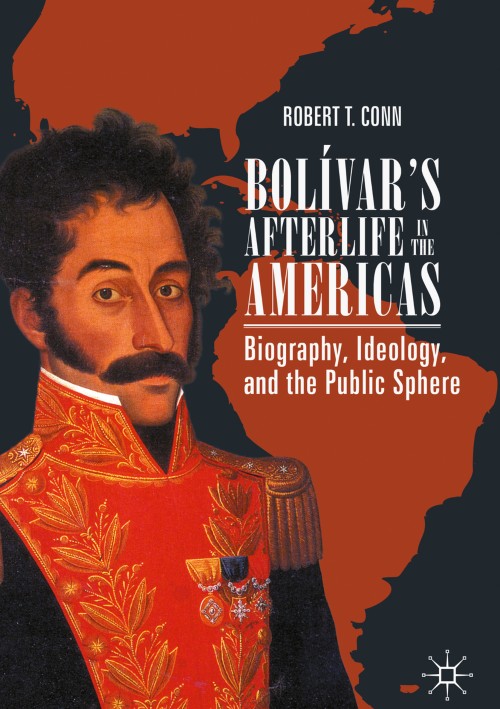
245 10|aBolívar’s Afterlife in the Americas|h[electronic resource] :|bBiography, Ideology, and the Public Sphere /|cby Robert T. Conn.
250 |a1st ed. 2020.
264 1|aCham :|bSpringer International Publishing :|bImprint: Palgrave Macmillan,|c2020.
300 |aX, 525 p.|bonline resource.
336 |atext|btxt|2rdacontent
337 |acomputer|bc|2rdamedia
338 |aonline resource|bcr|2rdacarrier
347 |atext file|bPDF|2rda
505 0 |a1. An Introduction -- 2. Toward a Usable Narrative -- 3. Bolívar in Nineteenth-Century Venezuela -- 4. José Marti and Venezuela: Redressing Bolivarian Doctrine -- 5. From Liberalism to Positivism: Gil Fortoul and Vallenilla Lanz -- 6. Rufino Blanco Fombona: An Exile in Spain -- 7. The Construction of a Patrician Heritage and of Calumny: Vicente Lecuna, La Casa Natal, El Archivo del Libertador, and the Bolivarian Society -- 8. Revising the Bolivarian Machine: A Venezuela Reclaimed by New Intellectuals -- 9. Pan Americanism Above Ground: Bolívar in the United States -- 10. A Rebirth -- 11. Bolívar in the Wake of World War II: Gerhard Masur and Waldo Frank -- 12. The Bolívar-Santander Polemic in Colombia: Germán Arciniegas and Gabriel García Márquez -- 13. Bolívar and Sucre in Ecuador: A Case of Two Assassinations -- 14. Vasconcelos as Screenwriter: Bolívar Remembered -- 15. Bolívar in Bolivia: On Fathers and Creators -- 16. Institution Building in Peru: Ricardo Palma and Víctor Andrés Belaúnde -- 17. Bolívar in the Río de la Plata -- 18. Epilogue.
520 |aSimón Bolívar is the preeminent symbol of Latin America and the subject of seemingly endless posthumous attention. Interpreted and reinterpreted in biographies, histories, political writings, speeches, and works of art and fiction, he has been a vehicle for public discourse for the past two centuries. Robert T. Conn follows the afterlives of Bolívar across the Americas, tracing his presence in a range of competing but interlocking national stories. How have historians, writers, statesmen, filmmakers, and institutions reworked his life and writings to make cultural and political claims? How has his legacy been interpreted in the countries whose territories he liberated, as well as in those where his importance is symbolic, such as the United States? In answering these questions, Conn illuminates the history of nation building and hemispheric globalism in the Americas.
650 0|aLatin America|xHistory.
650 0|aIntellectual life|xHistory.
650 0|aCivilization|xHistory.
650 0|aWorld politics.
650 14|aLatin American History.
650 24|aIntellectual History.
650 24|aCultural History.
650 24|aPolitical History.
773 0 |tSpringer Nature eBook
776 08|iPrinted edition:|z9783030262174
776 08|iPrinted edition:|z9783030262198
776 08|iPrinted edition:|z9783030262204
856 40|uhttps://doi.org/10.1007/978-3-030-26218-1
912 |aZDB-2-HTY
912 |aZDB-2-SXH
950 |aHistory (SpringerNature-41172)
950 |aHistory (R0) (SpringerNature-43722)