LEADER 03145nam a22005415i 4500
001 608967
003 TR_AnAIT
005 20250627071540
007 cr nn 008mamaa
008 180416s2018 sz | s |||| 0|eng d
020 |a9783319761954|9978-3-319-76195-4
024 7 |a10.1007/978-3-319-76195-4|2doi
041 |aeng
049 |aTürk Tarih Kurumu Kütüphanesi
050 4|aE171-183.9
072 7|aHBJK|2bicssc
072 7|aHIS036000|2bisacsh
072 7|aNHK|2thema
082 04|a973|223
090 |aDK/1640
100 1 |aOliva, Mara.|eauthor.|4aut|4http://id.loc.gov/vocabulary/relators/aut
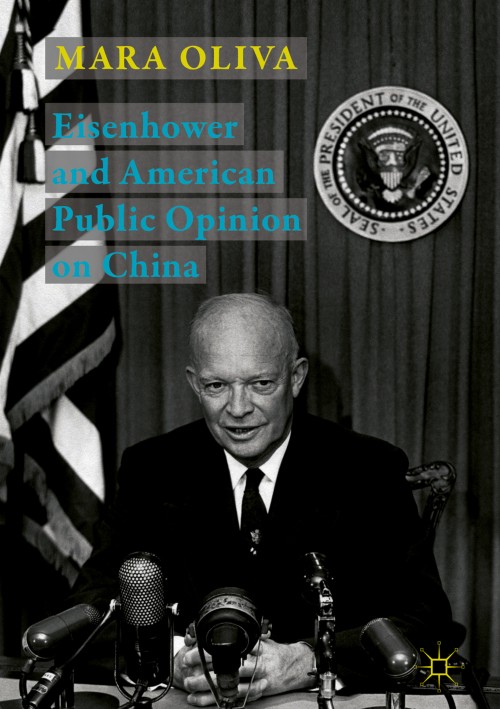
245 10|aEisenhower and American Public Opinion on China|h[electronic resource] /|cby Mara Oliva.
250 |a1st ed. 2018.
264 1|aCham :|bSpringer International Publishing :|bImprint: Palgrave Macmillan,|c2018.
300 |aXVII, 223 p. 3 illus.|bonline resource.
336 |atext|btxt|2rdacontent
337 |acomputer|bc|2rdamedia
338 |aonline resource|bcr|2rdacarrier
347 |atext file|bPDF|2rda
505 0 |a1. Introduction -- 2. America's Distorted Image of China -- 3. Keeping Promises -- 4. Challenge One: Dienbienphu and the Geneva Conference of 1954 -- 5. Challenge Two: The First Taiwan Crisis of 1954–1955 -- 6. A Missed Opportunity -- 7. Hard Line Until the End -- 8. Conclusions.
520 |aIn the 1950s, most of the American public opposed diplomatic and trade relations with Communist China; traditional historiography blames this widespread hostility for the tensions between China and the United States during Dwight D. Eisenhower’s presidency. In this book, Mara Oliva reconsiders the influence of U.S. public opinion on Sino-American relations, arguing that it is understudied and often misinterpreted. She shows how the Eisenhower administration’s hard line policy towards Beijing had been formulated in line with U.S. national security interests, not as a result of public pressure. However, the public did play a significant role in shaping the implementation, timing and political communication of Washington’s strategy, ultimately hampering relations with the Communist giant and seriously heightening the risk of nuclear conflict. Drawing together an extensive array of published and unpublished sources, this book offers a new prism for understanding one of the most difficult decades in the history of both countries.
650 0|aUnited States|xHistory.
650 0|aWorld history.
650 0|aAmerica|xPolitics and government.
650 0|aInternational relations.
650 0|aChina|xHistory.
650 14|aUS History.
650 24|aWorld History, Global and Transnational History.
650 24|aAmerican Politics.
650 24|aForeign Policy.
650 24|aHistory of China.
773 0 |tSpringer Nature eBook
776 08|iPrinted edition:|z9783319761947
776 08|iPrinted edition:|z9783319761961
776 08|iPrinted edition:|z9783030094270
856 40|uhttps://doi.org/10.1007/978-3-319-76195-4
912 |aZDB-2-HTY
912 |aZDB-2-SXH
950 |aHistory (SpringerNature-41172)
950 |aHistory (R0) (SpringerNature-43722)