

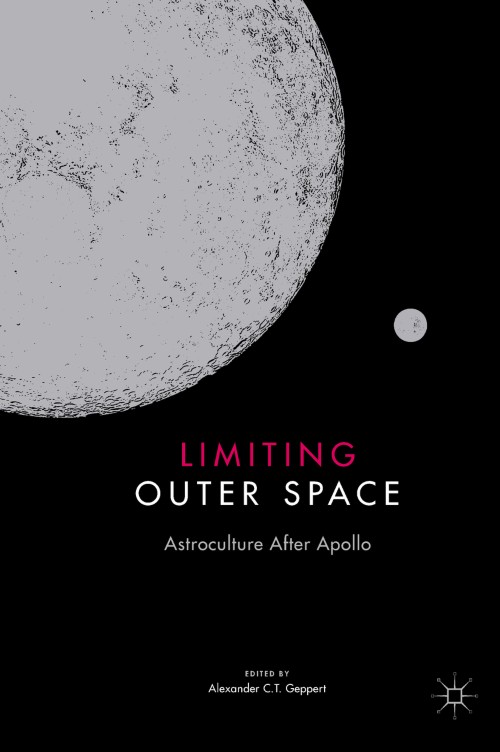
Limiting Outer Space [electronic resource] : Astroculture After Apollo / edited by Alexander C.T. Geppert.
Erişim Adresi
ISBN
9781137369161
Dil Kodu
İngilizce
Yer Numarası
DK/1641
Basım Bildirimi
1st ed. 2018.
Yayın Bilgisi
London : Palgrave Macmillan UK : Imprint: Palgrave Macmillan, 2018.
Fiziksel Niteleme
XXIV, 367 p. online resource.
Dizi
Palgrave Studies in the History of Science and Technology, 2730-9738
İçindekiler Notu
Introduction -- 1 Alexander C.T. Geppert; The Post-Apollo Paradox: Envisioning Limits During the Planetized 1970s -- Part I: Navigating the 1970s -- 2 Martin Collins; The 1970s: Spaceflight and Historically Interpreting the In-between Decade -- 3 Roger D. Launius; Responding to Apollo: America’s Divergent Reactions to the Moon Landings -- 4 Doug Millard; A Grounding in Space: Were the 1970s a Period of Transition in Britain’s Exploration of Outer Space? -- Part II: Reconfiguring Outer Space -- 5 Robert Poole; The Myth of Progress: 2001: A Space Odyssey -- 6 Florian Kläger; The Earthward Gaze and Self-reflexivity in Anglophone Novels of the 1970s -- 7 Thore Bjørnvig; Building Outer Space: LEGO and the Conquest of the Beyond in the 1970s -- 8 Luca Follis;The Province and Heritage of Humankind: Space Law’s Imaginary of Outer Space, 1967–1979 -- Part III: Grounding Utopias -- 9 Andrew Jenks; Transnational Utopias, Space Exploration and the Association of Space Explorers, 1972–1985 -- 10 Regina Peldszus; Architectural Experiments in Space: Orbital Stations, Simulators and Speculative Design, 1968–1982 -- 11 Tilmann Siebeneichner; Spacelab: Peace, Progress and European Politics in Outer Space, 1973–1985 -- 12 Peter J. Westwick; From the Club of Rome to Star Wars: The Era of Limits, Space Colonization and the Origins of SDI -- Epilogue -- 13 David A. Kirby; Final Frontiers? Envisioning Utopia in the Era of Limits.
.
Özet, vb.
Limiting Outer Space propels the historicization of outer space by focusing on the Post-Apollo period. After the Apollo moon landings, disillusionment set in. With the return of the last astronaut in 1972, the skies – rather than the distant stars – once again became the limit. No longer considered the inevitable destination of human expansion, outer space lost much of the popular appeal, cultural significance and political urgency that it had gained since the end of the Second World War. With the rapid waning of the worldwide Apollo frenzy, the optimism of the Space Age gave way to an era of planetized limits. Bringing together the history of European astroculture and American-Soviet spaceflight with recent scholarship on the 1970s, the thirteen chapters in this cutting-edge volume examine the reconfiguration of space imaginaries from a multiplicity of disciplinary perspectives. Rather than invoking oft-repeated narratives of Cold War rivalry and an escalating Space Race between East and West, Limiting Outer Space breaks new ground by exploring a hitherto underrated and understudied decade, the Post-Apollo period.
Konu
Science __ History.
Astronomy __ Observations.
Civilization __ History.
Technology.
History.
History of Science.
Astronomy, Observations and Techniques.
Cultural History.
History of Technology.
Astronomy __ Observations.
Civilization __ History.
Technology.
History.
History of Science.
Astronomy, Observations and Techniques.
Cultural History.
History of Technology.
Diğer Yazarlar
Eseri Alıntıla
Referansları kullanmadan önce gözden geçirmeniz ve varsa gerekli düzeltmeleri yapmanız önerilir.
Dijital Kaynak
MARC Görünümü
LEADER 04533nam a22005535i 4500
001 608968
003 TR_AnAIT
005 20250627071538
007 cr nn 008mamaa
008 180418s2018 xxk| s |||| 0|eng d
020 |a9781137369161|9978-1-137-36916-1
024 7 |a10.1057/978-1-137-36916-1|2doi
041 |aeng
049 |aTürk Tarih Kurumu Kütüphanesi
050 4|aQ124.6-127.2
072 7|aPDX|2bicssc
072 7|aSCI034000|2bisacsh
072 7|aPDX|2thema
082 04|a509|223
090 |aDK/1641
245 10|aLimiting Outer Space|h[electronic resource] :|bAstroculture After Apollo /|cedited by Alexander C.T. Geppert.
250 |a1st ed. 2018.
264 1|aLondon :|bPalgrave Macmillan UK :|bImprint: Palgrave Macmillan,|c2018.
300 |aXXIV, 367 p.|bonline resource.
336 |atext|btxt|2rdacontent
337 |acomputer|bc|2rdamedia
338 |aonline resource|bcr|2rdacarrier
347 |atext file|bPDF|2rda
490 1 |aPalgrave Studies in the History of Science and Technology,|x2730-9738
505 0 |aIntroduction -- 1 Alexander C.T. Geppert; The Post-Apollo Paradox: Envisioning Limits During the Planetized 1970s -- Part I: Navigating the 1970s -- 2 Martin Collins; The 1970s: Spaceflight and Historically Interpreting the In-between Decade -- 3 Roger D. Launius; Responding to Apollo: America’s Divergent Reactions to the Moon Landings -- 4 Doug Millard; A Grounding in Space: Were the 1970s a Period of Transition in Britain’s Exploration of Outer Space? -- Part II: Reconfiguring Outer Space -- 5 Robert Poole; The Myth of Progress: 2001: A Space Odyssey -- 6 Florian Kläger; The Earthward Gaze and Self-reflexivity in Anglophone Novels of the 1970s -- 7 Thore Bjørnvig; Building Outer Space: LEGO and the Conquest of the Beyond in the 1970s -- 8 Luca Follis;The Province and Heritage of Humankind: Space Law’s Imaginary of Outer Space, 1967–1979 -- Part III: Grounding Utopias -- 9 Andrew Jenks; Transnational Utopias, Space Exploration and the Association of Space Explorers, 1972–1985 -- 10 Regina Peldszus; Architectural Experiments in Space: Orbital Stations, Simulators and Speculative Design, 1968–1982 -- 11 Tilmann Siebeneichner; Spacelab: Peace, Progress and European Politics in Outer Space, 1973–1985 -- 12 Peter J. Westwick; From the Club of Rome to Star Wars: The Era of Limits, Space Colonization and the Origins of SDI -- Epilogue -- 13 David A. Kirby; Final Frontiers? Envisioning Utopia in the Era of Limits. .
520 |aLimiting Outer Space propels the historicization of outer space by focusing on the Post-Apollo period. After the Apollo moon landings, disillusionment set in. With the return of the last astronaut in 1972, the skies – rather than the distant stars – once again became the limit. No longer considered the inevitable destination of human expansion, outer space lost much of the popular appeal, cultural significance and political urgency that it had gained since the end of the Second World War. With the rapid waning of the worldwide Apollo frenzy, the optimism of the Space Age gave way to an era of planetized limits. Bringing together the history of European astroculture and American-Soviet spaceflight with recent scholarship on the 1970s, the thirteen chapters in this cutting-edge volume examine the reconfiguration of space imaginaries from a multiplicity of disciplinary perspectives. Rather than invoking oft-repeated narratives of Cold War rivalry and an escalating Space Race between East and West, Limiting Outer Space breaks new ground by exploring a hitherto underrated and understudied decade, the Post-Apollo period.
650 0|aScience|xHistory.
650 0|aAstronomy|xObservations.
650 0|aCivilization|xHistory.
650 0|aTechnology.
650 0|aHistory.
650 14|aHistory of Science.
650 24|aAstronomy, Observations and Techniques.
650 24|aCultural History.
650 24|aHistory of Technology.
700 1 |aGeppert, Alexander C.T.|eeditor.|4edt|4http://id.loc.gov/vocabulary/relators/edt
773 0 |tSpringer Nature eBook
776 08|iPrinted edition:|z9781137369154
776 08|iPrinted edition:|z9781349676590
776 08|iPrinted edition:|z9781349676606
830 0|aPalgrave Studies in the History of Science and Technology,|x2730-9738
856 40|uhttps://doi.org/10.1057/978-1-137-36916-1
912 |aZDB-2-HTY
912 |aZDB-2-SXH
950 |aHistory (SpringerNature-41172)
950 |aHistory (R0) (SpringerNature-43722)
001 608968
003 TR_AnAIT
005 20250627071538
007 cr nn 008mamaa
008 180418s2018 xxk| s |||| 0|eng d
020 |a9781137369161|9978-1-137-36916-1
024 7 |a10.1057/978-1-137-36916-1|2doi
041 |aeng
049 |aTürk Tarih Kurumu Kütüphanesi
050 4|aQ124.6-127.2
072 7|aPDX|2bicssc
072 7|aSCI034000|2bisacsh
072 7|aPDX|2thema
082 04|a509|223
090 |aDK/1641
245 10|aLimiting Outer Space|h[electronic resource] :|bAstroculture After Apollo /|cedited by Alexander C.T. Geppert.
250 |a1st ed. 2018.
264 1|aLondon :|bPalgrave Macmillan UK :|bImprint: Palgrave Macmillan,|c2018.
300 |aXXIV, 367 p.|bonline resource.
336 |atext|btxt|2rdacontent
337 |acomputer|bc|2rdamedia
338 |aonline resource|bcr|2rdacarrier
347 |atext file|bPDF|2rda
490 1 |aPalgrave Studies in the History of Science and Technology,|x2730-9738
505 0 |aIntroduction -- 1 Alexander C.T. Geppert; The Post-Apollo Paradox: Envisioning Limits During the Planetized 1970s -- Part I: Navigating the 1970s -- 2 Martin Collins; The 1970s: Spaceflight and Historically Interpreting the In-between Decade -- 3 Roger D. Launius; Responding to Apollo: America’s Divergent Reactions to the Moon Landings -- 4 Doug Millard; A Grounding in Space: Were the 1970s a Period of Transition in Britain’s Exploration of Outer Space? -- Part II: Reconfiguring Outer Space -- 5 Robert Poole; The Myth of Progress: 2001: A Space Odyssey -- 6 Florian Kläger; The Earthward Gaze and Self-reflexivity in Anglophone Novels of the 1970s -- 7 Thore Bjørnvig; Building Outer Space: LEGO and the Conquest of the Beyond in the 1970s -- 8 Luca Follis;The Province and Heritage of Humankind: Space Law’s Imaginary of Outer Space, 1967–1979 -- Part III: Grounding Utopias -- 9 Andrew Jenks; Transnational Utopias, Space Exploration and the Association of Space Explorers, 1972–1985 -- 10 Regina Peldszus; Architectural Experiments in Space: Orbital Stations, Simulators and Speculative Design, 1968–1982 -- 11 Tilmann Siebeneichner; Spacelab: Peace, Progress and European Politics in Outer Space, 1973–1985 -- 12 Peter J. Westwick; From the Club of Rome to Star Wars: The Era of Limits, Space Colonization and the Origins of SDI -- Epilogue -- 13 David A. Kirby; Final Frontiers? Envisioning Utopia in the Era of Limits. .
520 |aLimiting Outer Space propels the historicization of outer space by focusing on the Post-Apollo period. After the Apollo moon landings, disillusionment set in. With the return of the last astronaut in 1972, the skies – rather than the distant stars – once again became the limit. No longer considered the inevitable destination of human expansion, outer space lost much of the popular appeal, cultural significance and political urgency that it had gained since the end of the Second World War. With the rapid waning of the worldwide Apollo frenzy, the optimism of the Space Age gave way to an era of planetized limits. Bringing together the history of European astroculture and American-Soviet spaceflight with recent scholarship on the 1970s, the thirteen chapters in this cutting-edge volume examine the reconfiguration of space imaginaries from a multiplicity of disciplinary perspectives. Rather than invoking oft-repeated narratives of Cold War rivalry and an escalating Space Race between East and West, Limiting Outer Space breaks new ground by exploring a hitherto underrated and understudied decade, the Post-Apollo period.
650 0|aScience|xHistory.
650 0|aAstronomy|xObservations.
650 0|aCivilization|xHistory.
650 0|aTechnology.
650 0|aHistory.
650 14|aHistory of Science.
650 24|aAstronomy, Observations and Techniques.
650 24|aCultural History.
650 24|aHistory of Technology.
700 1 |aGeppert, Alexander C.T.|eeditor.|4edt|4http://id.loc.gov/vocabulary/relators/edt
773 0 |tSpringer Nature eBook
776 08|iPrinted edition:|z9781137369154
776 08|iPrinted edition:|z9781349676590
776 08|iPrinted edition:|z9781349676606
830 0|aPalgrave Studies in the History of Science and Technology,|x2730-9738
856 40|uhttps://doi.org/10.1057/978-1-137-36916-1
912 |aZDB-2-HTY
912 |aZDB-2-SXH
950 |aHistory (SpringerNature-41172)
950 |aHistory (R0) (SpringerNature-43722)
Materyaller
Depodan talep edilen materyal sadece kütüphane içerisinde kullanılmaktadır.
Materyal dışarıya ödünç verilmemektedir.
Materyal dışarıya ödünç verilmemektedir.
