

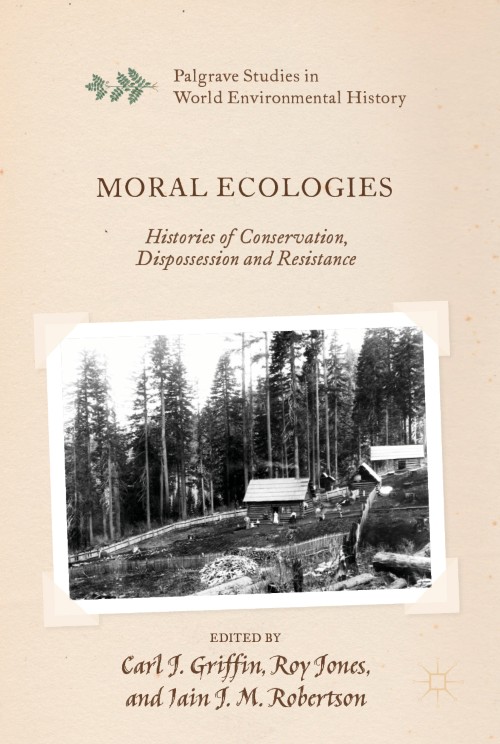
Moral Ecologies [electronic resource] : Histories of Conservation, Dispossession and Resistance / edited by Carl J. Griffin, Roy Jones, Iain J. M. Robertson.
Erişim Adresi
ISBN
9783030061128
Dil Kodu
İngilizce
Yer Numarası
DK/1655
Basım Bildirimi
1st ed. 2019.
Yayın Bilgisi
Cham : Springer International Publishing : Imprint: Palgrave Macmillan, 2019.
Fiziksel Niteleme
XIII, 306 p. 16 illus., 11 illus. in color. online resource.
Dizi
Palgrave Studies in World Environmental History, 2730-9754
İçindekiler Notu
1. Moral Ecologies: Histories of Conservation, Dispossession and Resistance -- I. Conservation as Dispossession -- 2. Politics of Conservation, Moral Ecology and Resistance by the Sonaha Indigenous Minorities of Nepal -- 3. Global Ecologies and Local Moralities: Conservation and Contention on Western Australia’s Gascoyne Coast -- 4. From Activists to Illegally Occupying Land: Aboriginal Resistance as Moral Ecology in Perth, Western Australia -- 5. Ghosts in the Forest: The Moral Ecology of Environmental Governance toward Poor Farmers in the Brazilian and US Atlantic Forests -- II. Conservation as Occupation -- 6. Crimes against Cultures: How Local Practices of Regulation Shape Archaeological Landscapes in Trowulan, East Java -- 7. Of Necessary Work: The Longue Durée of the Moral Ecology of the Hebridean Gàidhealtachd -- 8. Demographic Fluidity and Moral Ecology: Queenstown (Tasmania) and a Lesson in Precarious Process -- 9. ‘Fearless, Free and Bold’: The Moral Ecology of Kelly Country -- 10. Squatting as Moral Ecology: the Politics of Dwelling in the New Forest, England -- 11. A ‘Moral Ecology’ of Afrikaner Settlement in German East Africa, 1902–1914 -- 12. Afterword: On Moral Ecologies and Archival Absences. .
Özet, vb.
This book offers the first systematic study of how elite conservation schemes and policies define once customary and vernacular forms of managing common resources as banditry—and how the ‘bandits’ fight back. Drawing inspiration from Karl Jacoby’s seminal Crimes against Nature, this book takes Jacoby’s moral ecology and extends the concept beyond the founding of American national parks. From eighteenth-century Europe, through settler colonialism in Africa, Australia and the Americas, to postcolonial Asia and Australia, Moral Ecologies takes a global stance and a deep temporal perspective, examining how the language and practices of conservation often dispossess Indigenous peoples and settlers, and how those groups resist in everyday ways. Drawing together archaeologists, anthropologists, geographers and historians, this is a methodologically diverse and conceptually innovative study that will appeal to anyone interested in the politics of conservation, protest and environmental history.
Konu
World history.
Science __ History.
Social history.
Civilization __ History.
Philosophy of nature.
Human geography.
World History, Global and Transnational History.
History of Science.
Social History.
Cultural History.
Philosophy of Nature.
Human Geography.
Science __ History.
Social history.
Civilization __ History.
Philosophy of nature.
Human geography.
World History, Global and Transnational History.
History of Science.
Social History.
Cultural History.
Philosophy of Nature.
Human Geography.
Diğer Yazarlar
Eseri Alıntıla
Referansları kullanmadan önce gözden geçirmeniz ve varsa gerekli düzeltmeleri yapmanız önerilir.
Dijital Kaynak
MARC Görünümü
LEADER 04508nam a22006015i 4500
001 608982
003 TR_AnAIT
005 20250627071505
007 cr nn 008mamaa
008 190301s2019 sz | s |||| 0|eng d
020 |a9783030061128|9978-3-030-06112-8
024 7 |a10.1007/978-3-030-06112-8|2doi
041 |aeng
049 |aTürk Tarih Kurumu Kütüphanesi
050 4|aD17-24.5
072 7|aHBG|2bicssc
072 7|aHIS037000|2bisacsh
072 7|aNHB|2thema
082 04|a909|223
090 |aDK/1655
245 10|aMoral Ecologies|h[electronic resource] :|bHistories of Conservation, Dispossession and Resistance /|cedited by Carl J. Griffin, Roy Jones, Iain J. M. Robertson.
250 |a1st ed. 2019.
264 1|aCham :|bSpringer International Publishing :|bImprint: Palgrave Macmillan,|c2019.
300 |aXIII, 306 p. 16 illus., 11 illus. in color.|bonline resource.
336 |atext|btxt|2rdacontent
337 |acomputer|bc|2rdamedia
338 |aonline resource|bcr|2rdacarrier
347 |atext file|bPDF|2rda
490 1 |aPalgrave Studies in World Environmental History,|x2730-9754
505 0 |a1. Moral Ecologies: Histories of Conservation, Dispossession and Resistance -- I. Conservation as Dispossession -- 2. Politics of Conservation, Moral Ecology and Resistance by the Sonaha Indigenous Minorities of Nepal -- 3. Global Ecologies and Local Moralities: Conservation and Contention on Western Australia’s Gascoyne Coast -- 4. From Activists to Illegally Occupying Land: Aboriginal Resistance as Moral Ecology in Perth, Western Australia -- 5. Ghosts in the Forest: The Moral Ecology of Environmental Governance toward Poor Farmers in the Brazilian and US Atlantic Forests -- II. Conservation as Occupation -- 6. Crimes against Cultures: How Local Practices of Regulation Shape Archaeological Landscapes in Trowulan, East Java -- 7. Of Necessary Work: The Longue Durée of the Moral Ecology of the Hebridean Gàidhealtachd -- 8. Demographic Fluidity and Moral Ecology: Queenstown (Tasmania) and a Lesson in Precarious Process -- 9. ‘Fearless, Free and Bold’: The Moral Ecology of Kelly Country -- 10. Squatting as Moral Ecology: the Politics of Dwelling in the New Forest, England -- 11. A ‘Moral Ecology’ of Afrikaner Settlement in German East Africa, 1902–1914 -- 12. Afterword: On Moral Ecologies and Archival Absences. .
520 |aThis book offers the first systematic study of how elite conservation schemes and policies define once customary and vernacular forms of managing common resources as banditry—and how the ‘bandits’ fight back. Drawing inspiration from Karl Jacoby’s seminal Crimes against Nature, this book takes Jacoby’s moral ecology and extends the concept beyond the founding of American national parks. From eighteenth-century Europe, through settler colonialism in Africa, Australia and the Americas, to postcolonial Asia and Australia, Moral Ecologies takes a global stance and a deep temporal perspective, examining how the language and practices of conservation often dispossess Indigenous peoples and settlers, and how those groups resist in everyday ways. Drawing together archaeologists, anthropologists, geographers and historians, this is a methodologically diverse and conceptually innovative study that will appeal to anyone interested in the politics of conservation, protest and environmental history.
650 0|aWorld history.
650 0|aScience|xHistory.
650 0|aSocial history.
650 0|aCivilization|xHistory.
650 0|aPhilosophy of nature.
650 0|aHuman geography.
650 14|aWorld History, Global and Transnational History.
650 24|aHistory of Science.
650 24|aSocial History.
650 24|aCultural History.
650 24|aPhilosophy of Nature.
650 24|aHuman Geography.
700 1 |aGriffin, Carl J.|eeditor.|4edt|4http://id.loc.gov/vocabulary/relators/edt
700 1 |aJones, Roy.|eeditor.|4edt|4http://id.loc.gov/vocabulary/relators/edt
700 1 |aRobertson, Iain J. M.|eeditor.|4edt|4http://id.loc.gov/vocabulary/relators/edt
773 0 |tSpringer Nature eBook
776 08|iPrinted edition:|z9783030061111
776 08|iPrinted edition:|z9783030061135
830 0|aPalgrave Studies in World Environmental History,|x2730-9754
856 40|uhttps://doi.org/10.1007/978-3-030-06112-8
912 |aZDB-2-HTY
912 |aZDB-2-SXH
950 |aHistory (SpringerNature-41172)
950 |aHistory (R0) (SpringerNature-43722)
001 608982
003 TR_AnAIT
005 20250627071505
007 cr nn 008mamaa
008 190301s2019 sz | s |||| 0|eng d
020 |a9783030061128|9978-3-030-06112-8
024 7 |a10.1007/978-3-030-06112-8|2doi
041 |aeng
049 |aTürk Tarih Kurumu Kütüphanesi
050 4|aD17-24.5
072 7|aHBG|2bicssc
072 7|aHIS037000|2bisacsh
072 7|aNHB|2thema
082 04|a909|223
090 |aDK/1655
245 10|aMoral Ecologies|h[electronic resource] :|bHistories of Conservation, Dispossession and Resistance /|cedited by Carl J. Griffin, Roy Jones, Iain J. M. Robertson.
250 |a1st ed. 2019.
264 1|aCham :|bSpringer International Publishing :|bImprint: Palgrave Macmillan,|c2019.
300 |aXIII, 306 p. 16 illus., 11 illus. in color.|bonline resource.
336 |atext|btxt|2rdacontent
337 |acomputer|bc|2rdamedia
338 |aonline resource|bcr|2rdacarrier
347 |atext file|bPDF|2rda
490 1 |aPalgrave Studies in World Environmental History,|x2730-9754
505 0 |a1. Moral Ecologies: Histories of Conservation, Dispossession and Resistance -- I. Conservation as Dispossession -- 2. Politics of Conservation, Moral Ecology and Resistance by the Sonaha Indigenous Minorities of Nepal -- 3. Global Ecologies and Local Moralities: Conservation and Contention on Western Australia’s Gascoyne Coast -- 4. From Activists to Illegally Occupying Land: Aboriginal Resistance as Moral Ecology in Perth, Western Australia -- 5. Ghosts in the Forest: The Moral Ecology of Environmental Governance toward Poor Farmers in the Brazilian and US Atlantic Forests -- II. Conservation as Occupation -- 6. Crimes against Cultures: How Local Practices of Regulation Shape Archaeological Landscapes in Trowulan, East Java -- 7. Of Necessary Work: The Longue Durée of the Moral Ecology of the Hebridean Gàidhealtachd -- 8. Demographic Fluidity and Moral Ecology: Queenstown (Tasmania) and a Lesson in Precarious Process -- 9. ‘Fearless, Free and Bold’: The Moral Ecology of Kelly Country -- 10. Squatting as Moral Ecology: the Politics of Dwelling in the New Forest, England -- 11. A ‘Moral Ecology’ of Afrikaner Settlement in German East Africa, 1902–1914 -- 12. Afterword: On Moral Ecologies and Archival Absences. .
520 |aThis book offers the first systematic study of how elite conservation schemes and policies define once customary and vernacular forms of managing common resources as banditry—and how the ‘bandits’ fight back. Drawing inspiration from Karl Jacoby’s seminal Crimes against Nature, this book takes Jacoby’s moral ecology and extends the concept beyond the founding of American national parks. From eighteenth-century Europe, through settler colonialism in Africa, Australia and the Americas, to postcolonial Asia and Australia, Moral Ecologies takes a global stance and a deep temporal perspective, examining how the language and practices of conservation often dispossess Indigenous peoples and settlers, and how those groups resist in everyday ways. Drawing together archaeologists, anthropologists, geographers and historians, this is a methodologically diverse and conceptually innovative study that will appeal to anyone interested in the politics of conservation, protest and environmental history.
650 0|aWorld history.
650 0|aScience|xHistory.
650 0|aSocial history.
650 0|aCivilization|xHistory.
650 0|aPhilosophy of nature.
650 0|aHuman geography.
650 14|aWorld History, Global and Transnational History.
650 24|aHistory of Science.
650 24|aSocial History.
650 24|aCultural History.
650 24|aPhilosophy of Nature.
650 24|aHuman Geography.
700 1 |aGriffin, Carl J.|eeditor.|4edt|4http://id.loc.gov/vocabulary/relators/edt
700 1 |aJones, Roy.|eeditor.|4edt|4http://id.loc.gov/vocabulary/relators/edt
700 1 |aRobertson, Iain J. M.|eeditor.|4edt|4http://id.loc.gov/vocabulary/relators/edt
773 0 |tSpringer Nature eBook
776 08|iPrinted edition:|z9783030061111
776 08|iPrinted edition:|z9783030061135
830 0|aPalgrave Studies in World Environmental History,|x2730-9754
856 40|uhttps://doi.org/10.1007/978-3-030-06112-8
912 |aZDB-2-HTY
912 |aZDB-2-SXH
950 |aHistory (SpringerNature-41172)
950 |aHistory (R0) (SpringerNature-43722)
Materyaller
Depodan talep edilen materyal sadece kütüphane içerisinde kullanılmaktadır.
Materyal dışarıya ödünç verilmemektedir.
Materyal dışarıya ödünç verilmemektedir.
