

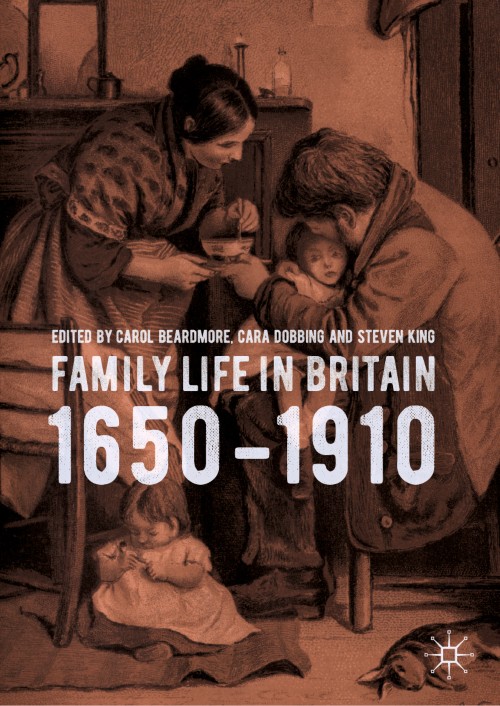
Family Life in Britain, 1650–1910 [electronic resource] / edited by Carol Beardmore, Cara Dobbing, Steven King.
Erişim Adresi
ISBN
9783030048556
Dil Kodu
İngilizce
Yer Numarası
DK/1657
Basım Bildirimi
1st ed. 2019.
Yayın Bilgisi
Cham : Springer International Publishing : Imprint: Palgrave Macmillan, 2019.
Fiziksel Niteleme
XI, 292 p. 10 illus., 1 illus. in color. online resource.
İçindekiler Notu
Chapter One: Introduction; Carol Beardmore, Cara Dobbing, Steven King -- Part One: Economies of the Family -- Chapter Two: Family Fortunes: Marriage, Inheritance and Economic Challenges in Scotland, c.1660-1800; Regina Poertner -- Chapter Three: Victorian Professions: the Galvanising (and Shaping) Force of Death on Families; Kim Price -- Chapter Four: “The Widows and Orphans of Servants are Dying”: The Conflict of Family in the Design and Application of nineteenth-Century Civil Servant Pensions; Kathleen McIlvenna -- Part Two: Family Processes -- Chapter Five: Step Motherhood in the Nineteenth Century: Elinor Packe and Continuing Family Cohesiveness, 1900-1911; Geoff Monks -- Chapter Six: Balancing the Family: Edward Wrench, Baslow G.P. c.1862–1890; Carol Beardmore -- Chapter Seven: The Family and Insanity: The Experience of the Garlands Asylum, 1862-1910; Cara Dobbing -- Chapter Eight: Conceptualising the ‘Perfect’ Family in Late-Nineteenth-Century Philanthropic Institutions; Steven Taylor -- Part Three: Reconstituting the Family -- Chapter Nine: Negotiating the Blending of Families: Tension and Affection between Step-Parents and Children in Early Modern England, 1470-1640; Maria Cannon -- Chapter Ten: Family Beyond the Household: Constituting and Reconstituting as Kin; Iain Riddell -- Chapter Eleven: Configuring and Re-Configuring Families in Nineteenth-Century England; Steven King.
Özet, vb.
This book explores the ways that families were formed and re-formed, and held together and fractured, in Britain from the sixteenth to twentieth century. The chapters build upon the argument, developed in the 1990s and 2000s, that the nuclear family form, the bedrock of understandings of the structure and function of family and kinship units, provides a wholly inadequate lens through which to view the British family. Instead the volume's contributors point to families and households with porous boundaries, an endless capacity to reconstitute themselves, and an essential fluidity to both the form of families, and the family and kinship relationships that stood in the background. This book offers a re-reading,and reconsideration of the existing pillars of family history in Britain. It examines areas such as: Scottish kinship patterns, work patterns of kin in Post Office families, stepfamily relations, the role of family in managing lunatic patients, and the fluidity associated with arange of professional families in the nineteenth century. Chapter 8 of this book is available open access under a CC BY 4.0 license at link.springer.com.
Konu
Social history.
Great Britain __ History.
Europe __ History __ 1492-.
Sociology.
Social groups.
Social History.
History of Britain and Ireland.
History of Modern Europe.
Sociology of Family, Youth and Aging.
Great Britain __ History.
Europe __ History __ 1492-.
Sociology.
Social groups.
Social History.
History of Britain and Ireland.
History of Modern Europe.
Sociology of Family, Youth and Aging.
Diğer Yazarlar
Eseri Alıntıla
Referansları kullanmadan önce gözden geçirmeniz ve varsa gerekli düzeltmeleri yapmanız önerilir.
Dijital Kaynak
MARC Görünümü
LEADER 04515nam a22005415i 4500
001 608984
003 TR_AnAIT
005 20250627071500
007 cr nn 008mamaa
008 190403s2019 sz | s |||| 0|eng d
020 |a9783030048556|9978-3-030-04855-6
024 7 |a10.1007/978-3-030-04855-6|2doi
041 |aeng
049 |aTürk Tarih Kurumu Kütüphanesi
050 4|aHN
072 7|aHBTB|2bicssc
072 7|aHIS054000|2bisacsh
072 7|aNHTB|2thema
082 04|a306.09|223
090 |aDK/1657
245 10|aFamily Life in Britain, 1650–1910|h[electronic resource] /|cedited by Carol Beardmore, Cara Dobbing, Steven King.
250 |a1st ed. 2019.
264 1|aCham :|bSpringer International Publishing :|bImprint: Palgrave Macmillan,|c2019.
300 |aXI, 292 p. 10 illus., 1 illus. in color.|bonline resource.
336 |atext|btxt|2rdacontent
337 |acomputer|bc|2rdamedia
338 |aonline resource|bcr|2rdacarrier
347 |atext file|bPDF|2rda
505 0 |aChapter One: Introduction; Carol Beardmore, Cara Dobbing, Steven King -- Part One: Economies of the Family -- Chapter Two: Family Fortunes: Marriage, Inheritance and Economic Challenges in Scotland, c.1660-1800; Regina Poertner -- Chapter Three: Victorian Professions: the Galvanising (and Shaping) Force of Death on Families; Kim Price -- Chapter Four: “The Widows and Orphans of Servants are Dying”: The Conflict of Family in the Design and Application of nineteenth-Century Civil Servant Pensions; Kathleen McIlvenna -- Part Two: Family Processes -- Chapter Five: Step Motherhood in the Nineteenth Century: Elinor Packe and Continuing Family Cohesiveness, 1900-1911; Geoff Monks -- Chapter Six: Balancing the Family: Edward Wrench, Baslow G.P. c.1862–1890; Carol Beardmore -- Chapter Seven: The Family and Insanity: The Experience of the Garlands Asylum, 1862-1910; Cara Dobbing -- Chapter Eight: Conceptualising the ‘Perfect’ Family in Late-Nineteenth-Century Philanthropic Institutions; Steven Taylor -- Part Three: Reconstituting the Family -- Chapter Nine: Negotiating the Blending of Families: Tension and Affection between Step-Parents and Children in Early Modern England, 1470-1640; Maria Cannon -- Chapter Ten: Family Beyond the Household: Constituting and Reconstituting as Kin; Iain Riddell -- Chapter Eleven: Configuring and Re-Configuring Families in Nineteenth-Century England; Steven King.
520 |aThis book explores the ways that families were formed and re-formed, and held together and fractured, in Britain from the sixteenth to twentieth century. The chapters build upon the argument, developed in the 1990s and 2000s, that the nuclear family form, the bedrock of understandings of the structure and function of family and kinship units, provides a wholly inadequate lens through which to view the British family. Instead the volume's contributors point to families and households with porous boundaries, an endless capacity to reconstitute themselves, and an essential fluidity to both the form of families, and the family and kinship relationships that stood in the background. This book offers a re-reading,and reconsideration of the existing pillars of family history in Britain. It examines areas such as: Scottish kinship patterns, work patterns of kin in Post Office families, stepfamily relations, the role of family in managing lunatic patients, and the fluidity associated with arange of professional families in the nineteenth century. Chapter 8 of this book is available open access under a CC BY 4.0 license at link.springer.com.
650 0|aSocial history.
650 0|aGreat Britain|xHistory.
650 0|aEurope|xHistory|x1492-.
650 0|aSociology.
650 0|aSocial groups.
650 14|aSocial History.
650 24|aHistory of Britain and Ireland.
650 24|aHistory of Modern Europe.
650 24|aSociology of Family, Youth and Aging.
700 1 |aBeardmore, Carol.|eeditor.|4edt|4http://id.loc.gov/vocabulary/relators/edt
700 1 |aDobbing, Cara.|eeditor.|4edt|4http://id.loc.gov/vocabulary/relators/edt
700 1 |aKing, Steven.|eeditor.|4edt|4http://id.loc.gov/vocabulary/relators/edt
773 0 |tSpringer Nature eBook
776 08|iPrinted edition:|z9783030048549
776 08|iPrinted edition:|z9783030048563
856 40|uhttps://doi.org/10.1007/978-3-030-04855-6
912 |aZDB-2-HTY
912 |aZDB-2-SXH
950 |aHistory (SpringerNature-41172)
950 |aHistory (R0) (SpringerNature-43722)
001 608984
003 TR_AnAIT
005 20250627071500
007 cr nn 008mamaa
008 190403s2019 sz | s |||| 0|eng d
020 |a9783030048556|9978-3-030-04855-6
024 7 |a10.1007/978-3-030-04855-6|2doi
041 |aeng
049 |aTürk Tarih Kurumu Kütüphanesi
050 4|aHN
072 7|aHBTB|2bicssc
072 7|aHIS054000|2bisacsh
072 7|aNHTB|2thema
082 04|a306.09|223
090 |aDK/1657
245 10|aFamily Life in Britain, 1650–1910|h[electronic resource] /|cedited by Carol Beardmore, Cara Dobbing, Steven King.
250 |a1st ed. 2019.
264 1|aCham :|bSpringer International Publishing :|bImprint: Palgrave Macmillan,|c2019.
300 |aXI, 292 p. 10 illus., 1 illus. in color.|bonline resource.
336 |atext|btxt|2rdacontent
337 |acomputer|bc|2rdamedia
338 |aonline resource|bcr|2rdacarrier
347 |atext file|bPDF|2rda
505 0 |aChapter One: Introduction; Carol Beardmore, Cara Dobbing, Steven King -- Part One: Economies of the Family -- Chapter Two: Family Fortunes: Marriage, Inheritance and Economic Challenges in Scotland, c.1660-1800; Regina Poertner -- Chapter Three: Victorian Professions: the Galvanising (and Shaping) Force of Death on Families; Kim Price -- Chapter Four: “The Widows and Orphans of Servants are Dying”: The Conflict of Family in the Design and Application of nineteenth-Century Civil Servant Pensions; Kathleen McIlvenna -- Part Two: Family Processes -- Chapter Five: Step Motherhood in the Nineteenth Century: Elinor Packe and Continuing Family Cohesiveness, 1900-1911; Geoff Monks -- Chapter Six: Balancing the Family: Edward Wrench, Baslow G.P. c.1862–1890; Carol Beardmore -- Chapter Seven: The Family and Insanity: The Experience of the Garlands Asylum, 1862-1910; Cara Dobbing -- Chapter Eight: Conceptualising the ‘Perfect’ Family in Late-Nineteenth-Century Philanthropic Institutions; Steven Taylor -- Part Three: Reconstituting the Family -- Chapter Nine: Negotiating the Blending of Families: Tension and Affection between Step-Parents and Children in Early Modern England, 1470-1640; Maria Cannon -- Chapter Ten: Family Beyond the Household: Constituting and Reconstituting as Kin; Iain Riddell -- Chapter Eleven: Configuring and Re-Configuring Families in Nineteenth-Century England; Steven King.
520 |aThis book explores the ways that families were formed and re-formed, and held together and fractured, in Britain from the sixteenth to twentieth century. The chapters build upon the argument, developed in the 1990s and 2000s, that the nuclear family form, the bedrock of understandings of the structure and function of family and kinship units, provides a wholly inadequate lens through which to view the British family. Instead the volume's contributors point to families and households with porous boundaries, an endless capacity to reconstitute themselves, and an essential fluidity to both the form of families, and the family and kinship relationships that stood in the background. This book offers a re-reading,and reconsideration of the existing pillars of family history in Britain. It examines areas such as: Scottish kinship patterns, work patterns of kin in Post Office families, stepfamily relations, the role of family in managing lunatic patients, and the fluidity associated with arange of professional families in the nineteenth century. Chapter 8 of this book is available open access under a CC BY 4.0 license at link.springer.com.
650 0|aSocial history.
650 0|aGreat Britain|xHistory.
650 0|aEurope|xHistory|x1492-.
650 0|aSociology.
650 0|aSocial groups.
650 14|aSocial History.
650 24|aHistory of Britain and Ireland.
650 24|aHistory of Modern Europe.
650 24|aSociology of Family, Youth and Aging.
700 1 |aBeardmore, Carol.|eeditor.|4edt|4http://id.loc.gov/vocabulary/relators/edt
700 1 |aDobbing, Cara.|eeditor.|4edt|4http://id.loc.gov/vocabulary/relators/edt
700 1 |aKing, Steven.|eeditor.|4edt|4http://id.loc.gov/vocabulary/relators/edt
773 0 |tSpringer Nature eBook
776 08|iPrinted edition:|z9783030048549
776 08|iPrinted edition:|z9783030048563
856 40|uhttps://doi.org/10.1007/978-3-030-04855-6
912 |aZDB-2-HTY
912 |aZDB-2-SXH
950 |aHistory (SpringerNature-41172)
950 |aHistory (R0) (SpringerNature-43722)
Materyaller
Depodan talep edilen materyal sadece kütüphane içerisinde kullanılmaktadır.
Materyal dışarıya ödünç verilmemektedir.
Materyal dışarıya ödünç verilmemektedir.
