LEADER 03680nam a22005655i 4500
001 609051
003 TR_AnAIT
005 20250627071245
007 cr nn 008mamaa
008 190718s2019 xxk| s |||| 0|eng d
020 |a9781137512765|9978-1-137-51276-5
024 7 |a10.1057/978-1-137-51276-5|2doi
041 |aeng
049 |aTürk Tarih Kurumu Kütüphanesi
050 4|aCB3-481
072 7|aHBTB|2bicssc
072 7|aHIS054000|2bisacsh
072 7|aNHTB|2thema
082 04|a306.09|223
090 |aDK/1724
100 1 |aBirch, Jonathan C. P.|eauthor.|4aut|4http://id.loc.gov/vocabulary/relators/aut
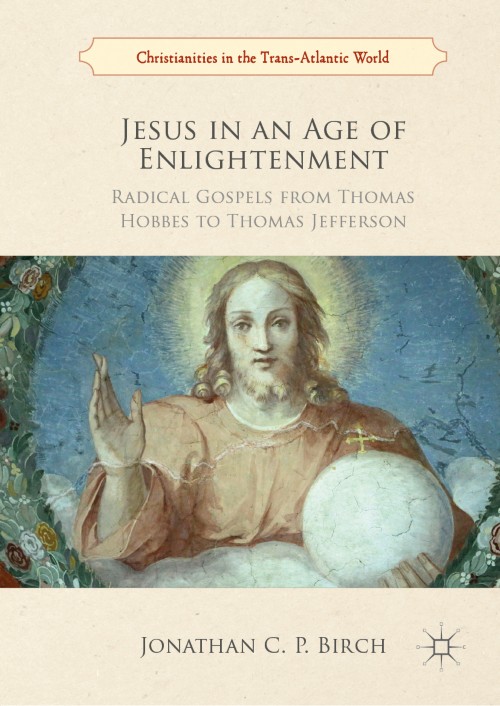
245 10|aJesus in an Age of Enlightenment|h[electronic resource] :|bRadical Gospels from Thomas Hobbes to Thomas Jefferson /|cby Jonathan C. P. Birch.
250 |a1st ed. 2019.
264 1|aLondon :|bPalgrave Macmillan UK :|bImprint: Palgrave Macmillan,|c2019.
300 |aXIX, 493 p.|bonline resource.
336 |atext|btxt|2rdacontent
337 |acomputer|bc|2rdamedia
338 |aonline resource|bcr|2rdacarrier
347 |atext file|bPDF|2rda
490 1 |aChristianities in the Trans-Atlantic World,|x2634-5846
505 0 |aChapter One: Introduction -- Chapter Two: Imagining Enlightenment – The Historical and Historiographical Context -- Chapter Three: Overture to a Moral Messiah - God, Goodness, and the Heretical Tendency -- Chapter Four: Material Messiah - Hobbes, Heresy, and a Kingdom Not of This World -- Chapter Five: ‘No Spirit No God’ - From the Light of Christ to the Age of Enlightenment -- Chapter Six: What Would Jesus Tolerate? - Reason and Revelation in Spinoza, Locke, and Bayle -- Chapter Seven: The Unity of God and the Wisdom of Christ - The Religious Enlightenments of Joseph Priestley and Thomas Jefferson -- Chapter Eight: Postscript and Conclusion.
520 |aThis book explores the religious concerns of Enlightenment thinkers from Thomas Hobbes to Thomas Jefferson. Using an innovative method, the study illuminates the intellectual history of the age through interpretations of Jesus between c.1750 and c.1826. The book demonstrates the persistence of theology in modern philosophy and the projects of social reform and amelioration associated with the Enlightenment. At the core of many of these projects was a robust moral-theological realism, sometimes manifest in a natural law ethic, but always associated with Jesus and a commitment to the sovereign goodness of God. This ethical orientation in Enlightenment discourse is found in a range of different metaphysical and political identities (dualist and monist; progressive and radical) which intersect with earlier ‘heretical’ tendencies in Christian thought (Arianism, Pelagianism, and Marcionism). This intellectual matrix helped to produce the discourses of irenic toleration which are a legacyof the Enlightenment at its best. .
650 0|aCivilization|xHistory.
650 0|aTheology.
650 0|aReligion|xHistory.
650 0|aIntellectual life|xHistory.
650 0|aPolitical science|xPhilosophy.
650 14|aCultural History.
650 24|aChristian Theology.
650 24|aHistory of Religion.
650 24|aIntellectual History.
650 24|aPolitical Philosophy.
773 0 |tSpringer Nature eBook
776 08|iPrinted edition:|z9781137512758
776 08|iPrinted edition:|z9781349702640
776 08|iPrinted edition:|z9781349702633
830 0|aChristianities in the Trans-Atlantic World,|x2634-5846
856 40|uhttps://doi.org/10.1057/978-1-137-51276-5
912 |aZDB-2-HTY
912 |aZDB-2-SXH
950 |aHistory (SpringerNature-41172)
950 |aHistory (R0) (SpringerNature-43722)