LEADER 03474nam a22005535i 4500
001 609087
003 TR_AnAIT
005 20250627071125
007 cr nn 008mamaa
008 201210s2020 sz | s |||| 0|eng d
020 |a9783030590352|9978-3-030-59035-2
024 7 |a10.1007/978-3-030-59035-2|2doi
041 |aeng
049 |aTürk Tarih Kurumu Kütüphanesi
050 4|aCB3-481
072 7|aHBTB|2bicssc
072 7|aHIS054000|2bisacsh
072 7|aNHTB|2thema
082 04|a306.09|223
090 |aDK/1759
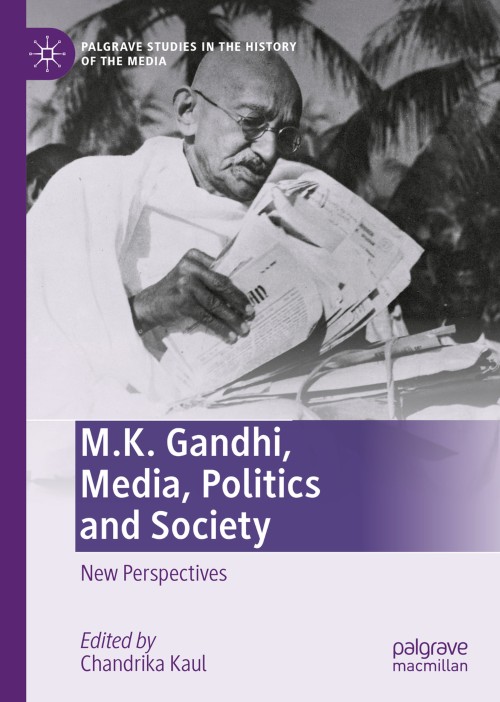
245 10|aM.K. Gandhi, Media, Politics and Society|h[electronic resource] :|bNew Perspectives /|cedited by Chandrika Kaul.
250 |a1st ed. 2020.
264 1|aCham :|bSpringer International Publishing :|bImprint: Palgrave Macmillan,|c2020.
300 |aXVII, 168 p. 4 illus., 1 illus. in color.|bonline resource.
336 |atext|btxt|2rdacontent
337 |acomputer|bc|2rdamedia
338 |aonline resource|bcr|2rdacarrier
347 |atext file|bPDF|2rda
490 1 |aPalgrave Studies in the History of the Media,|x2634-6583
505 0 |a1. Brief Introductory Remarks- Chandrika Kaul -- 2. “This cable...was not in my words”: Gandhi, the Telegraph and Political Communication in the British Empire- Amelia Bonea -- 3. Gandhi’s Evolving Discourse on Leprosy- Sanjiv Kakar -- 4. The Global Gandhi of the Muslim Vernacular Press: Mahatma as Monumental Peasant and the Prophetic Rose in the Urdu Pamphlets of an early 20th century Delhi Sufi- Timothy S. Dobe -- 5. Gandhi and the Bengali Intellectuals: Perceptions and portrayal of his ideas in contemporary vernacular journals in the 1920s and 1930s- Sarvani Gooptu -- 6. Gandhi and Broadcasting: Missing Narratives in Media, Nationalism and the Raj- Chandrika Kaul -- 7. Gandhi and the Muslim League: The Dawn in 1947- Gopa Sabharwal -- 8. Gandhi in 1947: Self Fashioning, Print Culture and The Republic of letters- Anjana Sharma -- 9. A Modern Mahatma? Use and Misuse of Gandhi in Popular Culture- Mei Li Badecker.
520 |aThis Palgrave Pivot showcases new research on M.K. Gandhi and the press, telegraphs and popular culture. Despite Gandhi being the subject of numerous books over the past century, there are few that put journalism centre stage. This edited collection explores both Gandhi’s own approach to the press, but also how different advocacy groups and the media within India and overseas engaged with Gandhi, and his ideology and methodology, to further their own causes. The timeframe of the book extends from the late nineteenth century up to the present, and the case studies draw inspiration from a number of disciplinary approaches.
650 0|aCivilization|xHistory.
650 0|aImperialism.
650 0|aSocial history.
650 0|aAsia|xHistory.
650 0|aJournalism.
650 14|aCultural History.
650 24|aImperialism and Colonialism.
650 24|aSocial History.
650 24|aHistory of South Asia.
650 24|aJournalism.
700 1 |aKaul, Chandrika.|eeditor.|4edt|4http://id.loc.gov/vocabulary/relators/edt
773 0 |tSpringer Nature eBook
776 08|iPrinted edition:|z9783030590345
776 08|iPrinted edition:|z9783030590369
830 0|aPalgrave Studies in the History of the Media,|x2634-6583
856 40|uhttps://doi.org/10.1007/978-3-030-59035-2
912 |aZDB-2-HTY
912 |aZDB-2-SXH
950 |aHistory (SpringerNature-41172)
950 |aHistory (R0) (SpringerNature-43722)