

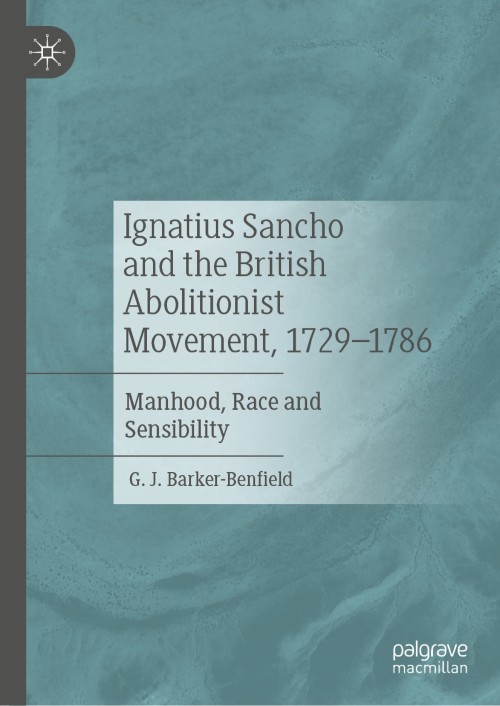
Ignatius Sancho and the British Abolitionist Movement, 1729-1786 [electronic resource] : Manhood, Race and Sensibility / by G. J. Barker-Benfield.
Erişim Adresi
ISBN
9783031374203
Dil Kodu
İngilizce
Yer Numarası
DK/1811
Yazar
Basım Bildirimi
1st ed. 2023.
Yayın Bilgisi
Cham : Springer Nature Switzerland : Imprint: Palgrave Macmillan, 2023.
Fiziksel Niteleme
IX, 264 p. 6 illus., 2 illus. in color. online resource.
İçindekiler Notu
Chapter 1: “Considering slavery – what it is": Ignatius Sancho Appeals to Laurence Sterne -- Chapter 2: “So many of her brethren and sisters”: Sterne Replies to Sancho -- Chapter 3: “The black must be discharged”: Mansfield’s Decision and its Aftermath -- Chapter 4: “The poor fellow foams again”: Castration for the Public Good -- Chapter 5: “A Son of Afric”: Amid Riots and Imperial War -- Chapter 6: “To produce remorse in every enlightened reader”: Frances Crewe’s Publication of Sancho’s Letters -- Chapter 7: “Too well known to make any mention necessary”: Sancho’s Impact.
Özet, vb.
“Ignatius Sancho, a man of rare accomplishments and talents, is an important figure in British black history, and in the story of Atlantic slave narratives. But he has, until now, lacked an appropriate biography. Barker- Benfield fills that gap with a biographical and literary study that is original, persuasive and grounded in wide-ranging and clever analysis and exposition. In the process, he has helped to secure Sancho at the centre of our understanding of British black history.” —James Walvin, Professor Emeritus in History, University of York “At last, Ignatius Sancho receives the thoughtful, sympathetic assessment the pioneer Anglo-African writer long has deserved. An acknowledged master of eighteenth-century cultural history, Barker-Benfield brings to his subject interpretive flair and characteristic insight. With original contributions to the history of antislavery and to the history of sexuality in late eighteenth-century England, this eloquent study willhold its value for many years to come.” —Christopher L. Brown, Professor, Columbia University in the City of New York This book highlights the significant role played by Ignatius Sancho (c. 1729-80), the first Black man to vote in England, in the British abolitionist movement. Examining the letters of Sancho, and especially his correspondence with the influential novelist and preacher, Laurence Sterne, the author analyses the relationship between sensibility and antislavery in eighteenth-century Britain. The book demonstrates how Sancho navigated the bawdy, riotous conditions of commercial London, which was the headquarters of a growing and war-torn Empire. It shows how Sancho mastered the fashionable and gendered language of the culture of sensibility, navigating the contemporary issues of race, slavery, and politics. The book addresses the White metropolitan and colonial preoccupation with Black men’s sexuality, which was intensified by the Somerset decision of 1772. Sancho’s was a unique and influential voice in eighteenth-century Britain, making this book an insightful read for scholars of anti-slavery as well as gender, race, and imperialism in British history. G. J. Barker-Benfield is Professor Emeritus of History at the State University of New York, Albany , New York, USA.
Konu
Imperialism.
Great Britain __ History.
Race.
Women __ History.
Social history.
Imperialism and Colonialism.
History of Britain and Ireland.
Race and Ethnicity Studies.
Women's History / History of Gender.
Social History.
Great Britain __ History.
Race.
Women __ History.
Social history.
Imperialism and Colonialism.
History of Britain and Ireland.
Race and Ethnicity Studies.
Women's History / History of Gender.
Social History.
Eseri Alıntıla
Referansları kullanmadan önce gözden geçirmeniz ve varsa gerekli düzeltmeleri yapmanız önerilir.
Dijital Kaynak
MARC Görünümü
LEADER 04797nam a22005415i 4500
001 609139
003 TR_AnAIT
005 20250627070944
007 cr nn 008mamaa
008 230901s2023 sz | s |||| 0|eng d
020 |a9783031374203|9978-3-031-37420-3
024 7 |a10.1007/978-3-031-37420-3|2doi
041 |aeng
049 |aTürk Tarih Kurumu Kütüphanesi
050 4|aJV61-152
072 7|aHBTQ|2bicssc
072 7|aHIS000000|2bisacsh
072 7|aNHTQ|2thema
082 04|a325.3|223
090 |aDK/1811
100 1 |aBarker-Benfield, G. J.|eauthor.|4aut|4http://id.loc.gov/vocabulary/relators/aut
245 10|aIgnatius Sancho and the British Abolitionist Movement, 1729-1786|h[electronic resource] :|bManhood, Race and Sensibility /|cby G. J. Barker-Benfield.
250 |a1st ed. 2023.
264 1|aCham :|bSpringer Nature Switzerland :|bImprint: Palgrave Macmillan,|c2023.
300 |aIX, 264 p. 6 illus., 2 illus. in color.|bonline resource.
336 |atext|btxt|2rdacontent
337 |acomputer|bc|2rdamedia
338 |aonline resource|bcr|2rdacarrier
347 |atext file|bPDF|2rda
505 0 |aChapter 1: “Considering slavery – what it is": Ignatius Sancho Appeals to Laurence Sterne -- Chapter 2: “So many of her brethren and sisters”: Sterne Replies to Sancho -- Chapter 3: “The black must be discharged”: Mansfield’s Decision and its Aftermath -- Chapter 4: “The poor fellow foams again”: Castration for the Public Good -- Chapter 5: “A Son of Afric”: Amid Riots and Imperial War -- Chapter 6: “To produce remorse in every enlightened reader”: Frances Crewe’s Publication of Sancho’s Letters -- Chapter 7: “Too well known to make any mention necessary”: Sancho’s Impact.
520 |a“Ignatius Sancho, a man of rare accomplishments and talents, is an important figure in British black history, and in the story of Atlantic slave narratives. But he has, until now, lacked an appropriate biography. Barker- Benfield fills that gap with a biographical and literary study that is original, persuasive and grounded in wide-ranging and clever analysis and exposition. In the process, he has helped to secure Sancho at the centre of our understanding of British black history.” —James Walvin, Professor Emeritus in History, University of York “At last, Ignatius Sancho receives the thoughtful, sympathetic assessment the pioneer Anglo-African writer long has deserved. An acknowledged master of eighteenth-century cultural history, Barker-Benfield brings to his subject interpretive flair and characteristic insight. With original contributions to the history of antislavery and to the history of sexuality in late eighteenth-century England, this eloquent study willhold its value for many years to come.” —Christopher L. Brown, Professor, Columbia University in the City of New York This book highlights the significant role played by Ignatius Sancho (c. 1729-80), the first Black man to vote in England, in the British abolitionist movement. Examining the letters of Sancho, and especially his correspondence with the influential novelist and preacher, Laurence Sterne, the author analyses the relationship between sensibility and antislavery in eighteenth-century Britain. The book demonstrates how Sancho navigated the bawdy, riotous conditions of commercial London, which was the headquarters of a growing and war-torn Empire. It shows how Sancho mastered the fashionable and gendered language of the culture of sensibility, navigating the contemporary issues of race, slavery, and politics. The book addresses the White metropolitan and colonial preoccupation with Black men’s sexuality, which was intensified by the Somerset decision of 1772. Sancho’s was a unique and influential voice in eighteenth-century Britain, making this book an insightful read for scholars of anti-slavery as well as gender, race, and imperialism in British history. G. J. Barker-Benfield is Professor Emeritus of History at the State University of New York, Albany , New York, USA.
650 0|aImperialism.
650 0|aGreat Britain|xHistory.
650 0|aRace.
650 0|aWomen|xHistory.
650 0|aSocial history.
650 14|aImperialism and Colonialism.
650 24|aHistory of Britain and Ireland.
650 24|aRace and Ethnicity Studies.
650 24|aWomen's History / History of Gender.
650 24|aSocial History.
773 0 |tSpringer Nature eBook
776 08|iPrinted edition:|z9783031374197
776 08|iPrinted edition:|z9783031374210
776 08|iPrinted edition:|z9783031374227
856 40|uhttps://doi.org/10.1007/978-3-031-37420-3
912 |aZDB-2-HTY
912 |aZDB-2-SXH
950 |aHistory (SpringerNature-41172)
950 |aHistory (R0) (SpringerNature-43722)
001 609139
003 TR_AnAIT
005 20250627070944
007 cr nn 008mamaa
008 230901s2023 sz | s |||| 0|eng d
020 |a9783031374203|9978-3-031-37420-3
024 7 |a10.1007/978-3-031-37420-3|2doi
041 |aeng
049 |aTürk Tarih Kurumu Kütüphanesi
050 4|aJV61-152
072 7|aHBTQ|2bicssc
072 7|aHIS000000|2bisacsh
072 7|aNHTQ|2thema
082 04|a325.3|223
090 |aDK/1811
100 1 |aBarker-Benfield, G. J.|eauthor.|4aut|4http://id.loc.gov/vocabulary/relators/aut
245 10|aIgnatius Sancho and the British Abolitionist Movement, 1729-1786|h[electronic resource] :|bManhood, Race and Sensibility /|cby G. J. Barker-Benfield.
250 |a1st ed. 2023.
264 1|aCham :|bSpringer Nature Switzerland :|bImprint: Palgrave Macmillan,|c2023.
300 |aIX, 264 p. 6 illus., 2 illus. in color.|bonline resource.
336 |atext|btxt|2rdacontent
337 |acomputer|bc|2rdamedia
338 |aonline resource|bcr|2rdacarrier
347 |atext file|bPDF|2rda
505 0 |aChapter 1: “Considering slavery – what it is": Ignatius Sancho Appeals to Laurence Sterne -- Chapter 2: “So many of her brethren and sisters”: Sterne Replies to Sancho -- Chapter 3: “The black must be discharged”: Mansfield’s Decision and its Aftermath -- Chapter 4: “The poor fellow foams again”: Castration for the Public Good -- Chapter 5: “A Son of Afric”: Amid Riots and Imperial War -- Chapter 6: “To produce remorse in every enlightened reader”: Frances Crewe’s Publication of Sancho’s Letters -- Chapter 7: “Too well known to make any mention necessary”: Sancho’s Impact.
520 |a“Ignatius Sancho, a man of rare accomplishments and talents, is an important figure in British black history, and in the story of Atlantic slave narratives. But he has, until now, lacked an appropriate biography. Barker- Benfield fills that gap with a biographical and literary study that is original, persuasive and grounded in wide-ranging and clever analysis and exposition. In the process, he has helped to secure Sancho at the centre of our understanding of British black history.” —James Walvin, Professor Emeritus in History, University of York “At last, Ignatius Sancho receives the thoughtful, sympathetic assessment the pioneer Anglo-African writer long has deserved. An acknowledged master of eighteenth-century cultural history, Barker-Benfield brings to his subject interpretive flair and characteristic insight. With original contributions to the history of antislavery and to the history of sexuality in late eighteenth-century England, this eloquent study willhold its value for many years to come.” —Christopher L. Brown, Professor, Columbia University in the City of New York This book highlights the significant role played by Ignatius Sancho (c. 1729-80), the first Black man to vote in England, in the British abolitionist movement. Examining the letters of Sancho, and especially his correspondence with the influential novelist and preacher, Laurence Sterne, the author analyses the relationship between sensibility and antislavery in eighteenth-century Britain. The book demonstrates how Sancho navigated the bawdy, riotous conditions of commercial London, which was the headquarters of a growing and war-torn Empire. It shows how Sancho mastered the fashionable and gendered language of the culture of sensibility, navigating the contemporary issues of race, slavery, and politics. The book addresses the White metropolitan and colonial preoccupation with Black men’s sexuality, which was intensified by the Somerset decision of 1772. Sancho’s was a unique and influential voice in eighteenth-century Britain, making this book an insightful read for scholars of anti-slavery as well as gender, race, and imperialism in British history. G. J. Barker-Benfield is Professor Emeritus of History at the State University of New York, Albany , New York, USA.
650 0|aImperialism.
650 0|aGreat Britain|xHistory.
650 0|aRace.
650 0|aWomen|xHistory.
650 0|aSocial history.
650 14|aImperialism and Colonialism.
650 24|aHistory of Britain and Ireland.
650 24|aRace and Ethnicity Studies.
650 24|aWomen's History / History of Gender.
650 24|aSocial History.
773 0 |tSpringer Nature eBook
776 08|iPrinted edition:|z9783031374197
776 08|iPrinted edition:|z9783031374210
776 08|iPrinted edition:|z9783031374227
856 40|uhttps://doi.org/10.1007/978-3-031-37420-3
912 |aZDB-2-HTY
912 |aZDB-2-SXH
950 |aHistory (SpringerNature-41172)
950 |aHistory (R0) (SpringerNature-43722)
Materyaller
Depodan talep edilen materyal sadece kütüphane içerisinde kullanılmaktadır.
Materyal dışarıya ödünç verilmemektedir.
Materyal dışarıya ödünç verilmemektedir.
