LEADER 03688nam a22005415i 4500
001 609220
003 TR_AnAIT
005 20250627070710
007 cr nn 008mamaa
008 220303s2022 si | s |||| 0|eng d
020 |a9789811665813|9978-981-16-6581-3
024 7 |a10.1007/978-981-16-6581-3|2doi
041 |aeng
049 |aTürk Tarih Kurumu Kütüphanesi
050 4|aDS331-349.9
072 7|aHBJF|2bicssc
072 7|a1FK|2bicssc
072 7|aHIS017000|2bisacsh
072 7|aNHF|x1FK|2thema
082 04|a954|223
090 |aDK/1892
100 1 |aMukherjee, Rila.|eauthor.|4aut|4http://id.loc.gov/vocabulary/relators/aut
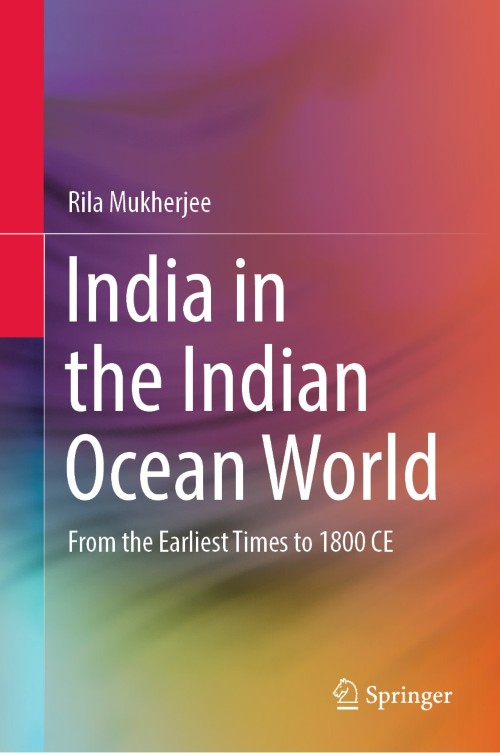
245 10|aIndia in the Indian Ocean World|h[electronic resource] :|bFrom the Earliest Times to 1800 CE /|cby Rila Mukherjee.
250 |a1st ed. 2022.
264 1|aSingapore :|bSpringer Nature Singapore :|bImprint: Springer,|c2022.
300 |aXXVI, 410 p. 55 illus., 23 illus. in color.|bonline resource.
336 |atext|btxt|2rdacontent
337 |acomputer|bc|2rdamedia
338 |aonline resource|bcr|2rdacarrier
347 |atext file|bPDF|2rda
505 0 |a1. Introduction -- 2. India in the Indian Ocean world -- 3. Indian Ocean History-Writing -- 4. From Sail to Steam -- 5. India in the Indian Ocean world: The archaeological record -- 6. India in the Indian Ocean world: The classical period -- 7. India in the Indian Ocean world: The early medieval period upto 1300 -- 8. From an Indian Ocean Realm to an Indian Ocean World: Changes 1300-1500 -- 9. 1500-1800: The Age of European Ascendance -- 10. Redrawing the Indian Ocean: imperialism, colonialism and the settlement of sea spaces -- 11. The current state of Indian Ocean history writing.
520 |aThe book integrates the latest scholarly literature on the entire Indian Ocean region, from East Africa to China. Issues such as India's history, India’s changing status in the region, and India's cross-cultural networking over a long period are explored in this book. It is organized in specific themes in thirteen chapters. It incorporates a wealth of research on India’s strategic significance in the Indian Ocean arena throughout history. It enriches the reader's understanding of the emergence of the Indian Ocean basin as a global arena for cross-cultural networking and nation-building. It discusses issues of trade and commerce, the circulation of ideas, peoples and objects, and social and religious themes, focusing on Hinduism, Buddhism, and Islam. The book provides a refreshingly different survey of India’s connected history in the Indian Ocean region starting from the archaeological record and ending with the coming of empire. The author’s unique experience, combined with an engaging writing style, makes the book highly readable. The book contributes to the field of global history and is of great interest to researchers, policymakers, teachers, and students across the fields of political, cultural, and economic history and strategic studies.
650 0|aAsia|xHistory.
650 0|aEthnology.
650 0|aEconomic history.
650 0|aHuman geography.
650 0|aCultural geography.
650 14|aHistory of South Asia.
650 24|aSociocultural Anthropology.
650 24|aEconomic History.
650 24|aSocial and Cultural Geography.
773 0 |tSpringer Nature eBook
776 08|iPrinted edition:|z9789811665806
776 08|iPrinted edition:|z9789811665820
776 08|iPrinted edition:|z9789811665837
856 40|uhttps://doi.org/10.1007/978-981-16-6581-3
912 |aZDB-2-HTY
912 |aZDB-2-SXH
950 |aHistory (SpringerNature-41172)
950 |aHistory (R0) (SpringerNature-43722)