

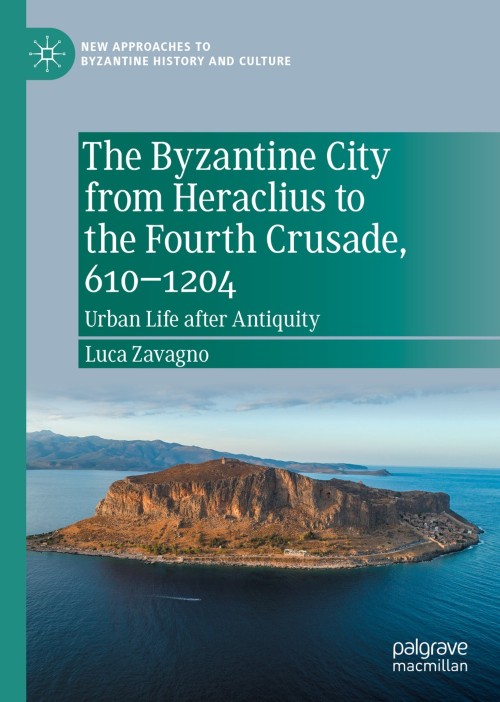
The Byzantine City from Heraclius to the Fourth Crusade, 610–1204 [electronic resource] : Urban Life after Antiquity / by Luca Zavagno.
Erişim Adresi
ISBN
9783030843076
Dil Kodu
İngilizce
Yer Numarası
DK/1956
Yazar
Basım Bildirimi
1st ed. 2021.
Yayın Bilgisi
Cham : Springer International Publishing : Imprint: Palgrave Pivot, 2021.
Fiziksel Niteleme
XIII, 214 p. 15 illus., 14 illus. in color. online resource.
Dizi
New Approaches to Byzantine History and Culture, 2730-9371
İçindekiler Notu
1. The History of Byzantine Urbanism -- 2. The Byzantine Mediterranean Between the End of Late Antiquity and the Fourth Crusade -- 3. The Experience of Byzantine Cities Across Space and Time -- 4. “Regional” Changes of Byzantine Urbanism from 600 to 1204.
Özet, vb.
“This is a most welcome and important contribution in the study of Byzantine cities, a topic of growing scholarly interest. Drawing from a range of historical sources and archaeological results, this book offers a compelling overview of the socioeconomic and cultural complexity of the Byzantine city and its significance for our understanding of the history of Byzantium.” —Nikolas Bakirtzis, The Cyprus Institute “This magisterial book explores the Byzantine city from two different points of view: its concrete archaeological image, deriving from excavation in many different Mediterranean countries; and our contemporary idea of it, produced by the intense scholarly debate of the last few decades. Based on extensive reading, and a sophisticated review and discussion of the most relevant theoretical themes, Zavagno’s study is a crucial reference for everyone willing to study and understand the complexity of urban phenomenon in the Byzantine Mediterranean.” —Enrico Zanini, University of Siena, Italy This book explores the Byzantine city and the changes it went through from 610 to 1204. Throughout this period, cities were always the centers of political and social life for both secular and religious authorities, and, furthermore, the focus of the economic interests of local landowning elites. This book therefore examines the regional and subregional trajectories in the urban function, landscape, structure and fabric of Byzantium’s cities, synthesizing the most cutting-edge archaeological excavations, the results of analyses of material culture (including ceramics, coins, and seals) and a reassessment of the documentary and hagiographical sources. The transformation the Byzantine urban landscape underwent from the seventh to thirteenth centuries can afford us a better grasp of changes to the Byzantine central and provincial administrative apparatus; their fiscal machinery, military institutions, socio-economic structures and religious organization. This book will be of interest to students and researchers of the history, archaeology and architecture of Byzantium. Luca Zavagno is Associate Professor of Byzantine Studies in the Department of History at Bilkent University, Turkey. He is the author of many articles on the early medieval and Byzantine Mediterranean, as well as two monographs. .
Konu
Europe __ History __ 476-1492.
Cities and towns __ History.
Social history.
History.
History of Medieval Europe.
Urban History.
Social History.
History.
Cities and towns __ History.
Social history.
History.
History of Medieval Europe.
Urban History.
Social History.
History.
Eseri Alıntıla
Referansları kullanmadan önce gözden geçirmeniz ve varsa gerekli düzeltmeleri yapmanız önerilir.
Dijital Kaynak
MARC Görünümü
LEADER 04558nam a22005535i 4500
001 609284
003 TR_AnAIT
005 20250627070439
007 cr nn 008mamaa
008 211006s2021 sz | s |||| 0|eng d
020 |a9783030843076|9978-3-030-84307-6
024 7 |a10.1007/978-3-030-84307-6|2doi
041 |aeng
049 |aTürk Tarih Kurumu Kütüphanesi
050 4|aD111-203
072 7|aHBJD|2bicssc
072 7|aHBLC1|2bicssc
072 7|aHIS037010|2bisacsh
072 7|aNHDJ|2thema
082 04|a940.902|223
090 |aDK/1956
100 1 |aZavagno, Luca.|eauthor.|4aut|4http://id.loc.gov/vocabulary/relators/aut
245 14|aThe Byzantine City from Heraclius to the Fourth Crusade, 610–1204|h[electronic resource] :|bUrban Life after Antiquity /|cby Luca Zavagno.
250 |a1st ed. 2021.
264 1|aCham :|bSpringer International Publishing :|bImprint: Palgrave Pivot,|c2021.
300 |aXIII, 214 p. 15 illus., 14 illus. in color.|bonline resource.
336 |atext|btxt|2rdacontent
337 |acomputer|bc|2rdamedia
338 |aonline resource|bcr|2rdacarrier
347 |atext file|bPDF|2rda
490 1 |aNew Approaches to Byzantine History and Culture,|x2730-9371
505 0 |a1. The History of Byzantine Urbanism -- 2. The Byzantine Mediterranean Between the End of Late Antiquity and the Fourth Crusade -- 3. The Experience of Byzantine Cities Across Space and Time -- 4. “Regional” Changes of Byzantine Urbanism from 600 to 1204.
520 |a“This is a most welcome and important contribution in the study of Byzantine cities, a topic of growing scholarly interest. Drawing from a range of historical sources and archaeological results, this book offers a compelling overview of the socioeconomic and cultural complexity of the Byzantine city and its significance for our understanding of the history of Byzantium.” —Nikolas Bakirtzis, The Cyprus Institute “This magisterial book explores the Byzantine city from two different points of view: its concrete archaeological image, deriving from excavation in many different Mediterranean countries; and our contemporary idea of it, produced by the intense scholarly debate of the last few decades. Based on extensive reading, and a sophisticated review and discussion of the most relevant theoretical themes, Zavagno’s study is a crucial reference for everyone willing to study and understand the complexity of urban phenomenon in the Byzantine Mediterranean.” —Enrico Zanini, University of Siena, Italy This book explores the Byzantine city and the changes it went through from 610 to 1204. Throughout this period, cities were always the centers of political and social life for both secular and religious authorities, and, furthermore, the focus of the economic interests of local landowning elites. This book therefore examines the regional and subregional trajectories in the urban function, landscape, structure and fabric of Byzantium’s cities, synthesizing the most cutting-edge archaeological excavations, the results of analyses of material culture (including ceramics, coins, and seals) and a reassessment of the documentary and hagiographical sources. The transformation the Byzantine urban landscape underwent from the seventh to thirteenth centuries can afford us a better grasp of changes to the Byzantine central and provincial administrative apparatus; their fiscal machinery, military institutions, socio-economic structures and religious organization. This book will be of interest to students and researchers of the history, archaeology and architecture of Byzantium. Luca Zavagno is Associate Professor of Byzantine Studies in the Department of History at Bilkent University, Turkey. He is the author of many articles on the early medieval and Byzantine Mediterranean, as well as two monographs. .
650 0|aEurope|xHistory|x476-1492.
650 0|aCities and towns|xHistory.
650 0|aSocial history.
650 0|aHistory.
650 14|aHistory of Medieval Europe.
650 24|aUrban History.
650 24|aSocial History.
650 24|aHistory.
773 0 |tSpringer Nature eBook
776 08|iPrinted edition:|z9783030843069
776 08|iPrinted edition:|z9783030843083
776 08|iPrinted edition:|z9783030843090
830 0|aNew Approaches to Byzantine History and Culture,|x2730-9371
856 40|uhttps://doi.org/10.1007/978-3-030-84307-6
912 |aZDB-2-HTY
912 |aZDB-2-SXH
950 |aHistory (SpringerNature-41172)
950 |aHistory (R0) (SpringerNature-43722)
001 609284
003 TR_AnAIT
005 20250627070439
007 cr nn 008mamaa
008 211006s2021 sz | s |||| 0|eng d
020 |a9783030843076|9978-3-030-84307-6
024 7 |a10.1007/978-3-030-84307-6|2doi
041 |aeng
049 |aTürk Tarih Kurumu Kütüphanesi
050 4|aD111-203
072 7|aHBJD|2bicssc
072 7|aHBLC1|2bicssc
072 7|aHIS037010|2bisacsh
072 7|aNHDJ|2thema
082 04|a940.902|223
090 |aDK/1956
100 1 |aZavagno, Luca.|eauthor.|4aut|4http://id.loc.gov/vocabulary/relators/aut
245 14|aThe Byzantine City from Heraclius to the Fourth Crusade, 610–1204|h[electronic resource] :|bUrban Life after Antiquity /|cby Luca Zavagno.
250 |a1st ed. 2021.
264 1|aCham :|bSpringer International Publishing :|bImprint: Palgrave Pivot,|c2021.
300 |aXIII, 214 p. 15 illus., 14 illus. in color.|bonline resource.
336 |atext|btxt|2rdacontent
337 |acomputer|bc|2rdamedia
338 |aonline resource|bcr|2rdacarrier
347 |atext file|bPDF|2rda
490 1 |aNew Approaches to Byzantine History and Culture,|x2730-9371
505 0 |a1. The History of Byzantine Urbanism -- 2. The Byzantine Mediterranean Between the End of Late Antiquity and the Fourth Crusade -- 3. The Experience of Byzantine Cities Across Space and Time -- 4. “Regional” Changes of Byzantine Urbanism from 600 to 1204.
520 |a“This is a most welcome and important contribution in the study of Byzantine cities, a topic of growing scholarly interest. Drawing from a range of historical sources and archaeological results, this book offers a compelling overview of the socioeconomic and cultural complexity of the Byzantine city and its significance for our understanding of the history of Byzantium.” —Nikolas Bakirtzis, The Cyprus Institute “This magisterial book explores the Byzantine city from two different points of view: its concrete archaeological image, deriving from excavation in many different Mediterranean countries; and our contemporary idea of it, produced by the intense scholarly debate of the last few decades. Based on extensive reading, and a sophisticated review and discussion of the most relevant theoretical themes, Zavagno’s study is a crucial reference for everyone willing to study and understand the complexity of urban phenomenon in the Byzantine Mediterranean.” —Enrico Zanini, University of Siena, Italy This book explores the Byzantine city and the changes it went through from 610 to 1204. Throughout this period, cities were always the centers of political and social life for both secular and religious authorities, and, furthermore, the focus of the economic interests of local landowning elites. This book therefore examines the regional and subregional trajectories in the urban function, landscape, structure and fabric of Byzantium’s cities, synthesizing the most cutting-edge archaeological excavations, the results of analyses of material culture (including ceramics, coins, and seals) and a reassessment of the documentary and hagiographical sources. The transformation the Byzantine urban landscape underwent from the seventh to thirteenth centuries can afford us a better grasp of changes to the Byzantine central and provincial administrative apparatus; their fiscal machinery, military institutions, socio-economic structures and religious organization. This book will be of interest to students and researchers of the history, archaeology and architecture of Byzantium. Luca Zavagno is Associate Professor of Byzantine Studies in the Department of History at Bilkent University, Turkey. He is the author of many articles on the early medieval and Byzantine Mediterranean, as well as two monographs. .
650 0|aEurope|xHistory|x476-1492.
650 0|aCities and towns|xHistory.
650 0|aSocial history.
650 0|aHistory.
650 14|aHistory of Medieval Europe.
650 24|aUrban History.
650 24|aSocial History.
650 24|aHistory.
773 0 |tSpringer Nature eBook
776 08|iPrinted edition:|z9783030843069
776 08|iPrinted edition:|z9783030843083
776 08|iPrinted edition:|z9783030843090
830 0|aNew Approaches to Byzantine History and Culture,|x2730-9371
856 40|uhttps://doi.org/10.1007/978-3-030-84307-6
912 |aZDB-2-HTY
912 |aZDB-2-SXH
950 |aHistory (SpringerNature-41172)
950 |aHistory (R0) (SpringerNature-43722)
Materyaller
Depodan talep edilen materyal sadece kütüphane içerisinde kullanılmaktadır.
Materyal dışarıya ödünç verilmemektedir.
Materyal dışarıya ödünç verilmemektedir.
