LEADER 04242nam a22005535i 4500
001 609288
003 TR_AnAIT
005 20250627070431
007 cr nn 008mamaa
008 211009s2021 sz | s |||| 0|eng d
020 |a9783030782092|9978-3-030-78209-2
024 7 |a10.1007/978-3-030-78209-2|2doi
041 |aeng
049 |aTürk Tarih Kurumu Kütüphanesi
050 4|aDAW1001-1051
072 7|aHBJD|2bicssc
072 7|a1DF|2bicssc
072 7|aHIS010000|2bisacsh
072 7|aNHD|x1DF|2thema
082 04|a943|223
090 |aDK/1960
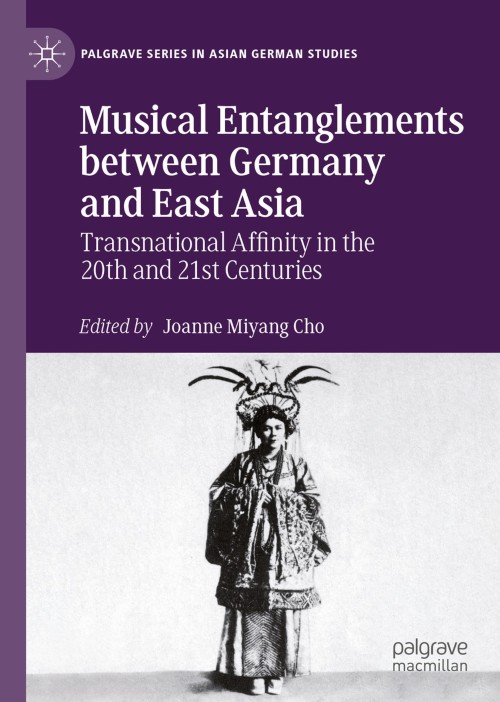
245 10|aMusical Entanglements between Germany and East Asia|h[electronic resource] :|bTransnational Affinity in the 20th and 21st Centuries /|cedited by Joanne Miyang Cho.
250 |a1st ed. 2021.
264 1|aCham :|bSpringer International Publishing :|bImprint: Palgrave Macmillan,|c2021.
300 |aXIX, 303 p. 6 illus.|bonline resource.
336 |atext|btxt|2rdacontent
337 |acomputer|bc|2rdamedia
338 |aonline resource|bcr|2rdacarrier
347 |atext file|bPDF|2rda
490 1 |aPalgrave Series in Asian German Studies,|x2731-5665
505 0 |aChapter 1: The Idea of Entanglement, Historiography, and Organization -- Part 1: German-Japanese/Korean Entanglements, 1900-1945: Wagner, Bandmasters, and Japanese Students -- Chapter 2: The Reception of Wagner in Japan at the Turn of the Twentieth Century: A Non-Musical Dimension of Cross-Border Music Transfer -- Chapter 3: Music for Modern Korea: Bandmasters Franz Eckert and Baek U-yong -- Chapter 4: Japanese Musicians in Germany and Austria, 1880-1945 -- Part 2: Sino-German Entanglements, 1900-1949: Operas, Beethoven, and Jewish Cantors -- Chapter 5: The “Oriental” Utopia: Postwar Orientalism and Ferruccio Busoni’s Opera Turandot -- Chapter 6: Reimagining China in Interwar German Opera: Eugen d’Albert’s Mister Wu and Ernst Toch’s Der Fächer -- Chapter 7: Demarcation and Cooperation: Nazi-persecuted Jewish Cantors in Shanghai Exile, 1938-1949 -- Chapter 8: What Beethoven Meant in China, 1900-1949: Music, Ideology and Power -- Part 3: German-East Asian Entanglements since 1945: Ferienkurse, Mozart, and East Asian Composers -- Chapter 9: Mozart in the Context of Globalization: The Musician as Agent of Cultural Hybridity -- Chapter 10: When “Japanese” Music Became “Modern” Music: The Internationale Ferienkurse für Neue Musik as Intercultural Agency -- Chapter 11: The Music of the Korean-German Composer Yun Isang in the Cold War Era: Interculturality and Engagement Art -- Chapter 12: Korean Contemporary Music and Germany: An Examination of Four Korean Composers.
520 |aThis edited volume explores musical encounters and entanglements between Germany and East Asian nations from 1900 to the present. In so doing, it speaks to their dynamic and multi-faceted musical relations in multiple ways. Despite East Asia and Germany being located at opposite ends of the globe, German music has found remarkably fertile soil in East Asia. East Asians have enthusiastically adopted it, while at the same time adding their own musical interpretations. These musical encounters have produced compositions that reflect this mutual influence, stimulating and enriching each other through their entanglement. After more than a century of entanglement, Germany and East Asia have become kindred musical spirits. .
650 0|aEurope, Central|xHistory.
650 0|aAsia|xHistory.
650 0|aCivilization|xHistory.
650 0|aWorld history.
650 14|aHistory of Germany and Central Europe.
650 24|aAsian History.
650 24|aCultural History.
650 24|aWorld History, Global and Transnational History.
700 1 |aCho, Joanne Miyang.|eeditor.|4edt|4http://id.loc.gov/vocabulary/relators/edt
773 0 |tSpringer Nature eBook
776 08|iPrinted edition:|z9783030782085
776 08|iPrinted edition:|z9783030782108
776 08|iPrinted edition:|z9783030782115
830 0|aPalgrave Series in Asian German Studies,|x2731-5665
856 40|uhttps://doi.org/10.1007/978-3-030-78209-2
912 |aZDB-2-HTY
912 |aZDB-2-SXH
950 |aHistory (SpringerNature-41172)
950 |aHistory (R0) (SpringerNature-43722)