LEADER 04078nam a22005295i 4500
001 609291
003 TR_AnAIT
005 20250627070425
007 cr nn 008mamaa
008 211012s2021 sz | s |||| 0|eng d
020 |a9783030828820|9978-3-030-82882-0
024 7 |a10.1007/978-3-030-82882-0|2doi
041 |aeng
049 |aTürk Tarih Kurumu Kütüphanesi
050 4|aDK1-949.5
050 4|aDJK1-77
072 7|aHBJ|2bicssc
072 7|aHIS032000|2bisacsh
072 7|aNHQ|2thema
082 04|a947|223
090 |aDK/1963
100 1 |aRimmington, Anthony.|eauthor.|4aut|4http://id.loc.gov/vocabulary/relators/aut
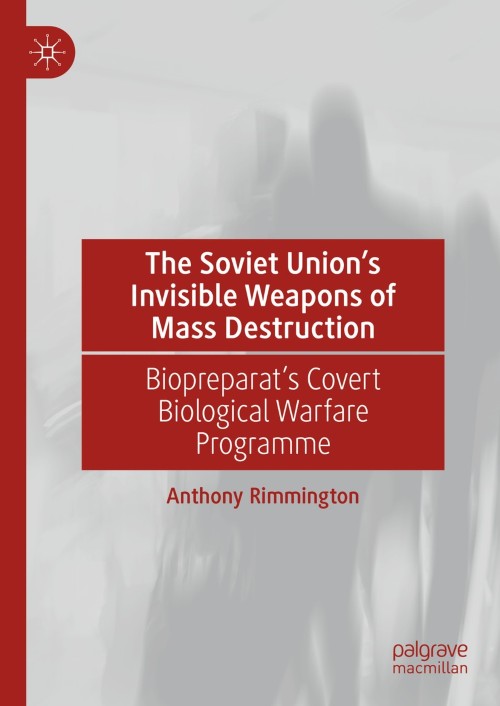
245 14|aThe Soviet Union’s Invisible Weapons of Mass Destruction|h[electronic resource] :|bBiopreparat's Covert Biological Warfare Programme /|cby Anthony Rimmington.
250 |a1st ed. 2021.
264 1|aCham :|bSpringer International Publishing :|bImprint: Palgrave Macmillan,|c2021.
300 |aXV, 269 p. 20 illus.|bonline resource.
336 |atext|btxt|2rdacontent
337 |acomputer|bc|2rdamedia
338 |aonline resource|bcr|2rdacarrier
347 |atext file|bPDF|2rda
505 0 |aChapter 1: Introduction -- Chapter 2: The Secret History: Khrushchev’s Creation of Soviet Reserve Biological Warfare Mobilization Facilities within Civil Production Plants in the 1950s and 1960s -- Chapter 3: Glavmikrobioprom and the Emergence of the Soviet Microbiological Industry -- Chapter 4: Genesis: The Creation of Biopreparat -- Chapter 5: Anthrax on the Kazakh Steppe: Biopreparat’s Network of Experimental-Industrial Bases -- Chapter 6: The Creation of Biopreparat’s Scientific Base: The R&D Complexes at Obolensk, Kol’tsovo and Leningrad -- Chapter 7: A Roadmap to the Future? The Emergence of Biopreparat as a Major Civil Biopharmaceutical Player -- Chapter 8: A Brave New World: Building Capitalism in the New Russia and the Struggle for Control of Biopreparat -- Chapter 9: Conclusion. .
520 |aThis book focuses on Biopreparat, the Soviet agency created in 1974, which spearheaded the largest and most sophisticated biological warfare programme the world has ever seen. At its height, Biopreparat employed more than 30,000 personnel and incorporated an enormous network embracing military-focused research institutes, design centres, biowarfare pilot facilities and dual-use production plants. The secret network pursued major offensive R&D programmes, which sought to use genetic engineering techniques to create microbial strains resistant to antibiotics and with wholly new and unexpected pathogenic properties. During the mid-1980s, Biopreparat increased in size and political importance and also emerged as a major civil biopharmaceutical player in the USSR. In the wake of the collapse of the Soviet Union in 1991, an acute struggle for control of Biopreparat’s most valuable assets took place and the network was eventually broken-up and control of its facilities transferred to a myriad of state agencies and private companies. Anthony Rimmington is a former Senior Research Fellow at Birmingham University’s Centre for Russian, European and Eurasian Studies, UK. He has published widely on the civil life sciences sector in the post-Soviet states and on the USSR’s offensive biological warfare programme, including The Soviet Union’s Agricultural Biowarfare Programme: Ploughshares to Swords (Palgrave, 2021).
650 0|aRussia|xHistory.
650 0|aEurope, Eastern|xHistory.
650 0|aSoviet Union|xHistory.
650 0|aMilitary history.
650 0|aHistory, Modern.
650 14|aRussian, Soviet, and East European History.
650 24|aMilitary History.
650 24|aModern History.
773 0 |tSpringer Nature eBook
776 08|iPrinted edition:|z9783030828813
776 08|iPrinted edition:|z9783030828837
776 08|iPrinted edition:|z9783030828844
856 40|uhttps://doi.org/10.1007/978-3-030-82882-0
912 |aZDB-2-HTY
912 |aZDB-2-SXH
950 |aHistory (SpringerNature-41172)
950 |aHistory (R0) (SpringerNature-43722)