LEADER 03654nam a22005295i 4500
001 609298
003 TR_AnAIT
005 20250627070409
007 cr nn 008mamaa
008 211101s2022 sz | s |||| 0|eng d
020 |a9783030787677|9978-3-030-78767-7
024 7 |a10.1007/978-3-030-78767-7|2doi
041 |aeng
049 |aTürk Tarih Kurumu Kütüphanesi
050 4|aD203.2-475
072 7|aHBL|2bicssc
072 7|aHIS037030|2bisacsh
072 7|aNH|2thema
082 04|a909.08|223
090 |aDK/1970
100 1 |aLogan, William A.T.|eauthor.|4aut|4http://id.loc.gov/vocabulary/relators/aut
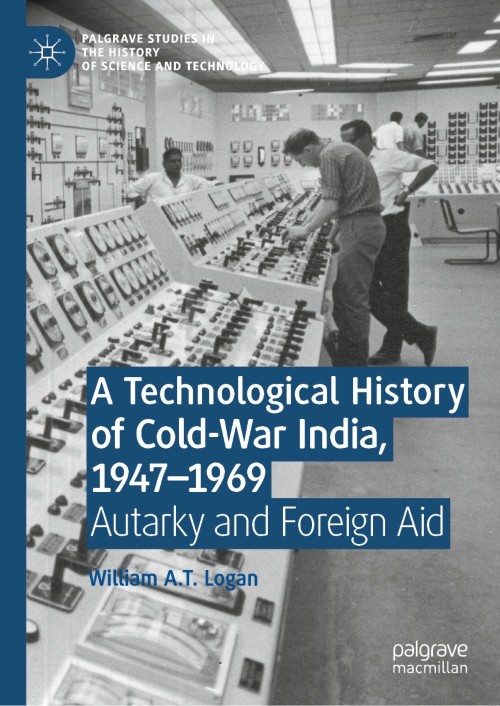
245 12|aA Technological History of Cold-War India, 1947–1969|h[electronic resource] :|bAutarky and Foreign Aid /|cby William A.T. Logan.
250 |a1st ed. 2022.
264 1|aCham :|bSpringer International Publishing :|bImprint: Palgrave Macmillan,|c2022.
300 |aXVIII, 282 p. 27 illus., 8 illus. in color.|bonline resource.
336 |atext|btxt|2rdacontent
337 |acomputer|bc|2rdamedia
338 |aonline resource|bcr|2rdacarrier
347 |atext file|bPDF|2rda
490 1 |aPalgrave Studies in the History of Science and Technology,|x2730-9738
505 0 |aCh-1. Introduction -- Ch 2: The Industrial Revolution in India -- Ch 3: India and the Cold War -- Ch 4: Modernizing the Indian Air Force -- Ch 5: India's Air Defenses and the Sino-Indian War -- Ch 6: Spanning Assam's Great River -- Ch 7: A Dam in the Khasi Hills -- Ch 8: Tarapur and the Atomic Age -- Ch 9: Constructing Tarapur, 1964-1969 -- Ch 10: Conclusion.
520 |a‘This well-written book provides an insightful and succinct “technological history” of development in early post-independence India under the challenges posed by the Cold War. This nuanced study, drawing on a wide range of materials, persuasively discusses how autarky as practiced with reference to technological indigenization conflicted with the economic and political realities of the Cold War world. Indeed, for those interested in better understanding the India of today, in particular, the changes in the Indian economy, this book provides much food for thought. An important addition to South Asian and India studies.’ --Sharma Shalendra, Lingan University This book provides a technological history of modern India, in particular the Nehruvian development in the context of the Cold War. Through a series of case studies about military modernization, transportation infrastructure, and electric power, it examines how the ideals of autarky and technological indigenization conflicted with the economic and political realities of the Cold War world. Where other studies tend to focus on the political leaders and economists who oversaw development, this book demonstrates how the perspective of the engineers, government bureaucrats, and aid workers informed and ultimately implemented development. William A.T. Logan is Assistant Professor of History at Pacific Union College, USA.
650 0|aHistory, Modern.
650 0|aAsia|xHistory.
650 0|aTechnology.
650 0|aHistory.
650 14|aModern History.
650 24|aAsian History.
650 24|aHistory of Technology.
773 0 |tSpringer Nature eBook
776 08|iPrinted edition:|z9783030787660
776 08|iPrinted edition:|z9783030787684
776 08|iPrinted edition:|z9783030787691
830 0|aPalgrave Studies in the History of Science and Technology,|x2730-9738
856 40|uhttps://doi.org/10.1007/978-3-030-78767-7
912 |aZDB-2-HTY
912 |aZDB-2-SXH
950 |aHistory (SpringerNature-41172)
950 |aHistory (R0) (SpringerNature-43722)