

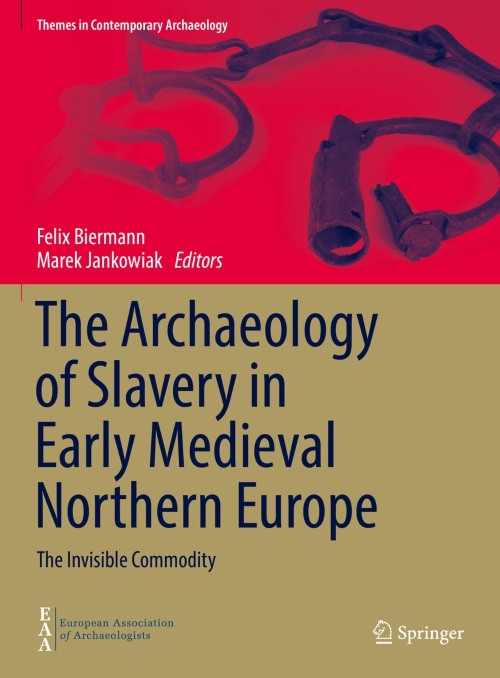
The Archaeology of Slavery in Early Medieval Northern Europe [electronic resource] : The Invisible Commodity / edited by Felix Biermann, Marek Jankowiak.
Erişim Adresi
ISBN
9783030732912
Dil Kodu
İngilizce
Yer Numarası
DK/1979
Basım Bildirimi
1st ed. 2021.
Yayın Bilgisi
Cham : Springer International Publishing : Imprint: Springer, 2021.
Fiziksel Niteleme
IX, 191 p. 69 illus., 33 illus. in color. online resource.
Dizi
Themes in Contemporary Archaeology, 2730-745X
İçindekiler Notu
Introduction: An ‘invisible commodity’?; Marek Jankowiak and Felix Biermann -- Part One: Comparative perspectives -- Chapter 1. The arrogation of slavery: Prehistory, archaeology, and pre-theoretical commitments concerning people as property; Timothy Taylor -- Chapter 2. Recent approaches to the archaeological investigation of slavery in Africa; Paul Lane -- Part Two: The British Isles -- Chapter 3. To tread the paths, and traverse the moors: Investigating slavery in early medieval western Britain; Katie Hemer -- Chapter 4. The archaeology of slave trading in Viking Age Britain and Ireland: A methodological approach; Janel Fontaine -- Part Three: Scandinavia -- Chapter 5. The norm and the subaltern. Identifying slaves in an early medieval Scandinavian society; Anna Kjellström -- Chapter 6. Legacy of the disowned. Finding ambátts in high medieval Scania and Östergötland through ceramic production; Mats Roslund -- Chapter 7. Bonded people. Making thralls visible in Viking-Age and early medieval Sweden; Torun Zachrisson -- Part Four: Central Europe -- Chapter 8. The slave trade in Great Moravia: reality or fiction?; Jiří Macháček -- Chapter 9. Slavery and slave trade in early medieval Czech duchy: Archaeology of slavery or slavery of archaeology?; Ivo Štefan -- Chapter 10. Archaeological evidence for slavery among the early medieval north-western Slavs; Felix Biermann -- Chapter 11.Tracing the Saqaliba: slave trade and the archaeology of tenth-century northern Europe; Marek Jankowiak -- Index.
Özet, vb.
This volume is the first comprehensive study of the material imprint of slavery in early medieval Europe. While written sources attest to the ubiquity of slavery and slave trade in early medieval British Isles, Scandinavia and Slavic lands, it is still difficult to find material traces of this reality, other than the hundreds of thousands of Islamic coins paid in exchange for the northern European slaves. This volume offers the first structured reflection on how to bridge this gap. It reviews the types of material evidence that can be associated with the institution of slavery and the slave trade in early medieval northern Europe, from individual objects (such as e.g. shackles) to more comprehensive landscape approaches. The book is divided into four sections. The first presents the analytical tools developed in Africa and prehistoric Europe to identify and describe social phenomena associated with slavery and the slave trade. The following three section reviewthe three main cultural zones of early medieval northern Europe: the British Isles, Scandinavia, and Slavic central Europe. The contributions offer methodological reflections on the concept of the archaeology of slavery. They emphasize that the material record, by its nature, admits multiple interpretations. More broadly, this book comes at a time when the history of slavery is being integrated into academic syllabi in most western countries. The collection of studies contributes to a more nuanced perspective on this important and controversial topic. This volume appeals to multiple audiences interested in comparative and global studies of slavery, and will constitute the point of reference for future debates.
Konu
Archaeology.
Archaeology __ Philosophy.
Archaeology.
Archaeology and Social Issues.
Archaeology __ Philosophy.
Archaeology.
Archaeology and Social Issues.
Diğer Yazarlar
Eseri Alıntıla
Referansları kullanmadan önce gözden geçirmeniz ve varsa gerekli düzeltmeleri yapmanız önerilir.
Dijital Kaynak
MARC Görünümü
LEADER 05092nam a22005055i 4500
001 609307
003 TR_AnAIT
005 20250627070350
007 cr nn 008mamaa
008 211118s2021 sz | s |||| 0|eng d
020 |a9783030732912|9978-3-030-73291-2
024 7 |a10.1007/978-3-030-73291-2|2doi
041 |aeng
049 |aTürk Tarih Kurumu Kütüphanesi
050 4|aCC1-960
072 7|aHD|2bicssc
072 7|aSOC003000|2bisacsh
072 7|aNK|2thema
082 04|a930.1|223
090 |aDK/1979
245 14|aThe Archaeology of Slavery in Early Medieval Northern Europe|h[electronic resource] :|bThe Invisible Commodity /|cedited by Felix Biermann, Marek Jankowiak.
250 |a1st ed. 2021.
264 1|aCham :|bSpringer International Publishing :|bImprint: Springer,|c2021.
300 |aIX, 191 p. 69 illus., 33 illus. in color.|bonline resource.
336 |atext|btxt|2rdacontent
337 |acomputer|bc|2rdamedia
338 |aonline resource|bcr|2rdacarrier
347 |atext file|bPDF|2rda
490 1 |aThemes in Contemporary Archaeology,|x2730-745X
505 0 |aIntroduction: An ‘invisible commodity’?; Marek Jankowiak and Felix Biermann -- Part One: Comparative perspectives -- Chapter 1. The arrogation of slavery: Prehistory, archaeology, and pre-theoretical commitments concerning people as property; Timothy Taylor -- Chapter 2. Recent approaches to the archaeological investigation of slavery in Africa; Paul Lane -- Part Two: The British Isles -- Chapter 3. To tread the paths, and traverse the moors: Investigating slavery in early medieval western Britain; Katie Hemer -- Chapter 4. The archaeology of slave trading in Viking Age Britain and Ireland: A methodological approach; Janel Fontaine -- Part Three: Scandinavia -- Chapter 5. The norm and the subaltern. Identifying slaves in an early medieval Scandinavian society; Anna Kjellström -- Chapter 6. Legacy of the disowned. Finding ambátts in high medieval Scania and Östergötland through ceramic production; Mats Roslund -- Chapter 7. Bonded people. Making thralls visible in Viking-Age and early medieval Sweden; Torun Zachrisson -- Part Four: Central Europe -- Chapter 8. The slave trade in Great Moravia: reality or fiction?; Jiří Macháček -- Chapter 9. Slavery and slave trade in early medieval Czech duchy: Archaeology of slavery or slavery of archaeology?; Ivo Štefan -- Chapter 10. Archaeological evidence for slavery among the early medieval north-western Slavs; Felix Biermann -- Chapter 11.Tracing the Saqaliba: slave trade and the archaeology of tenth-century northern Europe; Marek Jankowiak -- Index.
520 |aThis volume is the first comprehensive study of the material imprint of slavery in early medieval Europe. While written sources attest to the ubiquity of slavery and slave trade in early medieval British Isles, Scandinavia and Slavic lands, it is still difficult to find material traces of this reality, other than the hundreds of thousands of Islamic coins paid in exchange for the northern European slaves. This volume offers the first structured reflection on how to bridge this gap. It reviews the types of material evidence that can be associated with the institution of slavery and the slave trade in early medieval northern Europe, from individual objects (such as e.g. shackles) to more comprehensive landscape approaches. The book is divided into four sections. The first presents the analytical tools developed in Africa and prehistoric Europe to identify and describe social phenomena associated with slavery and the slave trade. The following three section reviewthe three main cultural zones of early medieval northern Europe: the British Isles, Scandinavia, and Slavic central Europe. The contributions offer methodological reflections on the concept of the archaeology of slavery. They emphasize that the material record, by its nature, admits multiple interpretations. More broadly, this book comes at a time when the history of slavery is being integrated into academic syllabi in most western countries. The collection of studies contributes to a more nuanced perspective on this important and controversial topic. This volume appeals to multiple audiences interested in comparative and global studies of slavery, and will constitute the point of reference for future debates.
650 0|aArchaeology.
650 0|aArchaeology|xPhilosophy.
650 14|aArchaeology.
650 24|aArchaeology and Social Issues.
700 1 |aBiermann, Felix.|eeditor.|4edt|4http://id.loc.gov/vocabulary/relators/edt
700 1 |aJankowiak, Marek.|eeditor.|4edt|4http://id.loc.gov/vocabulary/relators/edt
773 0 |tSpringer Nature eBook
776 08|iPrinted edition:|z9783030732905
776 08|iPrinted edition:|z9783030732929
776 08|iPrinted edition:|z9783030732936
830 0|aThemes in Contemporary Archaeology,|x2730-745X
856 40|uhttps://doi.org/10.1007/978-3-030-73291-2
912 |aZDB-2-HTY
912 |aZDB-2-SXH
950 |aHistory (SpringerNature-41172)
950 |aHistory (R0) (SpringerNature-43722)
001 609307
003 TR_AnAIT
005 20250627070350
007 cr nn 008mamaa
008 211118s2021 sz | s |||| 0|eng d
020 |a9783030732912|9978-3-030-73291-2
024 7 |a10.1007/978-3-030-73291-2|2doi
041 |aeng
049 |aTürk Tarih Kurumu Kütüphanesi
050 4|aCC1-960
072 7|aHD|2bicssc
072 7|aSOC003000|2bisacsh
072 7|aNK|2thema
082 04|a930.1|223
090 |aDK/1979
245 14|aThe Archaeology of Slavery in Early Medieval Northern Europe|h[electronic resource] :|bThe Invisible Commodity /|cedited by Felix Biermann, Marek Jankowiak.
250 |a1st ed. 2021.
264 1|aCham :|bSpringer International Publishing :|bImprint: Springer,|c2021.
300 |aIX, 191 p. 69 illus., 33 illus. in color.|bonline resource.
336 |atext|btxt|2rdacontent
337 |acomputer|bc|2rdamedia
338 |aonline resource|bcr|2rdacarrier
347 |atext file|bPDF|2rda
490 1 |aThemes in Contemporary Archaeology,|x2730-745X
505 0 |aIntroduction: An ‘invisible commodity’?; Marek Jankowiak and Felix Biermann -- Part One: Comparative perspectives -- Chapter 1. The arrogation of slavery: Prehistory, archaeology, and pre-theoretical commitments concerning people as property; Timothy Taylor -- Chapter 2. Recent approaches to the archaeological investigation of slavery in Africa; Paul Lane -- Part Two: The British Isles -- Chapter 3. To tread the paths, and traverse the moors: Investigating slavery in early medieval western Britain; Katie Hemer -- Chapter 4. The archaeology of slave trading in Viking Age Britain and Ireland: A methodological approach; Janel Fontaine -- Part Three: Scandinavia -- Chapter 5. The norm and the subaltern. Identifying slaves in an early medieval Scandinavian society; Anna Kjellström -- Chapter 6. Legacy of the disowned. Finding ambátts in high medieval Scania and Östergötland through ceramic production; Mats Roslund -- Chapter 7. Bonded people. Making thralls visible in Viking-Age and early medieval Sweden; Torun Zachrisson -- Part Four: Central Europe -- Chapter 8. The slave trade in Great Moravia: reality or fiction?; Jiří Macháček -- Chapter 9. Slavery and slave trade in early medieval Czech duchy: Archaeology of slavery or slavery of archaeology?; Ivo Štefan -- Chapter 10. Archaeological evidence for slavery among the early medieval north-western Slavs; Felix Biermann -- Chapter 11.Tracing the Saqaliba: slave trade and the archaeology of tenth-century northern Europe; Marek Jankowiak -- Index.
520 |aThis volume is the first comprehensive study of the material imprint of slavery in early medieval Europe. While written sources attest to the ubiquity of slavery and slave trade in early medieval British Isles, Scandinavia and Slavic lands, it is still difficult to find material traces of this reality, other than the hundreds of thousands of Islamic coins paid in exchange for the northern European slaves. This volume offers the first structured reflection on how to bridge this gap. It reviews the types of material evidence that can be associated with the institution of slavery and the slave trade in early medieval northern Europe, from individual objects (such as e.g. shackles) to more comprehensive landscape approaches. The book is divided into four sections. The first presents the analytical tools developed in Africa and prehistoric Europe to identify and describe social phenomena associated with slavery and the slave trade. The following three section reviewthe three main cultural zones of early medieval northern Europe: the British Isles, Scandinavia, and Slavic central Europe. The contributions offer methodological reflections on the concept of the archaeology of slavery. They emphasize that the material record, by its nature, admits multiple interpretations. More broadly, this book comes at a time when the history of slavery is being integrated into academic syllabi in most western countries. The collection of studies contributes to a more nuanced perspective on this important and controversial topic. This volume appeals to multiple audiences interested in comparative and global studies of slavery, and will constitute the point of reference for future debates.
650 0|aArchaeology.
650 0|aArchaeology|xPhilosophy.
650 14|aArchaeology.
650 24|aArchaeology and Social Issues.
700 1 |aBiermann, Felix.|eeditor.|4edt|4http://id.loc.gov/vocabulary/relators/edt
700 1 |aJankowiak, Marek.|eeditor.|4edt|4http://id.loc.gov/vocabulary/relators/edt
773 0 |tSpringer Nature eBook
776 08|iPrinted edition:|z9783030732905
776 08|iPrinted edition:|z9783030732929
776 08|iPrinted edition:|z9783030732936
830 0|aThemes in Contemporary Archaeology,|x2730-745X
856 40|uhttps://doi.org/10.1007/978-3-030-73291-2
912 |aZDB-2-HTY
912 |aZDB-2-SXH
950 |aHistory (SpringerNature-41172)
950 |aHistory (R0) (SpringerNature-43722)
Materyaller
Depodan talep edilen materyal sadece kütüphane içerisinde kullanılmaktadır.
Materyal dışarıya ödünç verilmemektedir.
Materyal dışarıya ödünç verilmemektedir.
