Interdisciplinary Insights from the Plague of Cyprian [electronic resource] : Pathology, Epidemiology, Ecology and History / by Mark Orsag, Amanda E. McKinney, DeeAnn M. Reeder.
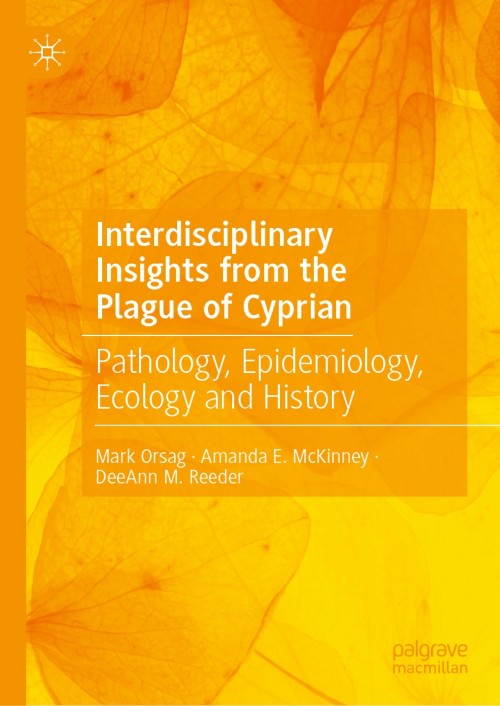
Erişim Adresi
ISBN
9783031260940
Dil Kodu
İngilizce
Yer Numarası
DK/2006
Yazar
Basım Bildirimi
1st ed. 2023.
Yayın Bilgisi
Cham : Springer International Publishing : Imprint: Palgrave Macmillan, 2023.
Fiziksel Niteleme
XXI, 311 p. 20 illus., 18 illus. in color. online resource.
İçindekiler Notu
Part I-“The Theory”: The Rediscovery and Reinterpretation of an Ancient Pandemic -- Chapter 1– The Ancient Evidentiary Foundations -- Chapter 2 – A Most Difficult Source and the Relevance of Climatic Circumstances -- Part II-- “The What and the How”: Underlying Differential Virology, Molecular Phylogenetics, Host Species Ecology and Biogeographical Presence -- Chapter 3– Retrospective and Differential Pathogen Diagnosis -- Chapter 4– Of Bats and Empires: The Egyptian Rousette Bat and the Kingdom of Aksum -- Chapter 5–Modeling an Ancient Zoonotic Outbreak -- Part III--“The Why”: Projected MARV Lineage Epidemiology and Pathology in the Third century Roman Empire -- Chapter 6– Guardrail Modeling: Geographical Dissemination Pathways and the Urban Epidemiological Setting -- Chapter 7– Exploration of Modeled Urban Epidemiology Concluded and Analysis of the Contrasting Epidemiological Situation in the Imperial Countryside -- Chapter 8– The Plague of Cyprian: Timelines, Outlines and Parameters -- Part IV: “Conclusion--Final Thoughts on the Plague of Cyprian”: Methodological Defense and Brief Overview of Our “Solution”, Histoiographical Context and Current Relevance -- Chapter 9– Situating the Plague of Cyprian within the Broader Outlines of Roman History -- Chapter 10- Modern Relevance of the Plague of Cyprian.
Özet, vb.
This book tackles the difficult challenge of uncovering the pathogenic cause, epidemiological mechanics and broader historical impacts of an extremely deadly third-century ancient Roman pandemic. The core of this research is embodied in a novel systems synthesis methodology that allows for ground-breaking historical-scientific problem-solving. Through precise historical and scientific problem-solving, analysis and modelling, the authors piece together a holistic puzzle portrait of an ancient plague that is fully consistent, in turn, with both the surviving ancient evidence and the latest in cutting edge twenty-first-century modern medical and molecular phylogenetic science. Demonstrating the broader relevance of the crisis-beset world of the third-century Roman Empire in providing guiding and cautionary historical lessons for the present, this innovative book provides fascinating insights for students and scholars across a range of disciplines. Mark Orsag is Professor of European and Interdisciplinary History and Chair of the History Department at Doane University in the USA. Prior to this, he studied at Carnegie-Mellon University, Pennsylvania State University, and Michigan State University. Mark’s research is centered at the nexus of history and the natural sciences. Dr. Amanda McKinney is the founder/executive director of the Institute for Human and Planetary Health in the USA. She is a triple board-certified physician with a medical degree from the University of Nebraska and residency/fellowship training at the University of California-Irvine. She is a Collaborator in the Planetary Limits Academic Network, which “aims to raise awareness about critical systemic challenges facing the human endeavor.” Her ongoing research encompasses both plant medicine and how planetary limits will impact US healthcare. DeeAnn M. Reeder is Professor of Biology at Bucknell University in the USA. She is a wildlife biologist whostudies disease ecology, behavior, physiology, and conservation. Having previously studied at UC Berkeley, UC Davis and Boston University, DeeAnn’s current research explores the relationships between bat health, ecosystem health and human disease risk. She holds a research position at the National Museum of Natural History, Smithsonian Institution, Washington DC.
Konu
Europe __ History __ To 476.
Medicine __ History.
Science __ History.
Historiography.
History __ Methodology.
Pathology.
Epidemiology.
History of Ancient Europe.
History of Medicine.
History of Science.
Historiography and Method.
Pathology.
Epidemiology.
Medicine __ History.
Science __ History.
Historiography.
History __ Methodology.
Pathology.
Epidemiology.
History of Ancient Europe.
History of Medicine.
History of Science.
Historiography and Method.
Pathology.
Epidemiology.
Diğer Yazarlar

Eseri Alıntıla
Referansları kullanmadan önce gözden geçirmeniz ve varsa gerekli düzeltmeleri yapmanız önerilir.
Dijital Kaynak
MARC Görünümü
LEADER 05910nam a22006255i 4500
001 609334
003 TR_AnAIT
005 20250627070250
007 cr nn 008mamaa
008 230330s2023 sz | s |||| 0|eng d
020 |a9783031260940|9978-3-031-26094-0
024 7 |a10.1007/978-3-031-26094-0|2doi
041 |aeng
049 |aTürk Tarih Kurumu Kütüphanesi
050 4|aD51-95
072 7|aHBJD|2bicssc
072 7|aHBLA|2bicssc
072 7|aHIS010000|2bisacsh
072 7|aNHD|2thema
072 7|aNHC|2thema
082 04|a936|223
090 |aDK/2006
100 1 |aOrsag, Mark.|eauthor.|4aut|4http://id.loc.gov/vocabulary/relators/aut
245 10|aInterdisciplinary Insights from the Plague of Cyprian|h[electronic resource] :|bPathology, Epidemiology, Ecology and History /|cby Mark Orsag, Amanda E. McKinney, DeeAnn M. Reeder.
250 |a1st ed. 2023.
264 1|aCham :|bSpringer International Publishing :|bImprint: Palgrave Macmillan,|c2023.
300 |aXXI, 311 p. 20 illus., 18 illus. in color.|bonline resource.
336 |atext|btxt|2rdacontent
337 |acomputer|bc|2rdamedia
338 |aonline resource|bcr|2rdacarrier
347 |atext file|bPDF|2rda
505 0 |aPart I-“The Theory”: The Rediscovery and Reinterpretation of an Ancient Pandemic -- Chapter 1– The Ancient Evidentiary Foundations -- Chapter 2 – A Most Difficult Source and the Relevance of Climatic Circumstances -- Part II-- “The What and the How”: Underlying Differential Virology, Molecular Phylogenetics, Host Species Ecology and Biogeographical Presence -- Chapter 3– Retrospective and Differential Pathogen Diagnosis -- Chapter 4– Of Bats and Empires: The Egyptian Rousette Bat and the Kingdom of Aksum -- Chapter 5–Modeling an Ancient Zoonotic Outbreak -- Part III--“The Why”: Projected MARV Lineage Epidemiology and Pathology in the Third century Roman Empire -- Chapter 6– Guardrail Modeling: Geographical Dissemination Pathways and the Urban Epidemiological Setting -- Chapter 7– Exploration of Modeled Urban Epidemiology Concluded and Analysis of the Contrasting Epidemiological Situation in the Imperial Countryside -- Chapter 8– The Plague of Cyprian: Timelines, Outlines and Parameters -- Part IV: “Conclusion--Final Thoughts on the Plague of Cyprian”: Methodological Defense and Brief Overview of Our “Solution”, Histoiographical Context and Current Relevance -- Chapter 9– Situating the Plague of Cyprian within the Broader Outlines of Roman History -- Chapter 10- Modern Relevance of the Plague of Cyprian.
520 |aThis book tackles the difficult challenge of uncovering the pathogenic cause, epidemiological mechanics and broader historical impacts of an extremely deadly third-century ancient Roman pandemic. The core of this research is embodied in a novel systems synthesis methodology that allows for ground-breaking historical-scientific problem-solving. Through precise historical and scientific problem-solving, analysis and modelling, the authors piece together a holistic puzzle portrait of an ancient plague that is fully consistent, in turn, with both the surviving ancient evidence and the latest in cutting edge twenty-first-century modern medical and molecular phylogenetic science. Demonstrating the broader relevance of the crisis-beset world of the third-century Roman Empire in providing guiding and cautionary historical lessons for the present, this innovative book provides fascinating insights for students and scholars across a range of disciplines. Mark Orsag is Professor of European and Interdisciplinary History and Chair of the History Department at Doane University in the USA. Prior to this, he studied at Carnegie-Mellon University, Pennsylvania State University, and Michigan State University. Mark’s research is centered at the nexus of history and the natural sciences. Dr. Amanda McKinney is the founder/executive director of the Institute for Human and Planetary Health in the USA. She is a triple board-certified physician with a medical degree from the University of Nebraska and residency/fellowship training at the University of California-Irvine. She is a Collaborator in the Planetary Limits Academic Network, which “aims to raise awareness about critical systemic challenges facing the human endeavor.” Her ongoing research encompasses both plant medicine and how planetary limits will impact US healthcare. DeeAnn M. Reeder is Professor of Biology at Bucknell University in the USA. She is a wildlife biologist whostudies disease ecology, behavior, physiology, and conservation. Having previously studied at UC Berkeley, UC Davis and Boston University, DeeAnn’s current research explores the relationships between bat health, ecosystem health and human disease risk. She holds a research position at the National Museum of Natural History, Smithsonian Institution, Washington DC.
650 0|aEurope|xHistory|xTo 476.
650 0|aMedicine|xHistory.
650 0|aScience|xHistory.
650 0|aHistoriography.
650 0|aHistory|xMethodology.
650 0|aPathology.
650 0|aEpidemiology.
650 14|aHistory of Ancient Europe.
650 24|aHistory of Medicine.
650 24|aHistory of Science.
650 24|aHistoriography and Method.
650 24|aPathology.
650 24|aEpidemiology.
700 1 |aMcKinney, Amanda E.|eauthor.|4aut|4http://id.loc.gov/vocabulary/relators/aut
700 1 |aReeder, DeeAnn M.|eauthor.|4aut|4http://id.loc.gov/vocabulary/relators/aut
773 0 |tSpringer Nature eBook
776 08|iPrinted edition:|z9783031260933
776 08|iPrinted edition:|z9783031260957
776 08|iPrinted edition:|z9783031260964
856 40|uhttps://doi.org/10.1007/978-3-031-26094-0
912 |aZDB-2-HTY
912 |aZDB-2-SXH
950 |aHistory (SpringerNature-41172)
950 |aHistory (R0) (SpringerNature-43722)
001 609334
003 TR_AnAIT
005 20250627070250
007 cr nn 008mamaa
008 230330s2023 sz | s |||| 0|eng d
020 |a9783031260940|9978-3-031-26094-0
024 7 |a10.1007/978-3-031-26094-0|2doi
041 |aeng
049 |aTürk Tarih Kurumu Kütüphanesi
050 4|aD51-95
072 7|aHBJD|2bicssc
072 7|aHBLA|2bicssc
072 7|aHIS010000|2bisacsh
072 7|aNHD|2thema
072 7|aNHC|2thema
082 04|a936|223
090 |aDK/2006
100 1 |aOrsag, Mark.|eauthor.|4aut|4http://id.loc.gov/vocabulary/relators/aut
245 10|aInterdisciplinary Insights from the Plague of Cyprian|h[electronic resource] :|bPathology, Epidemiology, Ecology and History /|cby Mark Orsag, Amanda E. McKinney, DeeAnn M. Reeder.
250 |a1st ed. 2023.
264 1|aCham :|bSpringer International Publishing :|bImprint: Palgrave Macmillan,|c2023.
300 |aXXI, 311 p. 20 illus., 18 illus. in color.|bonline resource.
336 |atext|btxt|2rdacontent
337 |acomputer|bc|2rdamedia
338 |aonline resource|bcr|2rdacarrier
347 |atext file|bPDF|2rda
505 0 |aPart I-“The Theory”: The Rediscovery and Reinterpretation of an Ancient Pandemic -- Chapter 1– The Ancient Evidentiary Foundations -- Chapter 2 – A Most Difficult Source and the Relevance of Climatic Circumstances -- Part II-- “The What and the How”: Underlying Differential Virology, Molecular Phylogenetics, Host Species Ecology and Biogeographical Presence -- Chapter 3– Retrospective and Differential Pathogen Diagnosis -- Chapter 4– Of Bats and Empires: The Egyptian Rousette Bat and the Kingdom of Aksum -- Chapter 5–Modeling an Ancient Zoonotic Outbreak -- Part III--“The Why”: Projected MARV Lineage Epidemiology and Pathology in the Third century Roman Empire -- Chapter 6– Guardrail Modeling: Geographical Dissemination Pathways and the Urban Epidemiological Setting -- Chapter 7– Exploration of Modeled Urban Epidemiology Concluded and Analysis of the Contrasting Epidemiological Situation in the Imperial Countryside -- Chapter 8– The Plague of Cyprian: Timelines, Outlines and Parameters -- Part IV: “Conclusion--Final Thoughts on the Plague of Cyprian”: Methodological Defense and Brief Overview of Our “Solution”, Histoiographical Context and Current Relevance -- Chapter 9– Situating the Plague of Cyprian within the Broader Outlines of Roman History -- Chapter 10- Modern Relevance of the Plague of Cyprian.
520 |aThis book tackles the difficult challenge of uncovering the pathogenic cause, epidemiological mechanics and broader historical impacts of an extremely deadly third-century ancient Roman pandemic. The core of this research is embodied in a novel systems synthesis methodology that allows for ground-breaking historical-scientific problem-solving. Through precise historical and scientific problem-solving, analysis and modelling, the authors piece together a holistic puzzle portrait of an ancient plague that is fully consistent, in turn, with both the surviving ancient evidence and the latest in cutting edge twenty-first-century modern medical and molecular phylogenetic science. Demonstrating the broader relevance of the crisis-beset world of the third-century Roman Empire in providing guiding and cautionary historical lessons for the present, this innovative book provides fascinating insights for students and scholars across a range of disciplines. Mark Orsag is Professor of European and Interdisciplinary History and Chair of the History Department at Doane University in the USA. Prior to this, he studied at Carnegie-Mellon University, Pennsylvania State University, and Michigan State University. Mark’s research is centered at the nexus of history and the natural sciences. Dr. Amanda McKinney is the founder/executive director of the Institute for Human and Planetary Health in the USA. She is a triple board-certified physician with a medical degree from the University of Nebraska and residency/fellowship training at the University of California-Irvine. She is a Collaborator in the Planetary Limits Academic Network, which “aims to raise awareness about critical systemic challenges facing the human endeavor.” Her ongoing research encompasses both plant medicine and how planetary limits will impact US healthcare. DeeAnn M. Reeder is Professor of Biology at Bucknell University in the USA. She is a wildlife biologist whostudies disease ecology, behavior, physiology, and conservation. Having previously studied at UC Berkeley, UC Davis and Boston University, DeeAnn’s current research explores the relationships between bat health, ecosystem health and human disease risk. She holds a research position at the National Museum of Natural History, Smithsonian Institution, Washington DC.
650 0|aEurope|xHistory|xTo 476.
650 0|aMedicine|xHistory.
650 0|aScience|xHistory.
650 0|aHistoriography.
650 0|aHistory|xMethodology.
650 0|aPathology.
650 0|aEpidemiology.
650 14|aHistory of Ancient Europe.
650 24|aHistory of Medicine.
650 24|aHistory of Science.
650 24|aHistoriography and Method.
650 24|aPathology.
650 24|aEpidemiology.
700 1 |aMcKinney, Amanda E.|eauthor.|4aut|4http://id.loc.gov/vocabulary/relators/aut
700 1 |aReeder, DeeAnn M.|eauthor.|4aut|4http://id.loc.gov/vocabulary/relators/aut
773 0 |tSpringer Nature eBook
776 08|iPrinted edition:|z9783031260933
776 08|iPrinted edition:|z9783031260957
776 08|iPrinted edition:|z9783031260964
856 40|uhttps://doi.org/10.1007/978-3-031-26094-0
912 |aZDB-2-HTY
912 |aZDB-2-SXH
950 |aHistory (SpringerNature-41172)
950 |aHistory (R0) (SpringerNature-43722)
Materyaller
Depodan talep edilen materyal sadece kütüphane içerisinde kullanılmaktadır.
Materyal dışarıya ödünç verilmemektedir.
