LEADER 04206nam a22005775i 4500
001 609348
003 TR_AnAIT
005 20250627070218
007 cr nn 008mamaa
008 180507s2018 sz | s |||| 0|eng d
020 |a9783319728650|9978-3-319-72865-0
024 7 |a10.1007/978-3-319-72865-0|2doi
041 |aeng
049 |aTürk Tarih Kurumu Kütüphanesi
050 4|aD17-24.5
072 7|aHBG|2bicssc
072 7|aHIS037000|2bisacsh
072 7|aNHB|2thema
082 04|a909|223
090 |aDK/2020
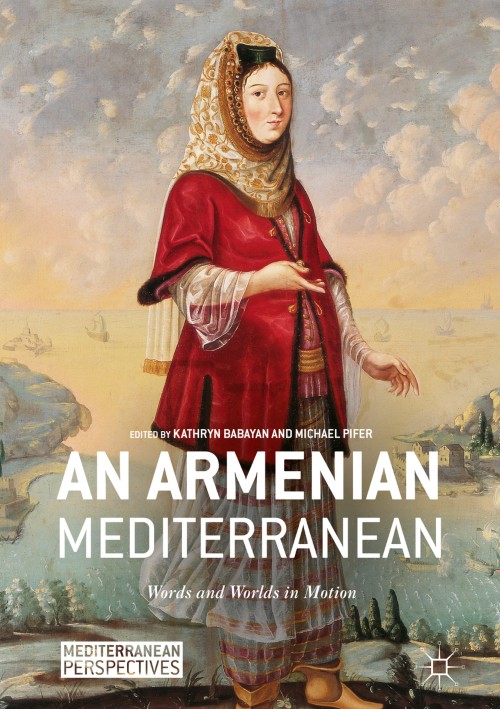
245 13|aAn Armenian Mediterranean|h[electronic resource] :|bWords and Worlds in Motion /|cedited by Kathryn Babayan, Michael Pifer.
250 |a1st ed. 2018.
264 1|aCham :|bSpringer International Publishing :|bImprint: Palgrave Macmillan,|c2018.
300 |aXXI, 337 p. 19 illus., 10 illus. in color.|bonline resource.
336 |atext|btxt|2rdacontent
337 |acomputer|bc|2rdamedia
338 |aonline resource|bcr|2rdacarrier
347 |atext file|bPDF|2rda
490 1 |aMediterranean Perspectives,|x2731-5606
505 0 |a1. Introduction: A Moveable Armenia -- I. Rethinking Boundaries -- 2. The Age of the Gharīb: Strangers in the Medieval Mediterranean -- 3. Past the Mediterranean and Iran: A Comparative Study of Armenia as an Islamic Frontier, 1st/7th–5th/11th Centuries -- 4. A Fish out of Water? Medieval Armenia(ns) and the Mediterranean -- II. Connecting Histories -- 5. From "Autonomous" to "Interactive" Histories: World History's Challenge to Armenian Studies -- 6. Mapping Jerusalem: Re-Reading the City in the Context of the Medieval Mediterranean -- III. Breaking National and Imperial Paradigms -- 7. Between Anatolia and the Balkans: Tracing Armenians in the Post-Ottoman Order -- 8. Armeno-Turkish Writing and the Question of Hybridity -- 9. Wandering Minstrels, Moving Novels: The Case of Khach'atur Abovyan's Wounds of Armenia -- IV. Texturizing Diaspora -- 10. Weaving Images: Textile, Displacement, and Reframing the Borders of Visual Culture -- 11. Diasporic Flânerie: From Armenian Ruinenlust to Armenia's Walkscapes -- 12. Spaces of Difference, Spaces of Belonging: Negotiating Armenianness in Lebanon and France -- V. Placing Statehood -- 13. Contemporary Armenian Drama and World Literature -- 14. How to Write the History of the Third Republic (or How Not to Write It) -- VI. Epilogue -- 15. The Mediterranean is Armenian.
520 |aThis book rethinks the Armenian people as significant actors in the context of Mediterranean and global history. Spanning a millennium of cross-cultural interaction and exchange across the Mediterranean world, essays move between connected histories, frontier studies, comparative literature, and discussions of trauma, memory, diaspora, and visual culture. Contributors dismantle narrow, national ways of understanding Armenian literature; propose new frameworks for mapping the post-Ottoman Mediterranean world; and navigate the challenges of writing national history in a globalized age. A century after the Armenian genocide, this book reimagines the borders of the “Armenian,” pointing to a fresh vision for the field of Armenian studies that is omnivorously comparative, deeply interconnected, and rich with possibility.
650 0|aWorld history.
650 0|aSocial history.
650 0|aAfrica|xHistory.
650 0|aAsia|xHistory.
650 0|aEurope|xHistory.
650 14|aWorld History, Global and Transnational History.
650 24|aSocial History.
650 24|aAfrican History.
650 24|aAsian History.
650 24|aEuropean History.
700 1 |aBabayan, Kathryn.|eeditor.|4edt|4http://id.loc.gov/vocabulary/relators/edt
700 1 |aPifer, Michael.|eeditor.|4edt|4http://id.loc.gov/vocabulary/relators/edt
773 0 |tSpringer Nature eBook
776 08|iPrinted edition:|z9783319728643
776 08|iPrinted edition:|z9783319728667
776 08|iPrinted edition:|z9783030102807
830 0|aMediterranean Perspectives,|x2731-5606
856 40|uhttps://doi.org/10.1007/978-3-319-72865-0
912 |aZDB-2-HTY
912 |aZDB-2-SXH
950 |aHistory (SpringerNature-41172)
950 |aHistory (R0) (SpringerNature-43722)