LEADER 04107nam a22006015i 4500
001 609365
003 TR_AnAIT
005 20250627070138
007 cr nn 008mamaa
008 211127s2021 sz | s |||| 0|eng d
020 |a9783030875206|9978-3-030-87520-6
024 7 |a10.1007/978-3-030-87520-6|2doi
041 |aeng
049 |aTürk Tarih Kurumu Kütüphanesi
050 4|aHQ1121-1154
072 7|aHBTB|2bicssc
072 7|aJFSJ|2bicssc
072 7|aHIS058000|2bisacsh
072 7|aNHTB|2thema
072 7|aJBSF|2thema
082 04|a305.309|223
090 |aDK/2037
100 1 |aCurta, Florin.|eauthor.|4aut|4http://id.loc.gov/vocabulary/relators/aut
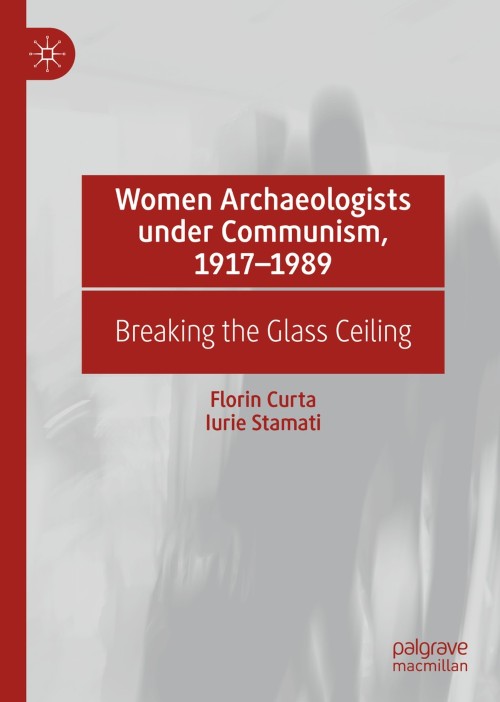
245 10|aWomen Archaeologists under Communism, 1917-1989|h[electronic resource] :|bBreaking the Glass Ceiling /|cby Florin Curta, Iurie Stamati.
250 |a1st ed. 2021.
264 1|aCham :|bSpringer International Publishing :|bImprint: Palgrave Macmillan,|c2021.
300 |aXII, 227 p.|bonline resource.
336 |atext|btxt|2rdacontent
337 |acomputer|bc|2rdamedia
338 |aonline resource|bcr|2rdacarrier
347 |atext file|bPDF|2rda
505 0 |aIntroduction -- 1. Women in Eastern Europe, 1917-1989 -- 2. Medieval Archaeology and Marxism in Eastern Europe -- 3. A Woman’s Place is in Slavic Archaeology: Irina Rusanova -- 4. Under the Glass Ceiling: Zhivka Văzharova and Maria Comşa -- 5. Reaching Through the Glass Ceiling: Ágnes Cs. Sós and Helena Zoll-Adamikowa -- 6. Research Topics, Gender and Marxism -- Conclusion.
520 |aThis book explores the uncharted territory of the history of archaeology under Communism through the biographies of five women archaeologists from the Soviet Union, Bulgaria, Romania, Hungary, and Poland. They were working in medieval archaeology, with a specific focus on the (early) Slavs. The choice of specialists in medieval archaeology has much to do with the fact that in the five East European countries considered in this book, medieval archaeology began to develop into a serious discipline less than a century ago. The main catalyst for the sudden rise of medieval archaeology was a dramatic shift in emphasis from traditional political and constitutional to social and economic history. In five countries, the rise of medieval archaeology thus coincides in time, and was ultimately caused by the imposition of Communist regimes. The five women were therefore true pioneers in their field, and respective countries. Florin Curta is Professor of Medieval History and Archaeology at the University of Florida, USA. His books include The Making of the Slavs (2001) and Slavs in the Making (2021). He is also the editor of several collections of studies. His most recent book is The Long Sixth Century in Eastern Europe (2021). Iurie Stamati teaches Historiography at the University of Quebec at Rimouski (Université du Québec à Rimouski), Canada. His research focuses on the political instrumentalization of history and archaeology in Eastern Europe. He is the author of several articles and of The Slavic Dossier: Medieval Archaeology in the Soviet Republic of Moldova Between State Propaganda and Scholarly Endeavor (2019).
650 0|aWomen|xHistory.
650 0|aRussia|xHistory.
650 0|aEurope, Eastern|xHistory.
650 0|aSoviet Union|xHistory.
650 0|aEurope|xHistory|x476-1492.
650 0|aHistory, Modern.
650 0|aArchaeology.
650 14|aWomen's History / History of Gender.
650 24|aRussian, Soviet, and East European History.
650 24|aHistory of Medieval Europe.
650 24|aModern History.
650 24|aArchaeology.
700 1 |aStamati, Iurie.|eauthor.|4aut|4http://id.loc.gov/vocabulary/relators/aut
773 0 |tSpringer Nature eBook
776 08|iPrinted edition:|z9783030875190
776 08|iPrinted edition:|z9783030875213
776 08|iPrinted edition:|z9783030875220
856 40|uhttps://doi.org/10.1007/978-3-030-87520-6
912 |aZDB-2-HTY
912 |aZDB-2-SXH
950 |aHistory (SpringerNature-41172)
950 |aHistory (R0) (SpringerNature-43722)