

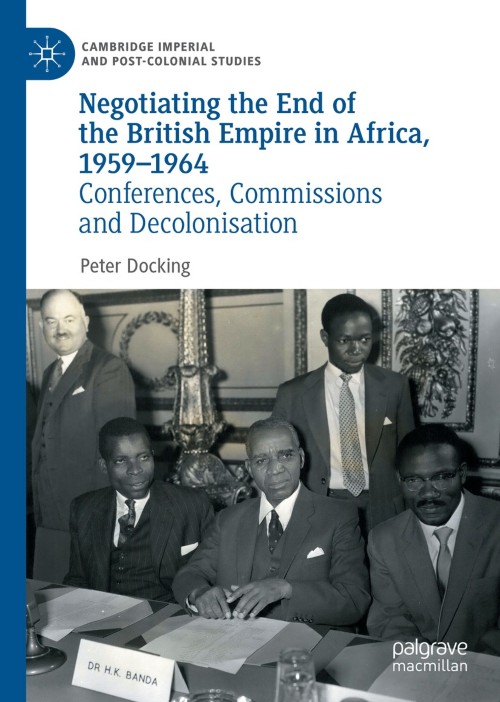
Negotiating the End of the British Empire in Africa, 1959-1964 [electronic resource] : Conferences, Commissions and Decolonisation / by Peter Docking.
Erişim Adresi
ISBN
9783030880910
Dil Kodu
İngilizce
Yer Numarası
DK/2042
Yazar
Basım Bildirimi
1st ed. 2021.
Yayın Bilgisi
Cham : Springer International Publishing : Imprint: Palgrave Macmillan, 2021.
Fiziksel Niteleme
XI, 313 p. 3 illus. in color. online resource.
Dizi
Cambridge Imperial and Post-Colonial Studies, 2635-1641
İçindekiler Notu
Chapter 1. Introduction -- Chapter 2. Breathing Spaces and Leverage: Reasons Behind the African Conferences and Commissions -- Chapter 3. Commissions and British Governmental Control -- Chapter 4. Conferences and British Governmental Control -- Chapter 5. Strengthening Voices: Constitutional Commissions and Popular Opinion and Politics in Africa -- Chapter 6. Conferences and Popular Opinion and Politics in Africa in the Wind of Change Era -- Chapter 7. Successes, Failures, and Consequences of the Commissions and Conferences -- Chapter 8. Conclusion.
Özet, vb.
“Peter Docking’s book successfully presents a crucial stage in the decolonisation of Africa by covering the vital conference and commission factor. These are often mentioned, but seldom investigated in depth in the existing literature, despite their significance. This invaluable book provides this missing analysis and much more.” —H. Kumarasingham, University of Edinburgh, UK This book examines conferences and commissions held for British colonial territories in east and central Africa in the early 1960s. Until 1960, the British and colonial governments regularly employed hard methods of colonial management in east and central Africa, such as instituting states of emergency and imprisoning political leaders. A series of events at the end of the 1950s made hard measures no longer feasible, including criticism from the United Nations. As a result, softer measures became more prevalent, and the use of constitutional conferences and commissions became an increasingly important tool for the British government in seeking to manage colonial affairs. During the period 1960-64, a staggering 16 conferences and 10 constitutional commissions were held for British colonies in east and central Africa. This book is the first of its kind to provide a detailed overview of how the British sought to make use of these events to control and manage the pace of change. The author also demonstrates how commissions and conferences helped shape politics and African popular opinion in the early 1960s. Whilst giving the British government temporary respite, conferences and commissions ultimately accelerated the decolonisation process by transferring more power to African political parties and engendering softer perceptions on both sides. Presenting both British and African perspectives, this book offers an innovative exploration into the way that these episodes played an important part in the decolonisation of Africa. It showsthat far from being dry and technical events, conferences and commissions were occasions of drama that tell us much about how the British government and those in Africa engaged with the last days of empire. Peter Docking is a visitor in the history department at King’s College, London, where he gained his PhD. He is a former solicitor. Peter has research interests in decolonisation and the role of international conferences. .
Konu
Imperialism.
Africa __ History.
Great Britain __ History.
History, Modern.
World politics.
Imperialism and Colonialism.
African History.
History of Britain and Ireland.
Modern History.
Political History.
Africa __ History.
Great Britain __ History.
History, Modern.
World politics.
Imperialism and Colonialism.
African History.
History of Britain and Ireland.
Modern History.
Political History.
Eseri Alıntıla
Referansları kullanmadan önce gözden geçirmeniz ve varsa gerekli düzeltmeleri yapmanız önerilir.
Dijital Kaynak
MARC Görünümü
LEADER 04938nam a22005655i 4500
001 609370
003 TR_AnAIT
005 20250627070128
007 cr nn 008mamaa
008 211201s2021 sz | s |||| 0|eng d
020 |a9783030880910|9978-3-030-88091-0
024 7 |a10.1007/978-3-030-88091-0|2doi
041 |aeng
049 |aTürk Tarih Kurumu Kütüphanesi
050 4|aJV61-152
072 7|aHBTQ|2bicssc
072 7|aHIS000000|2bisacsh
072 7|aNHTQ|2thema
082 04|a325.3|223
090 |aDK/2042
100 1 |aDocking, Peter.|eauthor.|4aut|4http://id.loc.gov/vocabulary/relators/aut
245 10|aNegotiating the End of the British Empire in Africa, 1959-1964|h[electronic resource] :|bConferences, Commissions and Decolonisation /|cby Peter Docking.
250 |a1st ed. 2021.
264 1|aCham :|bSpringer International Publishing :|bImprint: Palgrave Macmillan,|c2021.
300 |aXI, 313 p. 3 illus. in color.|bonline resource.
336 |atext|btxt|2rdacontent
337 |acomputer|bc|2rdamedia
338 |aonline resource|bcr|2rdacarrier
347 |atext file|bPDF|2rda
490 1 |aCambridge Imperial and Post-Colonial Studies,|x2635-1641
505 0 |aChapter 1. Introduction -- Chapter 2. Breathing Spaces and Leverage: Reasons Behind the African Conferences and Commissions -- Chapter 3. Commissions and British Governmental Control -- Chapter 4. Conferences and British Governmental Control -- Chapter 5. Strengthening Voices: Constitutional Commissions and Popular Opinion and Politics in Africa -- Chapter 6. Conferences and Popular Opinion and Politics in Africa in the Wind of Change Era -- Chapter 7. Successes, Failures, and Consequences of the Commissions and Conferences -- Chapter 8. Conclusion.
520 |a“Peter Docking’s book successfully presents a crucial stage in the decolonisation of Africa by covering the vital conference and commission factor. These are often mentioned, but seldom investigated in depth in the existing literature, despite their significance. This invaluable book provides this missing analysis and much more.” —H. Kumarasingham, University of Edinburgh, UK This book examines conferences and commissions held for British colonial territories in east and central Africa in the early 1960s. Until 1960, the British and colonial governments regularly employed hard methods of colonial management in east and central Africa, such as instituting states of emergency and imprisoning political leaders. A series of events at the end of the 1950s made hard measures no longer feasible, including criticism from the United Nations. As a result, softer measures became more prevalent, and the use of constitutional conferences and commissions became an increasingly important tool for the British government in seeking to manage colonial affairs. During the period 1960-64, a staggering 16 conferences and 10 constitutional commissions were held for British colonies in east and central Africa. This book is the first of its kind to provide a detailed overview of how the British sought to make use of these events to control and manage the pace of change. The author also demonstrates how commissions and conferences helped shape politics and African popular opinion in the early 1960s. Whilst giving the British government temporary respite, conferences and commissions ultimately accelerated the decolonisation process by transferring more power to African political parties and engendering softer perceptions on both sides. Presenting both British and African perspectives, this book offers an innovative exploration into the way that these episodes played an important part in the decolonisation of Africa. It showsthat far from being dry and technical events, conferences and commissions were occasions of drama that tell us much about how the British government and those in Africa engaged with the last days of empire. Peter Docking is a visitor in the history department at King’s College, London, where he gained his PhD. He is a former solicitor. Peter has research interests in decolonisation and the role of international conferences. .
650 0|aImperialism.
650 0|aAfrica|xHistory.
650 0|aGreat Britain|xHistory.
650 0|aHistory, Modern.
650 0|aWorld politics.
650 14|aImperialism and Colonialism.
650 24|aAfrican History.
650 24|aHistory of Britain and Ireland.
650 24|aModern History.
650 24|aPolitical History.
773 0 |tSpringer Nature eBook
776 08|iPrinted edition:|z9783030880903
776 08|iPrinted edition:|z9783030880927
776 08|iPrinted edition:|z9783030880934
830 0|aCambridge Imperial and Post-Colonial Studies,|x2635-1641
856 40|uhttps://doi.org/10.1007/978-3-030-88091-0
912 |aZDB-2-HTY
912 |aZDB-2-SXH
950 |aHistory (SpringerNature-41172)
950 |aHistory (R0) (SpringerNature-43722)
001 609370
003 TR_AnAIT
005 20250627070128
007 cr nn 008mamaa
008 211201s2021 sz | s |||| 0|eng d
020 |a9783030880910|9978-3-030-88091-0
024 7 |a10.1007/978-3-030-88091-0|2doi
041 |aeng
049 |aTürk Tarih Kurumu Kütüphanesi
050 4|aJV61-152
072 7|aHBTQ|2bicssc
072 7|aHIS000000|2bisacsh
072 7|aNHTQ|2thema
082 04|a325.3|223
090 |aDK/2042
100 1 |aDocking, Peter.|eauthor.|4aut|4http://id.loc.gov/vocabulary/relators/aut
245 10|aNegotiating the End of the British Empire in Africa, 1959-1964|h[electronic resource] :|bConferences, Commissions and Decolonisation /|cby Peter Docking.
250 |a1st ed. 2021.
264 1|aCham :|bSpringer International Publishing :|bImprint: Palgrave Macmillan,|c2021.
300 |aXI, 313 p. 3 illus. in color.|bonline resource.
336 |atext|btxt|2rdacontent
337 |acomputer|bc|2rdamedia
338 |aonline resource|bcr|2rdacarrier
347 |atext file|bPDF|2rda
490 1 |aCambridge Imperial and Post-Colonial Studies,|x2635-1641
505 0 |aChapter 1. Introduction -- Chapter 2. Breathing Spaces and Leverage: Reasons Behind the African Conferences and Commissions -- Chapter 3. Commissions and British Governmental Control -- Chapter 4. Conferences and British Governmental Control -- Chapter 5. Strengthening Voices: Constitutional Commissions and Popular Opinion and Politics in Africa -- Chapter 6. Conferences and Popular Opinion and Politics in Africa in the Wind of Change Era -- Chapter 7. Successes, Failures, and Consequences of the Commissions and Conferences -- Chapter 8. Conclusion.
520 |a“Peter Docking’s book successfully presents a crucial stage in the decolonisation of Africa by covering the vital conference and commission factor. These are often mentioned, but seldom investigated in depth in the existing literature, despite their significance. This invaluable book provides this missing analysis and much more.” —H. Kumarasingham, University of Edinburgh, UK This book examines conferences and commissions held for British colonial territories in east and central Africa in the early 1960s. Until 1960, the British and colonial governments regularly employed hard methods of colonial management in east and central Africa, such as instituting states of emergency and imprisoning political leaders. A series of events at the end of the 1950s made hard measures no longer feasible, including criticism from the United Nations. As a result, softer measures became more prevalent, and the use of constitutional conferences and commissions became an increasingly important tool for the British government in seeking to manage colonial affairs. During the period 1960-64, a staggering 16 conferences and 10 constitutional commissions were held for British colonies in east and central Africa. This book is the first of its kind to provide a detailed overview of how the British sought to make use of these events to control and manage the pace of change. The author also demonstrates how commissions and conferences helped shape politics and African popular opinion in the early 1960s. Whilst giving the British government temporary respite, conferences and commissions ultimately accelerated the decolonisation process by transferring more power to African political parties and engendering softer perceptions on both sides. Presenting both British and African perspectives, this book offers an innovative exploration into the way that these episodes played an important part in the decolonisation of Africa. It showsthat far from being dry and technical events, conferences and commissions were occasions of drama that tell us much about how the British government and those in Africa engaged with the last days of empire. Peter Docking is a visitor in the history department at King’s College, London, where he gained his PhD. He is a former solicitor. Peter has research interests in decolonisation and the role of international conferences. .
650 0|aImperialism.
650 0|aAfrica|xHistory.
650 0|aGreat Britain|xHistory.
650 0|aHistory, Modern.
650 0|aWorld politics.
650 14|aImperialism and Colonialism.
650 24|aAfrican History.
650 24|aHistory of Britain and Ireland.
650 24|aModern History.
650 24|aPolitical History.
773 0 |tSpringer Nature eBook
776 08|iPrinted edition:|z9783030880903
776 08|iPrinted edition:|z9783030880927
776 08|iPrinted edition:|z9783030880934
830 0|aCambridge Imperial and Post-Colonial Studies,|x2635-1641
856 40|uhttps://doi.org/10.1007/978-3-030-88091-0
912 |aZDB-2-HTY
912 |aZDB-2-SXH
950 |aHistory (SpringerNature-41172)
950 |aHistory (R0) (SpringerNature-43722)
Materyaller
Depodan talep edilen materyal sadece kütüphane içerisinde kullanılmaktadır.
Materyal dışarıya ödünç verilmemektedir.
Materyal dışarıya ödünç verilmemektedir.
