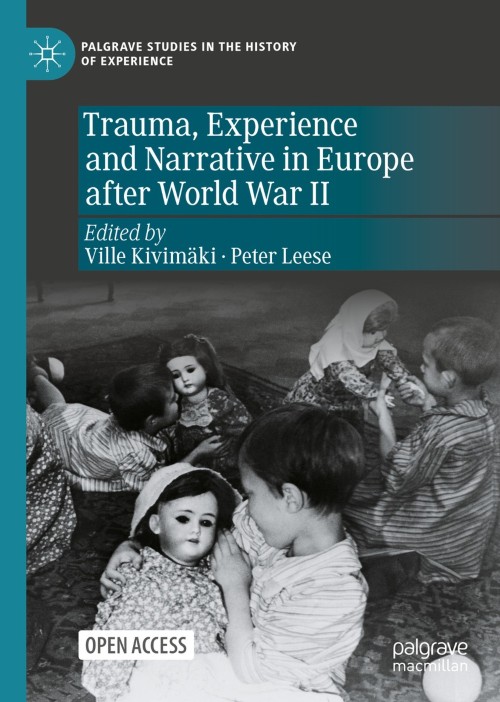
Trauma, Experience and Narrative in Europe after World War II [electronic resource] / edited by Ville Kivimäki, Peter Leese.
Erişim Adresi
ISBN
9783030846633
Dil Kodu
İngilizce
Yer Numarası
DK/2044
Basım Bildirimi
1st ed. 2022.
Yayın Bilgisi
Cham : Springer International Publishing : Imprint: Palgrave Macmillan, 2022.
Fiziksel Niteleme
XV, 337 p. 4 illus. online resource.
Dizi
Palgrave Studies in the History of Experience, 2524-8979
İçindekiler Notu
PART I: COMPARATIVE APPROACHES -- The Limits of Trauma: Experience and Narrative in Europe c. 1945 -- Beyond the Western Front -- PART II: CASE STUDIES -- Testing the Silence: Trauma and Military Psychiatry in Soviet Russia and Ukraine During and After World War II -- Experiencing Trauma Before Trauma: Posttraumatic Memories, Nightmares and Flashbacks Among Finnish Soldiers -- Entangled Bystanders: Multidimensional Trauma of Ethnic Cleansing and Mass Violence in Eastern Galicia -- Traumatized Children in Hungary After World War II -- “We will cry a little, but then we will forget”: Narratives of Loss and Victory in Postwar Yugoslavia -- Guilt, Responsibility and Trauma: Restoring the Moral Self-Image in Postwar Slovakia -- “Perpetrator Trauma” in Memoirs of Veterans of the Polish Home Army -- Environmental Trauma in the Narratives of Postwar Reconstruction: The Loss of Place and Identity in Northern Finland After World War II -- Suicide Rates as a “Social Thermometer”: Reading the Traumatized History of Lithuania -- PART III: CODA -- Towards a History of Trauma in Central and Eastern Europe After World War II: A Coda.
Özet, vb.
This book promotes a historically and culturally sensitive understanding of trauma during and after World War II. Focusing especially on Eastern and Central Europe, its contributors take a fresh look at the experiences of violence and loss in 1939–45 and their long-term effects in different cultures and societies. The chapters analyze traumatic experiences among soldiers and civilians alike and expand the study of traumatic violence beyond psychiatric discourses and treatments. While acknowledging the problems of applying a present-day medical concept to the past, this book makes a case for a cultural, social and historical study of trauma. Moving the focus of historical trauma studies from World War I to World War II and from Western Europe to the east, it breaks new ground and helps to explain the troublesome politics of memory and trauma in post-1945 Europe all the way to the present day. This book is an outcome of a workshop project ‘Historical Trauma Studies,’ funded by the Joint Committee for the Nordic Research Councils in the Humanities and Social Sciences (NOS-HS) in 2018–20. Chapters 4, 5 and 6 are available open access under a Creative Commons Attribution 4.0 International License via link.springer.com. Ville Kivimäki is Senior Research Fellow at Tampere University, Finland. He leads the Lived Nation research team at the Academy of Finland’s Centre of Excellence in the History of Experiences (HEX). Peter Leese is Associate Professor of Social and Cultural History at the Institute of English, Germanic and Romance Studies, University of Copenhagen, Denmark.
Konu
World War, 1939-1945.
Social history.
Civilization __ History.
Europe __ History.
History of World War II and the Holocaust.
Social History.
Cultural History.
European History.
Social history.
Civilization __ History.
Europe __ History.
History of World War II and the Holocaust.
Social History.
Cultural History.
European History.
Diğer Yazarlar

Eseri Alıntıla
Referansları kullanmadan önce gözden geçirmeniz ve varsa gerekli düzeltmeleri yapmanız önerilir.
Dijital Kaynak
MARC Görünümü
LEADER 04760nam a22005535i 4500
001 609372
003 TR_AnAIT
005 20250627070124
007 cr nn 008mamaa
008 211203s2022 sz | s |||| 0|eng d
020 |a9783030846633|9978-3-030-84663-3
024 7 |a10.1007/978-3-030-84663-3|2doi
041 |aeng
049 |aTürk Tarih Kurumu Kütüphanesi
050 4|aD731-838
072 7|aHBWQ|2bicssc
072 7|aHIS027100|2bisacsh
072 7|aNHWR7|2thema
082 04|a940.53|223
090 |aDK/2044
245 10|aTrauma, Experience and Narrative in Europe after World War II|h[electronic resource] /|cedited by Ville Kivimäki, Peter Leese.
250 |a1st ed. 2022.
264 1|aCham :|bSpringer International Publishing :|bImprint: Palgrave Macmillan,|c2022.
300 |aXV, 337 p. 4 illus.|bonline resource.
336 |atext|btxt|2rdacontent
337 |acomputer|bc|2rdamedia
338 |aonline resource|bcr|2rdacarrier
347 |atext file|bPDF|2rda
490 1 |aPalgrave Studies in the History of Experience,|x2524-8979
505 0 |aPART I: COMPARATIVE APPROACHES -- The Limits of Trauma: Experience and Narrative in Europe c. 1945 -- Beyond the Western Front -- PART II: CASE STUDIES -- Testing the Silence: Trauma and Military Psychiatry in Soviet Russia and Ukraine During and After World War II -- Experiencing Trauma Before Trauma: Posttraumatic Memories, Nightmares and Flashbacks Among Finnish Soldiers -- Entangled Bystanders: Multidimensional Trauma of Ethnic Cleansing and Mass Violence in Eastern Galicia -- Traumatized Children in Hungary After World War II -- “We will cry a little, but then we will forget”: Narratives of Loss and Victory in Postwar Yugoslavia -- Guilt, Responsibility and Trauma: Restoring the Moral Self-Image in Postwar Slovakia -- “Perpetrator Trauma” in Memoirs of Veterans of the Polish Home Army -- Environmental Trauma in the Narratives of Postwar Reconstruction: The Loss of Place and Identity in Northern Finland After World War II -- Suicide Rates as a “Social Thermometer”: Reading the Traumatized History of Lithuania -- PART III: CODA -- Towards a History of Trauma in Central and Eastern Europe After World War II: A Coda.
520 |aThis book promotes a historically and culturally sensitive understanding of trauma during and after World War II. Focusing especially on Eastern and Central Europe, its contributors take a fresh look at the experiences of violence and loss in 1939–45 and their long-term effects in different cultures and societies. The chapters analyze traumatic experiences among soldiers and civilians alike and expand the study of traumatic violence beyond psychiatric discourses and treatments. While acknowledging the problems of applying a present-day medical concept to the past, this book makes a case for a cultural, social and historical study of trauma. Moving the focus of historical trauma studies from World War I to World War II and from Western Europe to the east, it breaks new ground and helps to explain the troublesome politics of memory and trauma in post-1945 Europe all the way to the present day. This book is an outcome of a workshop project ‘Historical Trauma Studies,’ funded by the Joint Committee for the Nordic Research Councils in the Humanities and Social Sciences (NOS-HS) in 2018–20. Chapters 4, 5 and 6 are available open access under a Creative Commons Attribution 4.0 International License via link.springer.com. Ville Kivimäki is Senior Research Fellow at Tampere University, Finland. He leads the Lived Nation research team at the Academy of Finland’s Centre of Excellence in the History of Experiences (HEX). Peter Leese is Associate Professor of Social and Cultural History at the Institute of English, Germanic and Romance Studies, University of Copenhagen, Denmark.
650 0|aWorld War, 1939-1945.
650 0|aSocial history.
650 0|aCivilization|xHistory.
650 0|aEurope|xHistory.
650 14|aHistory of World War II and the Holocaust.
650 24|aSocial History.
650 24|aCultural History.
650 24|aEuropean History.
700 1 |aKivimäki, Ville.|eeditor.|4edt|4http://id.loc.gov/vocabulary/relators/edt
700 1 |aLeese, Peter.|eeditor.|4edt|4http://id.loc.gov/vocabulary/relators/edt
773 0 |tSpringer Nature eBook
776 08|iPrinted edition:|z9783030846626
776 08|iPrinted edition:|z9783030846640
776 08|iPrinted edition:|z9783030846657
830 0|aPalgrave Studies in the History of Experience,|x2524-8979
856 40|uhttps://doi.org/10.1007/978-3-030-84663-3
912 |aZDB-2-HTY
912 |aZDB-2-SXH
950 |aHistory (SpringerNature-41172)
950 |aHistory (R0) (SpringerNature-43722)
001 609372
003 TR_AnAIT
005 20250627070124
007 cr nn 008mamaa
008 211203s2022 sz | s |||| 0|eng d
020 |a9783030846633|9978-3-030-84663-3
024 7 |a10.1007/978-3-030-84663-3|2doi
041 |aeng
049 |aTürk Tarih Kurumu Kütüphanesi
050 4|aD731-838
072 7|aHBWQ|2bicssc
072 7|aHIS027100|2bisacsh
072 7|aNHWR7|2thema
082 04|a940.53|223
090 |aDK/2044
245 10|aTrauma, Experience and Narrative in Europe after World War II|h[electronic resource] /|cedited by Ville Kivimäki, Peter Leese.
250 |a1st ed. 2022.
264 1|aCham :|bSpringer International Publishing :|bImprint: Palgrave Macmillan,|c2022.
300 |aXV, 337 p. 4 illus.|bonline resource.
336 |atext|btxt|2rdacontent
337 |acomputer|bc|2rdamedia
338 |aonline resource|bcr|2rdacarrier
347 |atext file|bPDF|2rda
490 1 |aPalgrave Studies in the History of Experience,|x2524-8979
505 0 |aPART I: COMPARATIVE APPROACHES -- The Limits of Trauma: Experience and Narrative in Europe c. 1945 -- Beyond the Western Front -- PART II: CASE STUDIES -- Testing the Silence: Trauma and Military Psychiatry in Soviet Russia and Ukraine During and After World War II -- Experiencing Trauma Before Trauma: Posttraumatic Memories, Nightmares and Flashbacks Among Finnish Soldiers -- Entangled Bystanders: Multidimensional Trauma of Ethnic Cleansing and Mass Violence in Eastern Galicia -- Traumatized Children in Hungary After World War II -- “We will cry a little, but then we will forget”: Narratives of Loss and Victory in Postwar Yugoslavia -- Guilt, Responsibility and Trauma: Restoring the Moral Self-Image in Postwar Slovakia -- “Perpetrator Trauma” in Memoirs of Veterans of the Polish Home Army -- Environmental Trauma in the Narratives of Postwar Reconstruction: The Loss of Place and Identity in Northern Finland After World War II -- Suicide Rates as a “Social Thermometer”: Reading the Traumatized History of Lithuania -- PART III: CODA -- Towards a History of Trauma in Central and Eastern Europe After World War II: A Coda.
520 |aThis book promotes a historically and culturally sensitive understanding of trauma during and after World War II. Focusing especially on Eastern and Central Europe, its contributors take a fresh look at the experiences of violence and loss in 1939–45 and their long-term effects in different cultures and societies. The chapters analyze traumatic experiences among soldiers and civilians alike and expand the study of traumatic violence beyond psychiatric discourses and treatments. While acknowledging the problems of applying a present-day medical concept to the past, this book makes a case for a cultural, social and historical study of trauma. Moving the focus of historical trauma studies from World War I to World War II and from Western Europe to the east, it breaks new ground and helps to explain the troublesome politics of memory and trauma in post-1945 Europe all the way to the present day. This book is an outcome of a workshop project ‘Historical Trauma Studies,’ funded by the Joint Committee for the Nordic Research Councils in the Humanities and Social Sciences (NOS-HS) in 2018–20. Chapters 4, 5 and 6 are available open access under a Creative Commons Attribution 4.0 International License via link.springer.com. Ville Kivimäki is Senior Research Fellow at Tampere University, Finland. He leads the Lived Nation research team at the Academy of Finland’s Centre of Excellence in the History of Experiences (HEX). Peter Leese is Associate Professor of Social and Cultural History at the Institute of English, Germanic and Romance Studies, University of Copenhagen, Denmark.
650 0|aWorld War, 1939-1945.
650 0|aSocial history.
650 0|aCivilization|xHistory.
650 0|aEurope|xHistory.
650 14|aHistory of World War II and the Holocaust.
650 24|aSocial History.
650 24|aCultural History.
650 24|aEuropean History.
700 1 |aKivimäki, Ville.|eeditor.|4edt|4http://id.loc.gov/vocabulary/relators/edt
700 1 |aLeese, Peter.|eeditor.|4edt|4http://id.loc.gov/vocabulary/relators/edt
773 0 |tSpringer Nature eBook
776 08|iPrinted edition:|z9783030846626
776 08|iPrinted edition:|z9783030846640
776 08|iPrinted edition:|z9783030846657
830 0|aPalgrave Studies in the History of Experience,|x2524-8979
856 40|uhttps://doi.org/10.1007/978-3-030-84663-3
912 |aZDB-2-HTY
912 |aZDB-2-SXH
950 |aHistory (SpringerNature-41172)
950 |aHistory (R0) (SpringerNature-43722)
Materyaller
Depodan talep edilen materyal sadece kütüphane içerisinde kullanılmaktadır.
Materyal dışarıya ödünç verilmemektedir.
