LEADER 03379nam a22005295i 4500
001 609441
003 TR_AnAIT
005 20250627065902
007 cr nn 008mamaa
008 160212s2016 xxk| s |||| 0|eng d
020 |a9781137465900|9978-1-137-46590-0
024 7 |a10.1057/9781137465900|2doi
041 |aeng
049 |aTürk Tarih Kurumu Kütüphanesi
050 4|aD203.2-475
072 7|aHBL|2bicssc
072 7|aHIS037030|2bisacsh
072 7|aNH|2thema
082 04|a909.08|223
090 |aDK/2113
100 1 |aO'Connor, Thomas.|eauthor.|4aut|4http://id.loc.gov/vocabulary/relators/aut
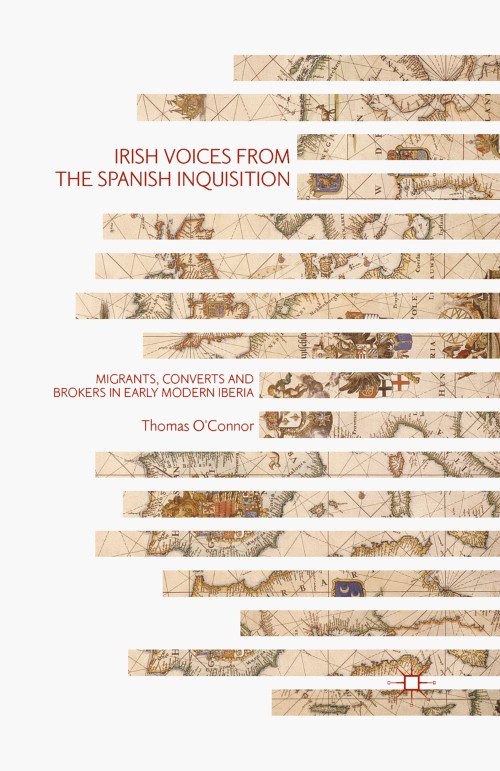
245 10|aIrish Voices from the Spanish Inquisition|h[electronic resource] :|bMigrants, Converts and Brokers in Early Modern Iberia /|cby Thomas O'Connor.
250 |a1st ed. 2016.
264 1|aLondon :|bPalgrave Macmillan UK :|bImprint: Palgrave Macmillan,|c2016.
300 |aXV, 280 p.|bonline resource.
336 |atext|btxt|2rdacontent
337 |acomputer|bc|2rdamedia
338 |aonline resource|bcr|2rdacarrier
347 |atext file|bPDF|2rda
520 |aThis book explores the activities of early modern Irish migrants in Spain, particularly their rather surprising association with the Spanish Inquisition. Pushed from home by political, economic and religious instability, and attracted to Spain by the wealth and opportunities of its burgeoning economy and empire, the incoming Irish fell prey to the Spanish Inquisition. For the inquisitors, the Irish, as vassals of Elizabeth I, were initially viewed as a heretical threat and suffered prosecution for Protestant heresy. However, for most Irish migrants, their dual status as English vassals and loyal Catholics permitted them to adapt quickly to provide brokerage and intermediary services to the Spanish state, mediating informally between it and Protestant jurisdictions, especially England. The Irish were particularly successful in forging an association with the Inquisition to convert incoming Protestant soldiers, merchants and operatives for useful service in Catholic Spain. As both victims and agents of the Inquisition, the Irish emerge as a versatile and complex migrant group. Their activities complicate our view of early modern migration and raise questions about the role of migrant groups and their foreign networks in the core historical narratives of Ireland, Spain and England, and in the history of their connections. Irish Voices from the Spanish Inquisition throws new light on how the Inquisition worked, not only as an organ of doctrinal police, but also in its unexpected role as a cross-creedal instrument of conversion and assimilation.
650 0|aHistory, Modern.
650 0|aPhilosophy|xHistory.
650 0|aEurope|xHistory.
650 0|aEurope|xHistory|x1492-.
650 0|aReligion|xHistory.
650 14|aModern History.
650 24|aHistory of Philosophy.
650 24|aEuropean History.
650 24|aHistory of Early Modern Europe.
650 24|aHistory of Religion.
773 0 |tSpringer Nature eBook
776 08|iPrinted edition:|z9781137465894
776 08|iPrinted edition:|z9781349690947
776 08|iPrinted edition:|z9781349690930
856 40|uhttps://doi.org/10.1057/9781137465900
912 |aZDB-2-HTY
912 |aZDB-2-SXH
950 |aHistory (SpringerNature-41172)
950 |aHistory (R0) (SpringerNature-43722)