Social Movements and the Change of Economic Elites in Europe after 1945 [electronic resource] / edited by Stefan Berger, Marcel Boldorf.
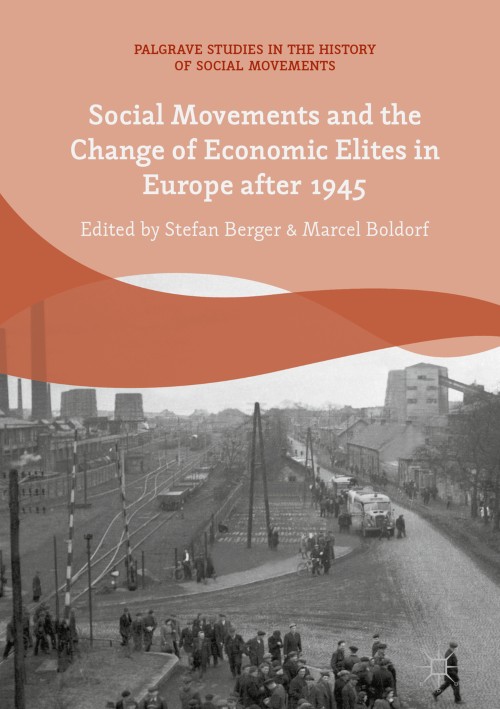
Erişim Adresi
ISBN
9783319771977
Dil Kodu
İngilizce
Yer Numarası
DK/2158
Basım Bildirimi
1st ed. 2018.
Yayın Bilgisi
Cham : Springer International Publishing : Imprint: Palgrave Macmillan, 2018.
Fiziksel Niteleme
XIX, 316 p. 1 illus. in color. online resource.
Dizi
Palgrave Studies in the History of Social Movements, 2634-6567
İçindekiler Notu
1 Social Movements and the Change of Economic Elites in Europe: An Introduction -- 2 Confrontation or Cooperation? The Labour Movement and Economic Elites in West Germany after 1945 -- 3 Social Movements and the Change of Industrial Elites in East Germany -- 4 France after the Liberation: The Labour Movement, the Employers and the Political Leaders in their Struggle with the Social Movement -- 5 Social Movements and Changing Elites: The Belgian Case -- 6 The Dutch Postwar Social Movement and the Elite’s Reaction -- 7 The Works Councils in Czechoslovakia, 1945-1949: Remarks on the Fate of a Social Movement in the Process of Transformation -- 8 Rebuilding the Donbass: The Impact of Nazi Occupation on Workers, Engineers and the Economic Development of the Post-War Soviet Union in Late Stalinism -- 9 Change or Continuity in the Danish Elites? Social Movements and the Transition from War to Peace in Denmark, 1945-1947 -- 10 Political Radicalization and Social Movements in Liberated Norway, 1945-1947 -- 11 Capitalism Under Attack: Economic Elites and Social Movements in Post-War Finland -- 12 The Swedish Labour Movement and Post-War Radicalisation: Social Democracy between Economic Elites and the Trade Union Movement -- 13 The Labour Movement and Business Elites under Waning Facism: Spain, 1939-1951 -- 14 Saving Social Democracy? Hugh Clegg and the Post-War Programme to Reform British Workplace Industrial Relations - too little too late? -- 15 Conclusion: Social Movements and the Change of Industrial Elites: A European Approach.
Özet, vb.
This book explores the changing nature of social movements and economic elites in post-Second World War Europe. In the years following 1945, Europe faced diverse challenges connected by the overriding question of how the reconstruction of the continent should proceed. For the Central Powers, the implementation lay in the hands of the Allied occupying forces who organised the process of denazification and the establishment of a new economic order. In countries without military occupation, there was a deep gap between the new governmental forces and the former collaborators. In both cases, social movements which were formed by anti-fascists on the left of the political spectrum assumed the task of social reorganisation. The chapters in this book explore the discourses about economic systems and their elites which moved to the fore across a range of European countries, uncovering who was involved, what resistance these social movements faced and how these ultimately failed in the West tobring about change, while in Eastern Europe Stalinism forcibly imposed change. .
Konu
Europe __ History __ 1492-.
Labor.
History.
Social history.
Economic history.
World politics.
History of Modern Europe.
Labor History.
Social History.
Economic History.
Political History.
Labor.
History.
Social history.
Economic history.
World politics.
History of Modern Europe.
Labor History.
Social History.
Economic History.
Political History.
Diğer Yazarlar

Eseri Alıntıla
Referansları kullanmadan önce gözden geçirmeniz ve varsa gerekli düzeltmeleri yapmanız önerilir.
Dijital Kaynak
MARC Görünümü
LEADER 04763nam a22006015i 4500
001 609486
003 TR_AnAIT
005 20250627065733
007 cr nn 008mamaa
008 180529s2018 sz | s |||| 0|eng d
020 |a9783319771977|9978-3-319-77197-7
024 7 |a10.1007/978-3-319-77197-7|2doi
041 |aeng
049 |aTürk Tarih Kurumu Kütüphanesi
050 4|aD203.2-475
072 7|aHBJD|2bicssc
072 7|aHBLL|2bicssc
072 7|aHIS010000|2bisacsh
072 7|aNHD|2thema
082 04|a940.903|223
090 |aDK/2158
245 10|aSocial Movements and the Change of Economic Elites in Europe after 1945|h[electronic resource] /|cedited by Stefan Berger, Marcel Boldorf.
250 |a1st ed. 2018.
264 1|aCham :|bSpringer International Publishing :|bImprint: Palgrave Macmillan,|c2018.
300 |aXIX, 316 p. 1 illus. in color.|bonline resource.
336 |atext|btxt|2rdacontent
337 |acomputer|bc|2rdamedia
338 |aonline resource|bcr|2rdacarrier
347 |atext file|bPDF|2rda
490 1 |aPalgrave Studies in the History of Social Movements,|x2634-6567
505 0 |a1 Social Movements and the Change of Economic Elites in Europe: An Introduction -- 2 Confrontation or Cooperation? The Labour Movement and Economic Elites in West Germany after 1945 -- 3 Social Movements and the Change of Industrial Elites in East Germany -- 4 France after the Liberation: The Labour Movement, the Employers and the Political Leaders in their Struggle with the Social Movement -- 5 Social Movements and Changing Elites: The Belgian Case -- 6 The Dutch Postwar Social Movement and the Elite’s Reaction -- 7 The Works Councils in Czechoslovakia, 1945-1949: Remarks on the Fate of a Social Movement in the Process of Transformation -- 8 Rebuilding the Donbass: The Impact of Nazi Occupation on Workers, Engineers and the Economic Development of the Post-War Soviet Union in Late Stalinism -- 9 Change or Continuity in the Danish Elites? Social Movements and the Transition from War to Peace in Denmark, 1945-1947 -- 10 Political Radicalization and Social Movements in Liberated Norway, 1945-1947 -- 11 Capitalism Under Attack: Economic Elites and Social Movements in Post-War Finland -- 12 The Swedish Labour Movement and Post-War Radicalisation: Social Democracy between Economic Elites and the Trade Union Movement -- 13 The Labour Movement and Business Elites under Waning Facism: Spain, 1939-1951 -- 14 Saving Social Democracy? Hugh Clegg and the Post-War Programme to Reform British Workplace Industrial Relations - too little too late? -- 15 Conclusion: Social Movements and the Change of Industrial Elites: A European Approach.
520 |aThis book explores the changing nature of social movements and economic elites in post-Second World War Europe. In the years following 1945, Europe faced diverse challenges connected by the overriding question of how the reconstruction of the continent should proceed. For the Central Powers, the implementation lay in the hands of the Allied occupying forces who organised the process of denazification and the establishment of a new economic order. In countries without military occupation, there was a deep gap between the new governmental forces and the former collaborators. In both cases, social movements which were formed by anti-fascists on the left of the political spectrum assumed the task of social reorganisation. The chapters in this book explore the discourses about economic systems and their elites which moved to the fore across a range of European countries, uncovering who was involved, what resistance these social movements faced and how these ultimately failed in the West tobring about change, while in Eastern Europe Stalinism forcibly imposed change. .
650 0|aEurope|xHistory|x1492-.
650 0|aLabor.
650 0|aHistory.
650 0|aSocial history.
650 0|aEconomic history.
650 0|aWorld politics.
650 14|aHistory of Modern Europe.
650 24|aLabor History.
650 24|aSocial History.
650 24|aEconomic History.
650 24|aPolitical History.
700 1 |aBerger, Stefan.|eeditor.|4edt|4http://id.loc.gov/vocabulary/relators/edt
700 1 |aBoldorf, Marcel.|eeditor.|4edt|4http://id.loc.gov/vocabulary/relators/edt
773 0 |tSpringer Nature eBook
776 08|iPrinted edition:|z9783319771960
776 08|iPrinted edition:|z9783319771984
776 08|iPrinted edition:|z9783030083960
830 0|aPalgrave Studies in the History of Social Movements,|x2634-6567
856 40|uhttps://doi.org/10.1007/978-3-319-77197-7
912 |aZDB-2-HTY
912 |aZDB-2-SXH
950 |aHistory (SpringerNature-41172)
950 |aHistory (R0) (SpringerNature-43722)
001 609486
003 TR_AnAIT
005 20250627065733
007 cr nn 008mamaa
008 180529s2018 sz | s |||| 0|eng d
020 |a9783319771977|9978-3-319-77197-7
024 7 |a10.1007/978-3-319-77197-7|2doi
041 |aeng
049 |aTürk Tarih Kurumu Kütüphanesi
050 4|aD203.2-475
072 7|aHBJD|2bicssc
072 7|aHBLL|2bicssc
072 7|aHIS010000|2bisacsh
072 7|aNHD|2thema
082 04|a940.903|223
090 |aDK/2158
245 10|aSocial Movements and the Change of Economic Elites in Europe after 1945|h[electronic resource] /|cedited by Stefan Berger, Marcel Boldorf.
250 |a1st ed. 2018.
264 1|aCham :|bSpringer International Publishing :|bImprint: Palgrave Macmillan,|c2018.
300 |aXIX, 316 p. 1 illus. in color.|bonline resource.
336 |atext|btxt|2rdacontent
337 |acomputer|bc|2rdamedia
338 |aonline resource|bcr|2rdacarrier
347 |atext file|bPDF|2rda
490 1 |aPalgrave Studies in the History of Social Movements,|x2634-6567
505 0 |a1 Social Movements and the Change of Economic Elites in Europe: An Introduction -- 2 Confrontation or Cooperation? The Labour Movement and Economic Elites in West Germany after 1945 -- 3 Social Movements and the Change of Industrial Elites in East Germany -- 4 France after the Liberation: The Labour Movement, the Employers and the Political Leaders in their Struggle with the Social Movement -- 5 Social Movements and Changing Elites: The Belgian Case -- 6 The Dutch Postwar Social Movement and the Elite’s Reaction -- 7 The Works Councils in Czechoslovakia, 1945-1949: Remarks on the Fate of a Social Movement in the Process of Transformation -- 8 Rebuilding the Donbass: The Impact of Nazi Occupation on Workers, Engineers and the Economic Development of the Post-War Soviet Union in Late Stalinism -- 9 Change or Continuity in the Danish Elites? Social Movements and the Transition from War to Peace in Denmark, 1945-1947 -- 10 Political Radicalization and Social Movements in Liberated Norway, 1945-1947 -- 11 Capitalism Under Attack: Economic Elites and Social Movements in Post-War Finland -- 12 The Swedish Labour Movement and Post-War Radicalisation: Social Democracy between Economic Elites and the Trade Union Movement -- 13 The Labour Movement and Business Elites under Waning Facism: Spain, 1939-1951 -- 14 Saving Social Democracy? Hugh Clegg and the Post-War Programme to Reform British Workplace Industrial Relations - too little too late? -- 15 Conclusion: Social Movements and the Change of Industrial Elites: A European Approach.
520 |aThis book explores the changing nature of social movements and economic elites in post-Second World War Europe. In the years following 1945, Europe faced diverse challenges connected by the overriding question of how the reconstruction of the continent should proceed. For the Central Powers, the implementation lay in the hands of the Allied occupying forces who organised the process of denazification and the establishment of a new economic order. In countries without military occupation, there was a deep gap between the new governmental forces and the former collaborators. In both cases, social movements which were formed by anti-fascists on the left of the political spectrum assumed the task of social reorganisation. The chapters in this book explore the discourses about economic systems and their elites which moved to the fore across a range of European countries, uncovering who was involved, what resistance these social movements faced and how these ultimately failed in the West tobring about change, while in Eastern Europe Stalinism forcibly imposed change. .
650 0|aEurope|xHistory|x1492-.
650 0|aLabor.
650 0|aHistory.
650 0|aSocial history.
650 0|aEconomic history.
650 0|aWorld politics.
650 14|aHistory of Modern Europe.
650 24|aLabor History.
650 24|aSocial History.
650 24|aEconomic History.
650 24|aPolitical History.
700 1 |aBerger, Stefan.|eeditor.|4edt|4http://id.loc.gov/vocabulary/relators/edt
700 1 |aBoldorf, Marcel.|eeditor.|4edt|4http://id.loc.gov/vocabulary/relators/edt
773 0 |tSpringer Nature eBook
776 08|iPrinted edition:|z9783319771960
776 08|iPrinted edition:|z9783319771984
776 08|iPrinted edition:|z9783030083960
830 0|aPalgrave Studies in the History of Social Movements,|x2634-6567
856 40|uhttps://doi.org/10.1007/978-3-319-77197-7
912 |aZDB-2-HTY
912 |aZDB-2-SXH
950 |aHistory (SpringerNature-41172)
950 |aHistory (R0) (SpringerNature-43722)
Materyaller
Depodan talep edilen materyal sadece kütüphane içerisinde kullanılmaktadır.
Materyal dışarıya ödünç verilmemektedir.
