

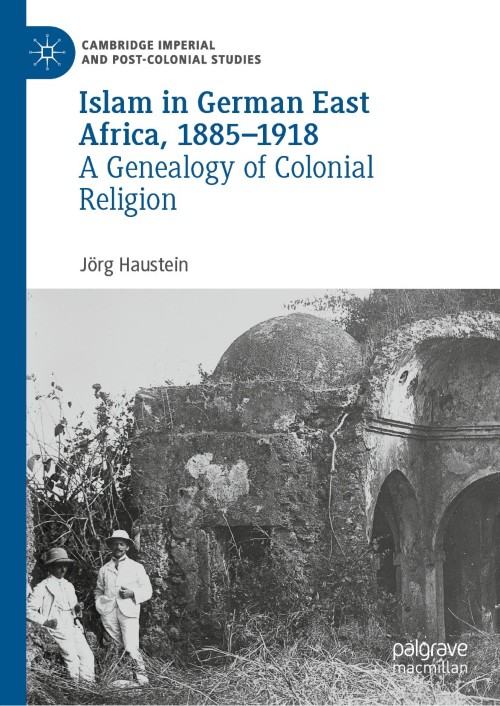
Islam in German East Africa, 1885–1918 [electronic resource] : A Genealogy of Colonial Religion / by Jörg Haustein.
Erişim Adresi
ISBN
9783031274237
Dil Kodu
İngilizce
Yer Numarası
DK/2209
Yazar
Basım Bildirimi
1st ed. 2023.
Yayın Bilgisi
Cham : Springer International Publishing : Imprint: Palgrave Macmillan, 2023.
Fiziksel Niteleme
XVI, 435 p. 27 illus. online resource.
Dizi
Cambridge Imperial and Post-Colonial Studies, 2635-1641
İçindekiler Notu
1. Introduction: Studying Islam in German East Africa -- 1.1 Previous Scholarship and Sources -- 1.2 Historical Overview and Chapter Plan -- I. Race and Religion: Islam and the 'Arab Revolt' -- 2. Supplanting “Arabdom”: Race and Religion in the German Conquest -- 2.1 Islam and “Arabdom” in the Scramble for East Africa -- 2.2 The “Arab Revolt” in Imperial Reckoning -- 2.3 Insurgent Coalitions and “Arab” Identity -- 2.4 Islam and “Arab” Politics -- 3. Contested Philology: Kiswahili as Religious Language -- 3.1 Missionary Philology, Religion, and Romanisation -- 3.2 Kiswahili as Contested Language -- 3.3 The Christianisation of Kiswahil -- 3.4 Race and Language: Colonial Religion and the Disavowal of Hybridity -- II. Colonial Instrumentality: Islam in the German “Civilising Mission” -- 4. Slavery and Religion: From Anti-Islamic Abolitionism to Christian Serfdom -- 4.1 The Quick Rise and Fall of the German Anti-Slavery Movement -- 4.2 Islam and Christianity in the “Civilising” Regime -- 4.3 Slavery in Missionary Campaigns and Parliamentary Debates -- 4.4 Bureaucratised Manumission and Coercive Labour Regimes -- 5. Educating for Islam? The German Government Schools and “Christian Civilising” -- 5.1 A School for Muslims in Tanga -- .2 “Secular” Schools and Missionary Complaints -- 5.3 Repression and Simple Equivalences -- 5.4 Colonial Instrumentality: Islam, Made in the Image of “Civilising” -- III. Coloured Justice: Colonial Jurisdiction and Islamic Law -- 6. Islam in the German Legal Order: Constitutional Conflicts and “Native Law” -- 6.1 The Schutzgebietsgesetz of 1886 -- .2 Implementing a Racial Divide -- 6.3 Defining Religious Exemptions -- 6.4 Islam in the Colonial Practice of “Native Law” -- 7. Studying Islamic Law: Elisions of German Scholarship -- 7.1 German Orientalism and Islamic Jurisprudence -- 7.2 “Native Law” and Islamic “Influence” -- 7.3 Coloured Justice: The Irreality of Colonial Law -- IV. Political Islam: The Making of “Islamic Danger” -- 8. Phantoms of Muslim Sedition: From Maji Maji to the “Mecca Letters” -- 8.1 Islam in the Maji Maji War -- 8.2 The “Mecca Letter” of 1908 -- 8.3 The Liabilities of “Islamic Danger” -- 8.4 Sufi Piety and Government Interventions -- 9. Mainstreaming “Islamic Danger”: Scholars, Missionaries, and Colonial Surveillance -- 9.1 German Scholars and the Geopolitics of Islam -- 9.2 Becker’s Islamwissenschaft and the Colonial Congress of 1910 -- 9.3 Colonial Press and Missionary Activism -- 9.4 Surveying Islam in East Africa -- 9.5 Political Islam: The Swan Song of Wartime Propaganda -- 10. Conclusion: A Genealogy of Colonial Religion -- 10.1 Pluralising Concepts: A Genealogy of Entangled Pretensions -- 10.2 Provincialising Europe: The Force of the Unrepresented -- 10.3 Rhizomatic Topography: The Sprawling Study of Islam.
Özet, vb.
In this rich and multi-layered deconstruction of German colonial engagement with Islam, Jörg Haustein shows how imperial agents in Germany’s largest colony wielded the knowledge category of Islam in a broad set of debates, ranging from race, language, and education to slavery, law, conflict, and war. These representations of ‘Mohammedanism’, often invoked for particular political ends, amounted to a serious misreading of Muslims in East Africa, with significant long-term effects. As the first in-depth account of the politics of Islam in German East Africa, the book makes an essential contribution to the history of religion in Tanzania before British rule. It also offers a template for re-reading the colonial archive in a manner that recovers Muslim agency beyond a European paradigm of religion. Jörg Haustein is Associate Professor of World Christianity at the University of Cambridge and a Fellow of Selwyn College, Cambridge. Previously, he has taught at the School of Oriental and African Studies in London and the University of Heidelberg in Germany. He is a scholar of religion in Africa from the nineteenth century onward, specializing in Pentecostal Christianity, colonial Islam, and the intersection of religion and development.
Konu
Imperialism.
Religion __ History.
Islam __ History.
Africa, Sub-Saharan __ History.
Europe, Central __ History.
Africa __ History.
Imperialism and Colonialism.
History of Religion.
Islamic History.
History of Sub-Saharan Africa.
History of Germany and Central Europe.
African History.
Religion __ History.
Islam __ History.
Africa, Sub-Saharan __ History.
Europe, Central __ History.
Africa __ History.
Imperialism and Colonialism.
History of Religion.
Islamic History.
History of Sub-Saharan Africa.
History of Germany and Central Europe.
African History.
Eseri Alıntıla
Referansları kullanmadan önce gözden geçirmeniz ve varsa gerekli düzeltmeleri yapmanız önerilir.
Dijital Kaynak
MARC Görünümü
LEADER 06222nam a22005895i 4500
001 609537
003 TR_AnAIT
005 20250627065551
007 cr nn 008mamaa
008 230714s2023 sz | s |||| 0|eng d
020 |a9783031274237|9978-3-031-27423-7
024 7 |a10.1007/978-3-031-27423-7|2doi
041 |aeng
049 |aTürk Tarih Kurumu Kütüphanesi
050 4|aJV61-152
072 7|aHBTQ|2bicssc
072 7|aHIS000000|2bisacsh
072 7|aNHTQ|2thema
082 04|a325.3|223
090 |aDK/2209
100 1 |aHaustein, Jörg.|eauthor.|4aut|4http://id.loc.gov/vocabulary/relators/aut
245 10|aIslam in German East Africa, 1885–1918|h[electronic resource] :|bA Genealogy of Colonial Religion /|cby Jörg Haustein.
250 |a1st ed. 2023.
264 1|aCham :|bSpringer International Publishing :|bImprint: Palgrave Macmillan,|c2023.
300 |aXVI, 435 p. 27 illus.|bonline resource.
336 |atext|btxt|2rdacontent
337 |acomputer|bc|2rdamedia
338 |aonline resource|bcr|2rdacarrier
347 |atext file|bPDF|2rda
490 1 |aCambridge Imperial and Post-Colonial Studies,|x2635-1641
505 0 |a1. Introduction: Studying Islam in German East Africa -- 1.1 Previous Scholarship and Sources -- 1.2 Historical Overview and Chapter Plan -- I. Race and Religion: Islam and the 'Arab Revolt' -- 2. Supplanting “Arabdom”: Race and Religion in the German Conquest -- 2.1 Islam and “Arabdom” in the Scramble for East Africa -- 2.2 The “Arab Revolt” in Imperial Reckoning -- 2.3 Insurgent Coalitions and “Arab” Identity -- 2.4 Islam and “Arab” Politics -- 3. Contested Philology: Kiswahili as Religious Language -- 3.1 Missionary Philology, Religion, and Romanisation -- 3.2 Kiswahili as Contested Language -- 3.3 The Christianisation of Kiswahil -- 3.4 Race and Language: Colonial Religion and the Disavowal of Hybridity -- II. Colonial Instrumentality: Islam in the German “Civilising Mission” -- 4. Slavery and Religion: From Anti-Islamic Abolitionism to Christian Serfdom -- 4.1 The Quick Rise and Fall of the German Anti-Slavery Movement -- 4.2 Islam and Christianity in the “Civilising” Regime -- 4.3 Slavery in Missionary Campaigns and Parliamentary Debates -- 4.4 Bureaucratised Manumission and Coercive Labour Regimes -- 5. Educating for Islam? The German Government Schools and “Christian Civilising” -- 5.1 A School for Muslims in Tanga -- .2 “Secular” Schools and Missionary Complaints -- 5.3 Repression and Simple Equivalences -- 5.4 Colonial Instrumentality: Islam, Made in the Image of “Civilising” -- III. Coloured Justice: Colonial Jurisdiction and Islamic Law -- 6. Islam in the German Legal Order: Constitutional Conflicts and “Native Law” -- 6.1 The Schutzgebietsgesetz of 1886 -- .2 Implementing a Racial Divide -- 6.3 Defining Religious Exemptions -- 6.4 Islam in the Colonial Practice of “Native Law” -- 7. Studying Islamic Law: Elisions of German Scholarship -- 7.1 German Orientalism and Islamic Jurisprudence -- 7.2 “Native Law” and Islamic “Influence” -- 7.3 Coloured Justice: The Irreality of Colonial Law -- IV. Political Islam: The Making of “Islamic Danger” -- 8. Phantoms of Muslim Sedition: From Maji Maji to the “Mecca Letters” -- 8.1 Islam in the Maji Maji War -- 8.2 The “Mecca Letter” of 1908 -- 8.3 The Liabilities of “Islamic Danger” -- 8.4 Sufi Piety and Government Interventions -- 9. Mainstreaming “Islamic Danger”: Scholars, Missionaries, and Colonial Surveillance -- 9.1 German Scholars and the Geopolitics of Islam -- 9.2 Becker’s Islamwissenschaft and the Colonial Congress of 1910 -- 9.3 Colonial Press and Missionary Activism -- 9.4 Surveying Islam in East Africa -- 9.5 Political Islam: The Swan Song of Wartime Propaganda -- 10. Conclusion: A Genealogy of Colonial Religion -- 10.1 Pluralising Concepts: A Genealogy of Entangled Pretensions -- 10.2 Provincialising Europe: The Force of the Unrepresented -- 10.3 Rhizomatic Topography: The Sprawling Study of Islam.
520 |aIn this rich and multi-layered deconstruction of German colonial engagement with Islam, Jörg Haustein shows how imperial agents in Germany’s largest colony wielded the knowledge category of Islam in a broad set of debates, ranging from race, language, and education to slavery, law, conflict, and war. These representations of ‘Mohammedanism’, often invoked for particular political ends, amounted to a serious misreading of Muslims in East Africa, with significant long-term effects. As the first in-depth account of the politics of Islam in German East Africa, the book makes an essential contribution to the history of religion in Tanzania before British rule. It also offers a template for re-reading the colonial archive in a manner that recovers Muslim agency beyond a European paradigm of religion. Jörg Haustein is Associate Professor of World Christianity at the University of Cambridge and a Fellow of Selwyn College, Cambridge. Previously, he has taught at the School of Oriental and African Studies in London and the University of Heidelberg in Germany. He is a scholar of religion in Africa from the nineteenth century onward, specializing in Pentecostal Christianity, colonial Islam, and the intersection of religion and development.
650 0|aImperialism.
650 0|aReligion|xHistory.
650 0|aIslam|xHistory.
650 0|aAfrica, Sub-Saharan|xHistory.
650 0|aEurope, Central|xHistory.
650 0|aAfrica|xHistory.
650 14|aImperialism and Colonialism.
650 24|aHistory of Religion.
650 24|aIslamic History.
650 24|aHistory of Sub-Saharan Africa.
650 24|aHistory of Germany and Central Europe.
650 24|aAfrican History.
773 0 |tSpringer Nature eBook
776 08|iPrinted edition:|z9783031274220
776 08|iPrinted edition:|z9783031274244
776 08|iPrinted edition:|z9783031274251
830 0|aCambridge Imperial and Post-Colonial Studies,|x2635-1641
856 40|uhttps://doi.org/10.1007/978-3-031-27423-7
912 |aZDB-2-HTY
912 |aZDB-2-SXH
950 |aHistory (SpringerNature-41172)
950 |aHistory (R0) (SpringerNature-43722)
001 609537
003 TR_AnAIT
005 20250627065551
007 cr nn 008mamaa
008 230714s2023 sz | s |||| 0|eng d
020 |a9783031274237|9978-3-031-27423-7
024 7 |a10.1007/978-3-031-27423-7|2doi
041 |aeng
049 |aTürk Tarih Kurumu Kütüphanesi
050 4|aJV61-152
072 7|aHBTQ|2bicssc
072 7|aHIS000000|2bisacsh
072 7|aNHTQ|2thema
082 04|a325.3|223
090 |aDK/2209
100 1 |aHaustein, Jörg.|eauthor.|4aut|4http://id.loc.gov/vocabulary/relators/aut
245 10|aIslam in German East Africa, 1885–1918|h[electronic resource] :|bA Genealogy of Colonial Religion /|cby Jörg Haustein.
250 |a1st ed. 2023.
264 1|aCham :|bSpringer International Publishing :|bImprint: Palgrave Macmillan,|c2023.
300 |aXVI, 435 p. 27 illus.|bonline resource.
336 |atext|btxt|2rdacontent
337 |acomputer|bc|2rdamedia
338 |aonline resource|bcr|2rdacarrier
347 |atext file|bPDF|2rda
490 1 |aCambridge Imperial and Post-Colonial Studies,|x2635-1641
505 0 |a1. Introduction: Studying Islam in German East Africa -- 1.1 Previous Scholarship and Sources -- 1.2 Historical Overview and Chapter Plan -- I. Race and Religion: Islam and the 'Arab Revolt' -- 2. Supplanting “Arabdom”: Race and Religion in the German Conquest -- 2.1 Islam and “Arabdom” in the Scramble for East Africa -- 2.2 The “Arab Revolt” in Imperial Reckoning -- 2.3 Insurgent Coalitions and “Arab” Identity -- 2.4 Islam and “Arab” Politics -- 3. Contested Philology: Kiswahili as Religious Language -- 3.1 Missionary Philology, Religion, and Romanisation -- 3.2 Kiswahili as Contested Language -- 3.3 The Christianisation of Kiswahil -- 3.4 Race and Language: Colonial Religion and the Disavowal of Hybridity -- II. Colonial Instrumentality: Islam in the German “Civilising Mission” -- 4. Slavery and Religion: From Anti-Islamic Abolitionism to Christian Serfdom -- 4.1 The Quick Rise and Fall of the German Anti-Slavery Movement -- 4.2 Islam and Christianity in the “Civilising” Regime -- 4.3 Slavery in Missionary Campaigns and Parliamentary Debates -- 4.4 Bureaucratised Manumission and Coercive Labour Regimes -- 5. Educating for Islam? The German Government Schools and “Christian Civilising” -- 5.1 A School for Muslims in Tanga -- .2 “Secular” Schools and Missionary Complaints -- 5.3 Repression and Simple Equivalences -- 5.4 Colonial Instrumentality: Islam, Made in the Image of “Civilising” -- III. Coloured Justice: Colonial Jurisdiction and Islamic Law -- 6. Islam in the German Legal Order: Constitutional Conflicts and “Native Law” -- 6.1 The Schutzgebietsgesetz of 1886 -- .2 Implementing a Racial Divide -- 6.3 Defining Religious Exemptions -- 6.4 Islam in the Colonial Practice of “Native Law” -- 7. Studying Islamic Law: Elisions of German Scholarship -- 7.1 German Orientalism and Islamic Jurisprudence -- 7.2 “Native Law” and Islamic “Influence” -- 7.3 Coloured Justice: The Irreality of Colonial Law -- IV. Political Islam: The Making of “Islamic Danger” -- 8. Phantoms of Muslim Sedition: From Maji Maji to the “Mecca Letters” -- 8.1 Islam in the Maji Maji War -- 8.2 The “Mecca Letter” of 1908 -- 8.3 The Liabilities of “Islamic Danger” -- 8.4 Sufi Piety and Government Interventions -- 9. Mainstreaming “Islamic Danger”: Scholars, Missionaries, and Colonial Surveillance -- 9.1 German Scholars and the Geopolitics of Islam -- 9.2 Becker’s Islamwissenschaft and the Colonial Congress of 1910 -- 9.3 Colonial Press and Missionary Activism -- 9.4 Surveying Islam in East Africa -- 9.5 Political Islam: The Swan Song of Wartime Propaganda -- 10. Conclusion: A Genealogy of Colonial Religion -- 10.1 Pluralising Concepts: A Genealogy of Entangled Pretensions -- 10.2 Provincialising Europe: The Force of the Unrepresented -- 10.3 Rhizomatic Topography: The Sprawling Study of Islam.
520 |aIn this rich and multi-layered deconstruction of German colonial engagement with Islam, Jörg Haustein shows how imperial agents in Germany’s largest colony wielded the knowledge category of Islam in a broad set of debates, ranging from race, language, and education to slavery, law, conflict, and war. These representations of ‘Mohammedanism’, often invoked for particular political ends, amounted to a serious misreading of Muslims in East Africa, with significant long-term effects. As the first in-depth account of the politics of Islam in German East Africa, the book makes an essential contribution to the history of religion in Tanzania before British rule. It also offers a template for re-reading the colonial archive in a manner that recovers Muslim agency beyond a European paradigm of religion. Jörg Haustein is Associate Professor of World Christianity at the University of Cambridge and a Fellow of Selwyn College, Cambridge. Previously, he has taught at the School of Oriental and African Studies in London and the University of Heidelberg in Germany. He is a scholar of religion in Africa from the nineteenth century onward, specializing in Pentecostal Christianity, colonial Islam, and the intersection of religion and development.
650 0|aImperialism.
650 0|aReligion|xHistory.
650 0|aIslam|xHistory.
650 0|aAfrica, Sub-Saharan|xHistory.
650 0|aEurope, Central|xHistory.
650 0|aAfrica|xHistory.
650 14|aImperialism and Colonialism.
650 24|aHistory of Religion.
650 24|aIslamic History.
650 24|aHistory of Sub-Saharan Africa.
650 24|aHistory of Germany and Central Europe.
650 24|aAfrican History.
773 0 |tSpringer Nature eBook
776 08|iPrinted edition:|z9783031274220
776 08|iPrinted edition:|z9783031274244
776 08|iPrinted edition:|z9783031274251
830 0|aCambridge Imperial and Post-Colonial Studies,|x2635-1641
856 40|uhttps://doi.org/10.1007/978-3-031-27423-7
912 |aZDB-2-HTY
912 |aZDB-2-SXH
950 |aHistory (SpringerNature-41172)
950 |aHistory (R0) (SpringerNature-43722)
Materyaller
Depodan talep edilen materyal sadece kütüphane içerisinde kullanılmaktadır.
Materyal dışarıya ödünç verilmemektedir.
Materyal dışarıya ödünç verilmemektedir.
