

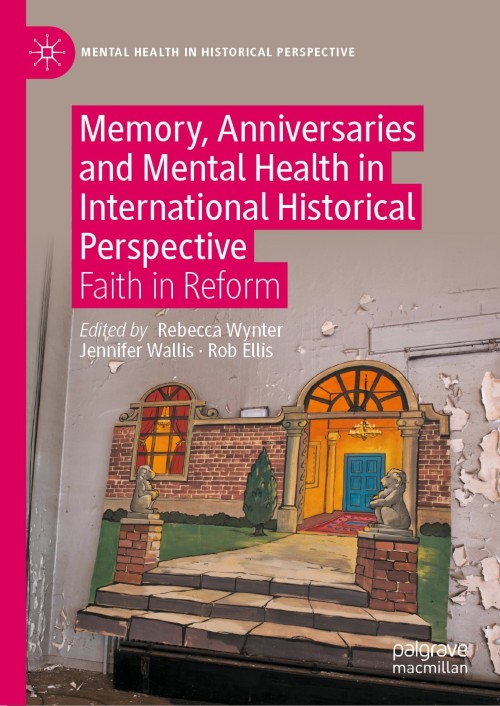
Memory, Anniversaries and Mental Health in International Historical Perspective [electronic resource] : Faith in Reform / edited by Rebecca Wynter, Jennifer Wallis, Rob Ellis.
Erişim Adresi
ISBN
9783031229787
Dil Kodu
İngilizce
Yer Numarası
DK/2210
Basım Bildirimi
1st ed. 2023.
Yayın Bilgisi
Cham : Springer International Publishing : Imprint: Palgrave Macmillan, 2023.
Fiziksel Niteleme
XVI, 314 p. 13 illus., 12 illus. in color. online resource.
Dizi
Mental Health in Historical Perspective, 2634-6044
İçindekiler Notu
1. Marking Time: Memory, Mental Health and Making Minds; Rebecca Wynter, Rob Ellis, and Jennifer Wallis -- Part I: Governance -- 2. Carrying on with ‘Common-Sense’: Rebuffing reform in Bombay’s Lunatic Asylums, 1894-1933; Sarah Pinto -- 3. The new socialist citizen and ‘forgetting’ authoritarianism: Psychiatry, psychoanalysis and revolution in socialist Yugoslavia; Ana Antic -- Part II: Practitioners -- 4. Appropriating Wilhelm Griesinger’s Asylum Reform Legacy (1868-2018): Some Reflections on Historiographic Narratives of Failure; Eric J. Engstrom -- 5. Remodelling the Sigmund Freud Museum, Vienna: Memories, Museums, and Curatorial Considerations; Daniela Finzi and Monika Pessler -- Part III: Casebooks -- 6. Madness, Memory and Delusion in Later Nineteenth-Century Colonial Barbados; Leonard Smith -- 7. Gone But Not Forgotten: Acts of Remembrance in the Late-nineteenth and Early-twentieth Century Asylum; Katherine Rawling -- 8. The Institute for Imbecile Children: remembering the lives and experiences of the patients; Rory du Plessis -- Part III: Oral Histories -- 9. Surprise and Nostalgia: Staff Narrate the Closure of an American Psychiatric Hospital, Elizabeth Nelson, Emily Beckman; and Modupe Labode -- 10. An Exploration of the Function of Nostalgia in Oral Histories of Institutional Care; Verusca Calabria -- Part IV: Personal Recollections -- 11. Talking Personality: Reflections on Historical Words, Diagnoses, and My Own Experience; Barbara Norden -- 12. ‘If your memory serves you well’: Reflections on becoming a psychiatrist; Allan Beveridge.
Özet, vb.
This book is the first to explore memory, misremembering, forgetting, and anniversaries in the history of psychiatry and mental health. It challenges simplistic representations of the callous nature of mental health care in the past, while at the same time eschewing a celebratory and uncritical marking of anniversaries and individuals. Asking critical questions of the early Whiggish histories of mental health care, the book problematizes the idea of a shared professional and institutional history, and the abiding faith placed in the reform of medicine, administration, and even patients. It contends that much post-1800 legislation drafted to ensure reform, acted to preserve beliefs about the ‘bad old days’ and a ‘brighter future’ in the state memories of imperial powers, which in turn exported these notions around the world. Conversely, the collection demonstrates the variety of remembering and forgetting, building on recent interest in the ideological and cultural linkages between pastand present in international psychiatric practice. In this way, it seeks to trace the pathways of memory, exploring the direction of travel, and the perpetuation, remodeling, and uprooting of recollection. Chapter “The New Socialist Citizen and ‘Forgetting’ Authoritarianism: Psychiatry, Psychoanalysis, and Revolution in Socialist Yugoslavia” is available open access under a Creative Commons Attribution 4.0 International License via link.springer. com. Rebecca Wynter is a historian at the Universities of Amsterdam and Birmingham. She has published widely on the histories of psychiatry, mental health, neurology, first response, and so-called ‘conversion therapy’. She is active in public history, working with museums, institutions and people to reveal the past. Jennifer Wallis is a Medical Humanities Teaching Fellow and Lecturer in the History of Science and Medicine at Imperial College London, UK. She has published widely on the nineteenth-century asylum and the history of medicine in the Victorian period. Rob Ellis is a Reader in History at the University of Huddersfield, UK. He has published widely on the histories of mental ill-health and learning disability and has worked in partnership to co-produce projects that have emphasized their contemporary relevance. .
Konu
Social history.
Collective memory.
Medicine __ History.
World history.
Science __ History.
Psychiatry.
Social History.
Memory Studies.
History of Medicine.
World History, Global and Transnational History.
History of Science.
Psychiatry.
Collective memory.
Medicine __ History.
World history.
Science __ History.
Psychiatry.
Social History.
Memory Studies.
History of Medicine.
World History, Global and Transnational History.
History of Science.
Psychiatry.
Diğer Yazarlar
Eseri Alıntıla
Referansları kullanmadan önce gözden geçirmeniz ve varsa gerekli düzeltmeleri yapmanız önerilir.
Dijital Kaynak
MARC Görünümü
LEADER 06169nam a22006135i 4500
001 609538
003 TR_AnAIT
005 20250627065549
007 cr nn 008mamaa
008 230719s2023 sz | s |||| 0|eng d
020 |a9783031229787|9978-3-031-22978-7
024 7 |a10.1007/978-3-031-22978-7|2doi
041 |aeng
049 |aTürk Tarih Kurumu Kütüphanesi
050 4|aHN
072 7|aHBTB|2bicssc
072 7|aHIS054000|2bisacsh
072 7|aNHTB|2thema
082 04|a306.09|223
090 |aDK/2210
245 10|aMemory, Anniversaries and Mental Health in International Historical Perspective|h[electronic resource] :|bFaith in Reform /|cedited by Rebecca Wynter, Jennifer Wallis, Rob Ellis.
250 |a1st ed. 2023.
264 1|aCham :|bSpringer International Publishing :|bImprint: Palgrave Macmillan,|c2023.
300 |aXVI, 314 p. 13 illus., 12 illus. in color.|bonline resource.
336 |atext|btxt|2rdacontent
337 |acomputer|bc|2rdamedia
338 |aonline resource|bcr|2rdacarrier
347 |atext file|bPDF|2rda
490 1 |aMental Health in Historical Perspective,|x2634-6044
505 0 |a1. Marking Time: Memory, Mental Health and Making Minds; Rebecca Wynter, Rob Ellis, and Jennifer Wallis -- Part I: Governance -- 2. Carrying on with ‘Common-Sense’: Rebuffing reform in Bombay’s Lunatic Asylums, 1894-1933; Sarah Pinto -- 3. The new socialist citizen and ‘forgetting’ authoritarianism: Psychiatry, psychoanalysis and revolution in socialist Yugoslavia; Ana Antic -- Part II: Practitioners -- 4. Appropriating Wilhelm Griesinger’s Asylum Reform Legacy (1868-2018): Some Reflections on Historiographic Narratives of Failure; Eric J. Engstrom -- 5. Remodelling the Sigmund Freud Museum, Vienna: Memories, Museums, and Curatorial Considerations; Daniela Finzi and Monika Pessler -- Part III: Casebooks -- 6. Madness, Memory and Delusion in Later Nineteenth-Century Colonial Barbados; Leonard Smith -- 7. Gone But Not Forgotten: Acts of Remembrance in the Late-nineteenth and Early-twentieth Century Asylum; Katherine Rawling -- 8. The Institute for Imbecile Children: remembering the lives and experiences of the patients; Rory du Plessis -- Part III: Oral Histories -- 9. Surprise and Nostalgia: Staff Narrate the Closure of an American Psychiatric Hospital, Elizabeth Nelson, Emily Beckman; and Modupe Labode -- 10. An Exploration of the Function of Nostalgia in Oral Histories of Institutional Care; Verusca Calabria -- Part IV: Personal Recollections -- 11. Talking Personality: Reflections on Historical Words, Diagnoses, and My Own Experience; Barbara Norden -- 12. ‘If your memory serves you well’: Reflections on becoming a psychiatrist; Allan Beveridge.
520 |aThis book is the first to explore memory, misremembering, forgetting, and anniversaries in the history of psychiatry and mental health. It challenges simplistic representations of the callous nature of mental health care in the past, while at the same time eschewing a celebratory and uncritical marking of anniversaries and individuals. Asking critical questions of the early Whiggish histories of mental health care, the book problematizes the idea of a shared professional and institutional history, and the abiding faith placed in the reform of medicine, administration, and even patients. It contends that much post-1800 legislation drafted to ensure reform, acted to preserve beliefs about the ‘bad old days’ and a ‘brighter future’ in the state memories of imperial powers, which in turn exported these notions around the world. Conversely, the collection demonstrates the variety of remembering and forgetting, building on recent interest in the ideological and cultural linkages between pastand present in international psychiatric practice. In this way, it seeks to trace the pathways of memory, exploring the direction of travel, and the perpetuation, remodeling, and uprooting of recollection. Chapter “The New Socialist Citizen and ‘Forgetting’ Authoritarianism: Psychiatry, Psychoanalysis, and Revolution in Socialist Yugoslavia” is available open access under a Creative Commons Attribution 4.0 International License via link.springer. com. Rebecca Wynter is a historian at the Universities of Amsterdam and Birmingham. She has published widely on the histories of psychiatry, mental health, neurology, first response, and so-called ‘conversion therapy’. She is active in public history, working with museums, institutions and people to reveal the past. Jennifer Wallis is a Medical Humanities Teaching Fellow and Lecturer in the History of Science and Medicine at Imperial College London, UK. She has published widely on the nineteenth-century asylum and the history of medicine in the Victorian period. Rob Ellis is a Reader in History at the University of Huddersfield, UK. He has published widely on the histories of mental ill-health and learning disability and has worked in partnership to co-produce projects that have emphasized their contemporary relevance. .
650 0|aSocial history.
650 0|aCollective memory.
650 0|aMedicine|xHistory.
650 0|aWorld history.
650 0|aScience|xHistory.
650 0|aPsychiatry.
650 14|aSocial History.
650 24|aMemory Studies.
650 24|aHistory of Medicine.
650 24|aWorld History, Global and Transnational History.
650 24|aHistory of Science.
650 24|aPsychiatry.
700 1 |aWynter, Rebecca.|eeditor.|4edt|4http://id.loc.gov/vocabulary/relators/edt
700 1 |aWallis, Jennifer.|eeditor.|4edt|4http://id.loc.gov/vocabulary/relators/edt
700 1 |aEllis, Rob.|eeditor.|4edt|4http://id.loc.gov/vocabulary/relators/edt
773 0 |tSpringer Nature eBook
776 08|iPrinted edition:|z9783031229770
776 08|iPrinted edition:|z9783031229794
776 08|iPrinted edition:|z9783031229800
830 0|aMental Health in Historical Perspective,|x2634-6044
856 40|uhttps://doi.org/10.1007/978-3-031-22978-7
912 |aZDB-2-HTY
912 |aZDB-2-SXH
950 |aHistory (SpringerNature-41172)
950 |aHistory (R0) (SpringerNature-43722)
001 609538
003 TR_AnAIT
005 20250627065549
007 cr nn 008mamaa
008 230719s2023 sz | s |||| 0|eng d
020 |a9783031229787|9978-3-031-22978-7
024 7 |a10.1007/978-3-031-22978-7|2doi
041 |aeng
049 |aTürk Tarih Kurumu Kütüphanesi
050 4|aHN
072 7|aHBTB|2bicssc
072 7|aHIS054000|2bisacsh
072 7|aNHTB|2thema
082 04|a306.09|223
090 |aDK/2210
245 10|aMemory, Anniversaries and Mental Health in International Historical Perspective|h[electronic resource] :|bFaith in Reform /|cedited by Rebecca Wynter, Jennifer Wallis, Rob Ellis.
250 |a1st ed. 2023.
264 1|aCham :|bSpringer International Publishing :|bImprint: Palgrave Macmillan,|c2023.
300 |aXVI, 314 p. 13 illus., 12 illus. in color.|bonline resource.
336 |atext|btxt|2rdacontent
337 |acomputer|bc|2rdamedia
338 |aonline resource|bcr|2rdacarrier
347 |atext file|bPDF|2rda
490 1 |aMental Health in Historical Perspective,|x2634-6044
505 0 |a1. Marking Time: Memory, Mental Health and Making Minds; Rebecca Wynter, Rob Ellis, and Jennifer Wallis -- Part I: Governance -- 2. Carrying on with ‘Common-Sense’: Rebuffing reform in Bombay’s Lunatic Asylums, 1894-1933; Sarah Pinto -- 3. The new socialist citizen and ‘forgetting’ authoritarianism: Psychiatry, psychoanalysis and revolution in socialist Yugoslavia; Ana Antic -- Part II: Practitioners -- 4. Appropriating Wilhelm Griesinger’s Asylum Reform Legacy (1868-2018): Some Reflections on Historiographic Narratives of Failure; Eric J. Engstrom -- 5. Remodelling the Sigmund Freud Museum, Vienna: Memories, Museums, and Curatorial Considerations; Daniela Finzi and Monika Pessler -- Part III: Casebooks -- 6. Madness, Memory and Delusion in Later Nineteenth-Century Colonial Barbados; Leonard Smith -- 7. Gone But Not Forgotten: Acts of Remembrance in the Late-nineteenth and Early-twentieth Century Asylum; Katherine Rawling -- 8. The Institute for Imbecile Children: remembering the lives and experiences of the patients; Rory du Plessis -- Part III: Oral Histories -- 9. Surprise and Nostalgia: Staff Narrate the Closure of an American Psychiatric Hospital, Elizabeth Nelson, Emily Beckman; and Modupe Labode -- 10. An Exploration of the Function of Nostalgia in Oral Histories of Institutional Care; Verusca Calabria -- Part IV: Personal Recollections -- 11. Talking Personality: Reflections on Historical Words, Diagnoses, and My Own Experience; Barbara Norden -- 12. ‘If your memory serves you well’: Reflections on becoming a psychiatrist; Allan Beveridge.
520 |aThis book is the first to explore memory, misremembering, forgetting, and anniversaries in the history of psychiatry and mental health. It challenges simplistic representations of the callous nature of mental health care in the past, while at the same time eschewing a celebratory and uncritical marking of anniversaries and individuals. Asking critical questions of the early Whiggish histories of mental health care, the book problematizes the idea of a shared professional and institutional history, and the abiding faith placed in the reform of medicine, administration, and even patients. It contends that much post-1800 legislation drafted to ensure reform, acted to preserve beliefs about the ‘bad old days’ and a ‘brighter future’ in the state memories of imperial powers, which in turn exported these notions around the world. Conversely, the collection demonstrates the variety of remembering and forgetting, building on recent interest in the ideological and cultural linkages between pastand present in international psychiatric practice. In this way, it seeks to trace the pathways of memory, exploring the direction of travel, and the perpetuation, remodeling, and uprooting of recollection. Chapter “The New Socialist Citizen and ‘Forgetting’ Authoritarianism: Psychiatry, Psychoanalysis, and Revolution in Socialist Yugoslavia” is available open access under a Creative Commons Attribution 4.0 International License via link.springer. com. Rebecca Wynter is a historian at the Universities of Amsterdam and Birmingham. She has published widely on the histories of psychiatry, mental health, neurology, first response, and so-called ‘conversion therapy’. She is active in public history, working with museums, institutions and people to reveal the past. Jennifer Wallis is a Medical Humanities Teaching Fellow and Lecturer in the History of Science and Medicine at Imperial College London, UK. She has published widely on the nineteenth-century asylum and the history of medicine in the Victorian period. Rob Ellis is a Reader in History at the University of Huddersfield, UK. He has published widely on the histories of mental ill-health and learning disability and has worked in partnership to co-produce projects that have emphasized their contemporary relevance. .
650 0|aSocial history.
650 0|aCollective memory.
650 0|aMedicine|xHistory.
650 0|aWorld history.
650 0|aScience|xHistory.
650 0|aPsychiatry.
650 14|aSocial History.
650 24|aMemory Studies.
650 24|aHistory of Medicine.
650 24|aWorld History, Global and Transnational History.
650 24|aHistory of Science.
650 24|aPsychiatry.
700 1 |aWynter, Rebecca.|eeditor.|4edt|4http://id.loc.gov/vocabulary/relators/edt
700 1 |aWallis, Jennifer.|eeditor.|4edt|4http://id.loc.gov/vocabulary/relators/edt
700 1 |aEllis, Rob.|eeditor.|4edt|4http://id.loc.gov/vocabulary/relators/edt
773 0 |tSpringer Nature eBook
776 08|iPrinted edition:|z9783031229770
776 08|iPrinted edition:|z9783031229794
776 08|iPrinted edition:|z9783031229800
830 0|aMental Health in Historical Perspective,|x2634-6044
856 40|uhttps://doi.org/10.1007/978-3-031-22978-7
912 |aZDB-2-HTY
912 |aZDB-2-SXH
950 |aHistory (SpringerNature-41172)
950 |aHistory (R0) (SpringerNature-43722)
Materyaller
Depodan talep edilen materyal sadece kütüphane içerisinde kullanılmaktadır.
Materyal dışarıya ödünç verilmemektedir.
Materyal dışarıya ödünç verilmemektedir.
