LEADER 03485nam a22005775i 4500
001 609587
003 TR_AnAIT
005 20250627065409
007 cr nn 008mamaa
008 171114s2017 sz | s |||| 0|eng d
020 |a9783319612706|9978-3-319-61270-6
024 7 |a10.1007/978-3-319-61270-6|2doi
041 |aeng
049 |aTürk Tarih Kurumu Kütüphanesi
050 4|aD203.2-475
072 7|aHBJD|2bicssc
072 7|aHBLL|2bicssc
072 7|aHIS010000|2bisacsh
072 7|aNHD|2thema
082 04|a940.903|223
090 |aDK/2259
100 1 |aAragüete-Toribio, Zahira.|eauthor.|4aut|4http://id.loc.gov/vocabulary/relators/aut
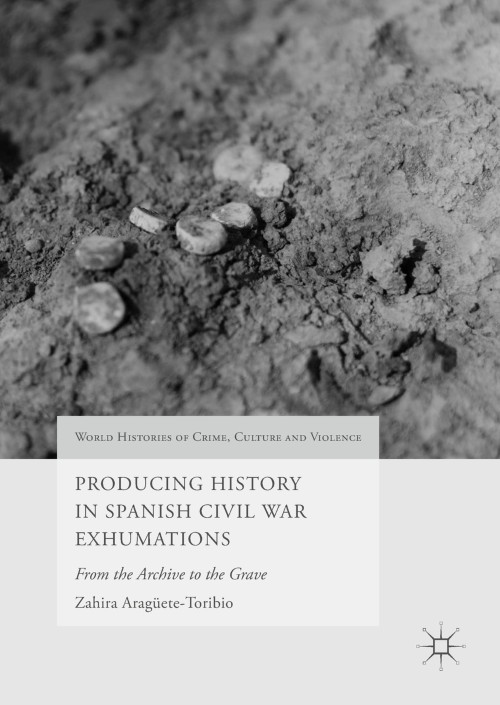
245 10|aProducing History in Spanish Civil War Exhumations|h[electronic resource] :|bFrom the Archive to the Grave /|cby Zahira Aragüete-Toribio.
250 |a1st ed. 2017.
264 1|aCham :|bSpringer International Publishing :|bImprint: Palgrave Macmillan,|c2017.
300 |aXVIII, 257 p. 21 illus.|bonline resource.
336 |atext|btxt|2rdacontent
337 |acomputer|bc|2rdamedia
338 |aonline resource|bcr|2rdacarrier
347 |atext file|bPDF|2rda
490 1 |aWorld Histories of Crime, Culture and Violence,|x2730-9649
505 0 |aChapter 1 – The Archive, the Story and the Mass Grave -- Chapter 2 – Contesting Silence, Reclaiming Historical Memory in Contemporary Spain -- Chapter 3 – Visions of War and Postwar History in Extremadura -- Chapter 4 – Exhuming the Body of the Unknown -- Chapter 5 – Exhuming Familial Remains -- Chapter 6 – The Affective Life of Violence -- Chapter 7 – Reburial and Commemoration -- Chapter 8 – The Exhumation as Emerging Archive -- Index.
520 |aThis book follows the efforts of different groups of families, historians, memory activists and forensic experts to assemble information about unatoned mass crimes committed during and after the Spanish Civil War (1936-1939), in order to attain their recognition by the Spanish state in the present. It examines how the exhumation of mass graves containing the corpses of Republican victims killed in extrajudicial executions by Francoist supporters has created, in the last years, new forms of historical and political enunciation which did not exist before. During the exhumation process, the study argues, the corpse, the document and the oral testimony have become key traces through which to discern the extent of Francoist repression. Analyzing familial and expert exchanges with these artefacts, between the archive and the grave, the volume considers how new versions of history are constructed in a landscape of distinct and complex generational experiences, memory politics and enduringsilences.
650 0|aEurope|xHistory|x1492-.
650 0|aHistory, Modern.
650 0|aCollective memory.
650 0|aSocial history.
650 0|aWorld politics.
650 14|aHistory of Modern Europe.
650 24|aModern History.
650 24|aMemory Studies.
650 24|aSocial History.
650 24|aPolitical History.
773 0 |tSpringer Nature eBook
776 08|iPrinted edition:|z9783319612690
776 08|iPrinted edition:|z9783319612713
776 08|iPrinted edition:|z9783319870380
830 0|aWorld Histories of Crime, Culture and Violence,|x2730-9649
856 40|uhttps://doi.org/10.1007/978-3-319-61270-6
912 |aZDB-2-HTY
912 |aZDB-2-SXH
950 |aHistory (SpringerNature-41172)
950 |aHistory (R0) (SpringerNature-43722)