

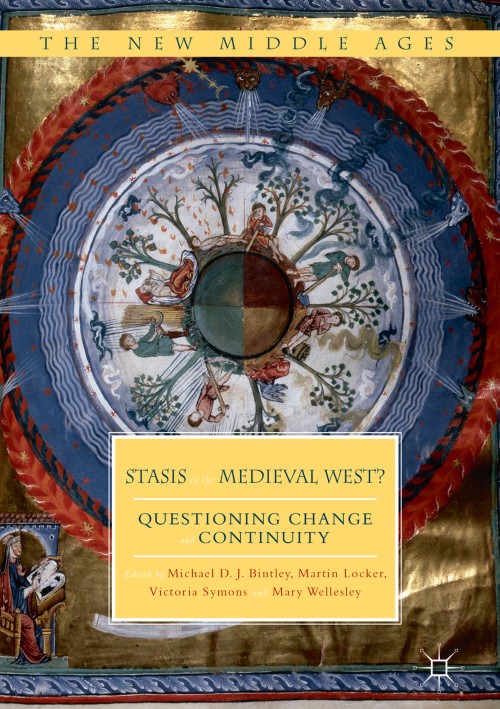
Stasis in the Medieval West? [electronic resource] : Questioning Change and Continuity / edited by Michael D.J. Bintley, Martin Locker, Victoria Symons, Mary Wellesley.
Erişim Adresi
ISBN
9781137561992
Dil Kodu
İngilizce
Yer Numarası
DK/2338
Basım Bildirimi
1st ed. 2017.
Yayın Bilgisi
New York : Palgrave Macmillan US : Imprint: Palgrave Macmillan, 2017.
Fiziksel Niteleme
XI, 283 p. 8 illus., 5 illus. in color. online resource.
Dizi
The New Middle Ages, 2945-5944
İçindekiler Notu
1 ‘Introduction: Stasis in the Medieval West? Questioning Change and Continuity’, Victoria Symons, Mary Wellesley, Michael D. J. Bintley -- 2 ‘Beacons of Belief: Trees and Religion in Britain from Prehistory to the Later Middle Ages’, Michael D. J. Bintley -- 3 ‘The More Things Change, the More They Stay the Same: Decorative Continuity in Early Anglo-Saxon England’, Melissa Herman -- 4 ‘Art History in the Dark Ages: (Re)considering Space, Stasis and Modern Viewing Practices in Relation to Anglo-Saxon Imagery’, Meg Boulton -- 5 ‘Set in Stone or Food for Worms: the Stasis of Writing in the Exeter Book Riddles’, Victoria Symons -- 6 ‘Stitched Up? Cynewulf, Authorial Attribution and Textual Stasis in Anglo-Saxon England’, Tom Birkett -- 7 ‘The House of Stilled Time: Stasis and Eternity in Anglo-Saxon Churches’, Michael Shapland -- 8 ‘There and Back Again: Creating the Pilgrimage Experience in Text’ , Martin Locker -- 9 ‘“But that will not be the end of the calamity”: Why Emphasize Viking Disruption?’, Katherine Cross -- 10 ‘Configuring Stasis: the Appeal to Tradition in the English Reign of Cnut the Great’, Simon C. Thomson -- 11 ‘Sleeping Dogs and Stasis in the Franklin’s Tale’, Richard North -- 12 ‘Static “Menyng” and Transitory “Melodye” in Lydgate’s Seying of the Nightingale’, Mary Wellesley -- 13 ‘Dress, Fashion and Anti-Fashion in the Medieval Imagination’, Louise Sylvester -- Index.
Özet, vb.
This volume questions the extent to which Medieval studies has emphasized the period as one of change and development through reexamining aspects of the medieval world that remained static. The Medieval period is popularly thought of as a dark age, before the flowerings of the Renaissance ushered a return to the wisdom of the Classical era. However, the reality familiar to scholars and students of the Middle Ages – that this was a time of immense transition and transformation – is well known. This book approaches the theme of ‘stasis’ in broad terms, with chapters covering the full temporal range from Late Antiquity to the later Middle Ages. Contributors to this collection seek to establish what remained static, continuous or ongoing in the Medieval era, and how the period’s political and cultural upheavals generated stasis in the form of deadlock, nostalgia, and the preservation of ancient traditions.
Konu
Literature, Medieval.
Philosophy, Medieval.
Europe __ History __ 476-1492.
Medieval Literature.
Medieval Philosophy.
History of Medieval Europe.
Philosophy, Medieval.
Europe __ History __ 476-1492.
Medieval Literature.
Medieval Philosophy.
History of Medieval Europe.
Eseri Alıntıla
Referansları kullanmadan önce gözden geçirmeniz ve varsa gerekli düzeltmeleri yapmanız önerilir.
Dijital Kaynak
MARC Görünümü
LEADER 04543nam a22005535i 4500
001 609666
003 TR_AnAIT
005 20250627065130
007 cr nn 008mamaa
008 170221s2017 xxu| s |||| 0|eng d
020 |a9781137561992|9978-1-137-56199-2
024 7 |a10.1057/978-1-137-56199-2|2doi
041 |aeng
049 |aTürk Tarih Kurumu Kütüphanesi
050 4|aPN661-694
072 7|aDSBB|2bicssc
072 7|aLIT011000|2bisacsh
072 7|aDSBB|2thema
082 04|a809.02|223
090 |aDK/2338
245 10|aStasis in the Medieval West?|h[electronic resource] :|bQuestioning Change and Continuity /|cedited by Michael D.J. Bintley, Martin Locker, Victoria Symons, Mary Wellesley.
250 |a1st ed. 2017.
264 1|aNew York :|bPalgrave Macmillan US :|bImprint: Palgrave Macmillan,|c2017.
300 |aXI, 283 p. 8 illus., 5 illus. in color.|bonline resource.
336 |atext|btxt|2rdacontent
337 |acomputer|bc|2rdamedia
338 |aonline resource|bcr|2rdacarrier
347 |atext file|bPDF|2rda
490 1 |aThe New Middle Ages,|x2945-5944
505 0 |a1 ‘Introduction: Stasis in the Medieval West? Questioning Change and Continuity’, Victoria Symons, Mary Wellesley, Michael D. J. Bintley -- 2 ‘Beacons of Belief: Trees and Religion in Britain from Prehistory to the Later Middle Ages’, Michael D. J. Bintley -- 3 ‘The More Things Change, the More They Stay the Same: Decorative Continuity in Early Anglo-Saxon England’, Melissa Herman -- 4 ‘Art History in the Dark Ages: (Re)considering Space, Stasis and Modern Viewing Practices in Relation to Anglo-Saxon Imagery’, Meg Boulton -- 5 ‘Set in Stone or Food for Worms: the Stasis of Writing in the Exeter Book Riddles’, Victoria Symons -- 6 ‘Stitched Up? Cynewulf, Authorial Attribution and Textual Stasis in Anglo-Saxon England’, Tom Birkett -- 7 ‘The House of Stilled Time: Stasis and Eternity in Anglo-Saxon Churches’, Michael Shapland -- 8 ‘There and Back Again: Creating the Pilgrimage Experience in Text’ , Martin Locker -- 9 ‘“But that will not be the end of the calamity”: Why Emphasize Viking Disruption?’, Katherine Cross -- 10 ‘Configuring Stasis: the Appeal to Tradition in the English Reign of Cnut the Great’, Simon C. Thomson -- 11 ‘Sleeping Dogs and Stasis in the Franklin’s Tale’, Richard North -- 12 ‘Static “Menyng” and Transitory “Melodye” in Lydgate’s Seying of the Nightingale’, Mary Wellesley -- 13 ‘Dress, Fashion and Anti-Fashion in the Medieval Imagination’, Louise Sylvester -- Index.
520 |aThis volume questions the extent to which Medieval studies has emphasized the period as one of change and development through reexamining aspects of the medieval world that remained static. The Medieval period is popularly thought of as a dark age, before the flowerings of the Renaissance ushered a return to the wisdom of the Classical era. However, the reality familiar to scholars and students of the Middle Ages – that this was a time of immense transition and transformation – is well known. This book approaches the theme of ‘stasis’ in broad terms, with chapters covering the full temporal range from Late Antiquity to the later Middle Ages. Contributors to this collection seek to establish what remained static, continuous or ongoing in the Medieval era, and how the period’s political and cultural upheavals generated stasis in the form of deadlock, nostalgia, and the preservation of ancient traditions.
650 0|aLiterature, Medieval.
650 0|aPhilosophy, Medieval.
650 0|aEurope|xHistory|x476-1492.
650 14|aMedieval Literature.
650 24|aMedieval Philosophy.
650 24|aHistory of Medieval Europe.
700 1 |aBintley, Michael D.J.|eeditor.|4edt|4http://id.loc.gov/vocabulary/relators/edt
700 1 |aLocker, Martin.|eeditor.|4edt|4http://id.loc.gov/vocabulary/relators/edt
700 1 |aSymons, Victoria.|eeditor.|4edt|4http://id.loc.gov/vocabulary/relators/edt
700 1 |aWellesley, Mary.|eeditor.|4edt|4http://id.loc.gov/vocabulary/relators/edt
773 0 |tSpringer Nature eBook
776 08|iPrinted edition:|z9781349573189
776 08|iPrinted edition:|z9781349950331
776 08|iPrinted edition:|z9781349957101
830 0|aThe New Middle Ages,|x2945-5944
856 40|uhttps://doi.org/10.1057/978-1-137-56199-2
912 |aZDB-2-HTY
912 |aZDB-2-SXH
950 |aHistory (SpringerNature-41172)
950 |aHistory (R0) (SpringerNature-43722)
001 609666
003 TR_AnAIT
005 20250627065130
007 cr nn 008mamaa
008 170221s2017 xxu| s |||| 0|eng d
020 |a9781137561992|9978-1-137-56199-2
024 7 |a10.1057/978-1-137-56199-2|2doi
041 |aeng
049 |aTürk Tarih Kurumu Kütüphanesi
050 4|aPN661-694
072 7|aDSBB|2bicssc
072 7|aLIT011000|2bisacsh
072 7|aDSBB|2thema
082 04|a809.02|223
090 |aDK/2338
245 10|aStasis in the Medieval West?|h[electronic resource] :|bQuestioning Change and Continuity /|cedited by Michael D.J. Bintley, Martin Locker, Victoria Symons, Mary Wellesley.
250 |a1st ed. 2017.
264 1|aNew York :|bPalgrave Macmillan US :|bImprint: Palgrave Macmillan,|c2017.
300 |aXI, 283 p. 8 illus., 5 illus. in color.|bonline resource.
336 |atext|btxt|2rdacontent
337 |acomputer|bc|2rdamedia
338 |aonline resource|bcr|2rdacarrier
347 |atext file|bPDF|2rda
490 1 |aThe New Middle Ages,|x2945-5944
505 0 |a1 ‘Introduction: Stasis in the Medieval West? Questioning Change and Continuity’, Victoria Symons, Mary Wellesley, Michael D. J. Bintley -- 2 ‘Beacons of Belief: Trees and Religion in Britain from Prehistory to the Later Middle Ages’, Michael D. J. Bintley -- 3 ‘The More Things Change, the More They Stay the Same: Decorative Continuity in Early Anglo-Saxon England’, Melissa Herman -- 4 ‘Art History in the Dark Ages: (Re)considering Space, Stasis and Modern Viewing Practices in Relation to Anglo-Saxon Imagery’, Meg Boulton -- 5 ‘Set in Stone or Food for Worms: the Stasis of Writing in the Exeter Book Riddles’, Victoria Symons -- 6 ‘Stitched Up? Cynewulf, Authorial Attribution and Textual Stasis in Anglo-Saxon England’, Tom Birkett -- 7 ‘The House of Stilled Time: Stasis and Eternity in Anglo-Saxon Churches’, Michael Shapland -- 8 ‘There and Back Again: Creating the Pilgrimage Experience in Text’ , Martin Locker -- 9 ‘“But that will not be the end of the calamity”: Why Emphasize Viking Disruption?’, Katherine Cross -- 10 ‘Configuring Stasis: the Appeal to Tradition in the English Reign of Cnut the Great’, Simon C. Thomson -- 11 ‘Sleeping Dogs and Stasis in the Franklin’s Tale’, Richard North -- 12 ‘Static “Menyng” and Transitory “Melodye” in Lydgate’s Seying of the Nightingale’, Mary Wellesley -- 13 ‘Dress, Fashion and Anti-Fashion in the Medieval Imagination’, Louise Sylvester -- Index.
520 |aThis volume questions the extent to which Medieval studies has emphasized the period as one of change and development through reexamining aspects of the medieval world that remained static. The Medieval period is popularly thought of as a dark age, before the flowerings of the Renaissance ushered a return to the wisdom of the Classical era. However, the reality familiar to scholars and students of the Middle Ages – that this was a time of immense transition and transformation – is well known. This book approaches the theme of ‘stasis’ in broad terms, with chapters covering the full temporal range from Late Antiquity to the later Middle Ages. Contributors to this collection seek to establish what remained static, continuous or ongoing in the Medieval era, and how the period’s political and cultural upheavals generated stasis in the form of deadlock, nostalgia, and the preservation of ancient traditions.
650 0|aLiterature, Medieval.
650 0|aPhilosophy, Medieval.
650 0|aEurope|xHistory|x476-1492.
650 14|aMedieval Literature.
650 24|aMedieval Philosophy.
650 24|aHistory of Medieval Europe.
700 1 |aBintley, Michael D.J.|eeditor.|4edt|4http://id.loc.gov/vocabulary/relators/edt
700 1 |aLocker, Martin.|eeditor.|4edt|4http://id.loc.gov/vocabulary/relators/edt
700 1 |aSymons, Victoria.|eeditor.|4edt|4http://id.loc.gov/vocabulary/relators/edt
700 1 |aWellesley, Mary.|eeditor.|4edt|4http://id.loc.gov/vocabulary/relators/edt
773 0 |tSpringer Nature eBook
776 08|iPrinted edition:|z9781349573189
776 08|iPrinted edition:|z9781349950331
776 08|iPrinted edition:|z9781349957101
830 0|aThe New Middle Ages,|x2945-5944
856 40|uhttps://doi.org/10.1057/978-1-137-56199-2
912 |aZDB-2-HTY
912 |aZDB-2-SXH
950 |aHistory (SpringerNature-41172)
950 |aHistory (R0) (SpringerNature-43722)
Materyaller
Depodan talep edilen materyal sadece kütüphane içerisinde kullanılmaktadır.
Materyal dışarıya ödünç verilmemektedir.
Materyal dışarıya ödünç verilmemektedir.
