

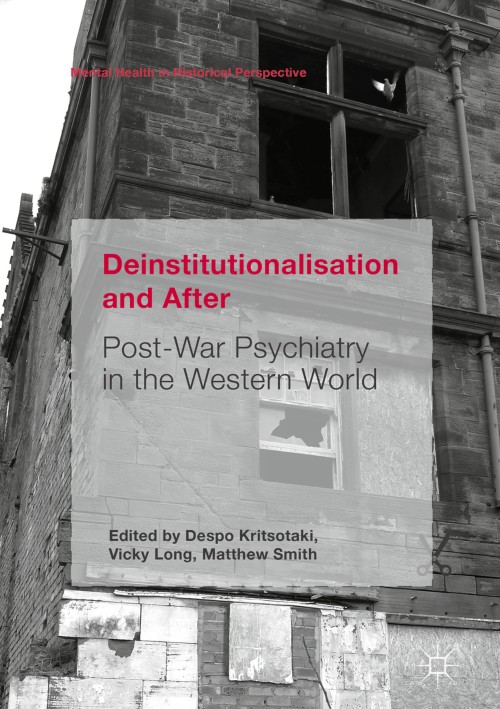
Deinstitutionalisation and After [electronic resource] : Post-War Psychiatry in the Western World / edited by Despo Kritsotaki, Vicky Long, Matthew Smith.
Erişim Adresi
ISBN
9783319453606
Dil Kodu
İngilizce
Yer Numarası
DK/2398
Basım Bildirimi
1st ed. 2016.
Yayın Bilgisi
Cham : Springer International Publishing : Imprint: Palgrave Macmillan, 2016.
Fiziksel Niteleme
XV, 297 p. online resource.
Dizi
Mental Health in Historical Perspective, 2634-6044
İçindekiler Notu
Introduction. Despo Kritsotaki, Vicky Long and Matthew Smith, Deinstitutionalisation and the Pathways of Post-War Psychiatry in the Western World -- Part I. Understanding deinstitutionalisation: culture, ideology and historiography -- Chapter 1. John Burnham, Deinstitutionalisation and the great sociocultural shift to consumer culture -- Chapter 2. Alexander Dunst, ‘All the Fits That’s News to Print’: Deinstitutionalisation and Anti-Psychiatric Movement Magazines in the United States, 1970-1986 -- Chapter 3. Megan Davies and Erika Dyck with Leslie Baker, Lanny Beckman, Geertje Boschma, Chris Dooley, Kathleen Kendall, Eugene LeBlanc, Robert Menzies, Marina Morrow, Diane Purvey, Nérée St-Amand, Marie-Claude Thifault, Jayne Whyte, Victor Willis, After the Asylum in Canada: Surviving Deinstitutionalisation and Revising History -- Part II. Designing and implementing psychiatric reform: experiments, opportunities and oppositions -- Chapter 4. Christof Beyer, ‘Islands of reform’. Early transformation of the mental health service in Lower Saxony, Germany in the 1960s -- Chapter 5. Nicolas Henckes, French deinstitutionalisation or the irony of success. Psychiatrists, the State and the transformation of the French psychiatric system, 1945-2010 -- Chapter 6. Valerie Harrington, Integration in a divided world: Salford Community Mental Health Services 1948-1974 -- Chapter 7. Despo Kritsotaki, Initiating deinstitutionalisation: Early attempts of mental health care reform in Greece, 1950s-1970s -- Part III. New conceptualisations of therapy and space -- Chapter 8. John Stewart, Child Guidance and Deinstitutionalisation in Post-War Britain -- Chapter 9. Cheryl McGeachan “Do you have a frog to guide you?”: Exploring the ‘asylum’ spaces of R.D. Laing -- Part IV. After Deinstitutionalisation: experiences, challenges and legacies -- Chapter 10. Elena Trivelli, The Basaglian Legacy in Italian Psychiatry: Remembering, Myth-making, and Crystallising -- Chapter 11. Howard Padwa, Marcia Meldrum, Jack R. Friedman and Joel T. Braslow, A mental health system in recovery. The era of deinstitutionalisation in California -- Chapter 12. Roslyn Burge, Callan Park in transition.
Özet, vb.
The book relates the history of post-war psychiatry, focusing on deinstitutionalisation, namely the shift from asylum to community in the second part of the twentieth century. After the Second World War, psychiatry and mental health care were reshaped by deinstitutionalisation. But what exactly was involved in this process? What were the origins of deinstitutionalisation and what did it mean to those who experienced it? What were the ramifications, both positive and negative, of such a fundamental shift in psychiatric care? Post-War Psychiatry in the Western World: Deinstitutionalisation and After seeks to answer these questions by exploring this momentous change in mental health care from 1945 to the present in a wide range of geographical settings. The book articulates a nuanced account of the history of deinstitutionalisation, highlighting the constraints and inconsistencies inherent in treating the mentally ill outside of the asylum, while seeking to inform current debates about how to help the most vulnerable members of society.
Konu
History, Modern.
Europe __ History.
United States __ History.
Science __ History.
Modern History.
European History.
US History.
History of Science.
Europe __ History.
United States __ History.
Science __ History.
Modern History.
European History.
US History.
History of Science.
Diğer Yazarlar
Eseri Alıntıla
Referansları kullanmadan önce gözden geçirmeniz ve varsa gerekli düzeltmeleri yapmanız önerilir.
Dijital Kaynak
MARC Görünümü
LEADER 05327nam a22005655i 4500
001 609726
003 TR_AnAIT
005 20250627064910
007 cr nn 008mamaa
008 161130s2016 sz | s |||| 0|eng d
020 |a9783319453606|9978-3-319-45360-6
024 7 |a10.1007/978-3-319-45360-6|2doi
041 |aeng
049 |aTürk Tarih Kurumu Kütüphanesi
050 4|aD203.2-475
072 7|aHBL|2bicssc
072 7|aHIS037030|2bisacsh
072 7|aNH|2thema
082 04|a909.08|223
090 |aDK/2398
245 10|aDeinstitutionalisation and After|h[electronic resource] :|bPost-War Psychiatry in the Western World /|cedited by Despo Kritsotaki, Vicky Long, Matthew Smith.
250 |a1st ed. 2016.
264 1|aCham :|bSpringer International Publishing :|bImprint: Palgrave Macmillan,|c2016.
300 |aXV, 297 p.|bonline resource.
336 |atext|btxt|2rdacontent
337 |acomputer|bc|2rdamedia
338 |aonline resource|bcr|2rdacarrier
347 |atext file|bPDF|2rda
490 1 |aMental Health in Historical Perspective,|x2634-6044
505 0 |aIntroduction. Despo Kritsotaki, Vicky Long and Matthew Smith, Deinstitutionalisation and the Pathways of Post-War Psychiatry in the Western World -- Part I. Understanding deinstitutionalisation: culture, ideology and historiography -- Chapter 1. John Burnham, Deinstitutionalisation and the great sociocultural shift to consumer culture -- Chapter 2. Alexander Dunst, ‘All the Fits That’s News to Print’: Deinstitutionalisation and Anti-Psychiatric Movement Magazines in the United States, 1970-1986 -- Chapter 3. Megan Davies and Erika Dyck with Leslie Baker, Lanny Beckman, Geertje Boschma, Chris Dooley, Kathleen Kendall, Eugene LeBlanc, Robert Menzies, Marina Morrow, Diane Purvey, Nérée St-Amand, Marie-Claude Thifault, Jayne Whyte, Victor Willis, After the Asylum in Canada: Surviving Deinstitutionalisation and Revising History -- Part II. Designing and implementing psychiatric reform: experiments, opportunities and oppositions -- Chapter 4. Christof Beyer, ‘Islands of reform’. Early transformation of the mental health service in Lower Saxony, Germany in the 1960s -- Chapter 5. Nicolas Henckes, French deinstitutionalisation or the irony of success. Psychiatrists, the State and the transformation of the French psychiatric system, 1945-2010 -- Chapter 6. Valerie Harrington, Integration in a divided world: Salford Community Mental Health Services 1948-1974 -- Chapter 7. Despo Kritsotaki, Initiating deinstitutionalisation: Early attempts of mental health care reform in Greece, 1950s-1970s -- Part III. New conceptualisations of therapy and space -- Chapter 8. John Stewart, Child Guidance and Deinstitutionalisation in Post-War Britain -- Chapter 9. Cheryl McGeachan “Do you have a frog to guide you?”: Exploring the ‘asylum’ spaces of R.D. Laing -- Part IV. After Deinstitutionalisation: experiences, challenges and legacies -- Chapter 10. Elena Trivelli, The Basaglian Legacy in Italian Psychiatry: Remembering, Myth-making, and Crystallising -- Chapter 11. Howard Padwa, Marcia Meldrum, Jack R. Friedman and Joel T. Braslow, A mental health system in recovery. The era of deinstitutionalisation in California -- Chapter 12. Roslyn Burge, Callan Park in transition.
520 |aThe book relates the history of post-war psychiatry, focusing on deinstitutionalisation, namely the shift from asylum to community in the second part of the twentieth century. After the Second World War, psychiatry and mental health care were reshaped by deinstitutionalisation. But what exactly was involved in this process? What were the origins of deinstitutionalisation and what did it mean to those who experienced it? What were the ramifications, both positive and negative, of such a fundamental shift in psychiatric care? Post-War Psychiatry in the Western World: Deinstitutionalisation and After seeks to answer these questions by exploring this momentous change in mental health care from 1945 to the present in a wide range of geographical settings. The book articulates a nuanced account of the history of deinstitutionalisation, highlighting the constraints and inconsistencies inherent in treating the mentally ill outside of the asylum, while seeking to inform current debates about how to help the most vulnerable members of society.
650 0|aHistory, Modern.
650 0|aEurope|xHistory.
650 0|aUnited States|xHistory.
650 0|aScience|xHistory.
650 14|aModern History.
650 24|aEuropean History.
650 24|aUS History.
650 24|aHistory of Science.
700 1 |aKritsotaki, Despo.|eeditor.|4edt|4http://id.loc.gov/vocabulary/relators/edt
700 1 |aLong, Vicky.|eeditor.|4edt|4http://id.loc.gov/vocabulary/relators/edt
700 1 |aSmith, Matthew.|eeditor.|4edt|4http://id.loc.gov/vocabulary/relators/edt
773 0 |tSpringer Nature eBook
776 08|iPrinted edition:|z9783319453590
776 08|iPrinted edition:|z9783319453613
776 08|iPrinted edition:|z9783319832753
830 0|aMental Health in Historical Perspective,|x2634-6044
856 40|uhttps://doi.org/10.1007/978-3-319-45360-6
912 |aZDB-2-HTY
912 |aZDB-2-SXH
950 |aHistory (SpringerNature-41172)
950 |aHistory (R0) (SpringerNature-43722)
001 609726
003 TR_AnAIT
005 20250627064910
007 cr nn 008mamaa
008 161130s2016 sz | s |||| 0|eng d
020 |a9783319453606|9978-3-319-45360-6
024 7 |a10.1007/978-3-319-45360-6|2doi
041 |aeng
049 |aTürk Tarih Kurumu Kütüphanesi
050 4|aD203.2-475
072 7|aHBL|2bicssc
072 7|aHIS037030|2bisacsh
072 7|aNH|2thema
082 04|a909.08|223
090 |aDK/2398
245 10|aDeinstitutionalisation and After|h[electronic resource] :|bPost-War Psychiatry in the Western World /|cedited by Despo Kritsotaki, Vicky Long, Matthew Smith.
250 |a1st ed. 2016.
264 1|aCham :|bSpringer International Publishing :|bImprint: Palgrave Macmillan,|c2016.
300 |aXV, 297 p.|bonline resource.
336 |atext|btxt|2rdacontent
337 |acomputer|bc|2rdamedia
338 |aonline resource|bcr|2rdacarrier
347 |atext file|bPDF|2rda
490 1 |aMental Health in Historical Perspective,|x2634-6044
505 0 |aIntroduction. Despo Kritsotaki, Vicky Long and Matthew Smith, Deinstitutionalisation and the Pathways of Post-War Psychiatry in the Western World -- Part I. Understanding deinstitutionalisation: culture, ideology and historiography -- Chapter 1. John Burnham, Deinstitutionalisation and the great sociocultural shift to consumer culture -- Chapter 2. Alexander Dunst, ‘All the Fits That’s News to Print’: Deinstitutionalisation and Anti-Psychiatric Movement Magazines in the United States, 1970-1986 -- Chapter 3. Megan Davies and Erika Dyck with Leslie Baker, Lanny Beckman, Geertje Boschma, Chris Dooley, Kathleen Kendall, Eugene LeBlanc, Robert Menzies, Marina Morrow, Diane Purvey, Nérée St-Amand, Marie-Claude Thifault, Jayne Whyte, Victor Willis, After the Asylum in Canada: Surviving Deinstitutionalisation and Revising History -- Part II. Designing and implementing psychiatric reform: experiments, opportunities and oppositions -- Chapter 4. Christof Beyer, ‘Islands of reform’. Early transformation of the mental health service in Lower Saxony, Germany in the 1960s -- Chapter 5. Nicolas Henckes, French deinstitutionalisation or the irony of success. Psychiatrists, the State and the transformation of the French psychiatric system, 1945-2010 -- Chapter 6. Valerie Harrington, Integration in a divided world: Salford Community Mental Health Services 1948-1974 -- Chapter 7. Despo Kritsotaki, Initiating deinstitutionalisation: Early attempts of mental health care reform in Greece, 1950s-1970s -- Part III. New conceptualisations of therapy and space -- Chapter 8. John Stewart, Child Guidance and Deinstitutionalisation in Post-War Britain -- Chapter 9. Cheryl McGeachan “Do you have a frog to guide you?”: Exploring the ‘asylum’ spaces of R.D. Laing -- Part IV. After Deinstitutionalisation: experiences, challenges and legacies -- Chapter 10. Elena Trivelli, The Basaglian Legacy in Italian Psychiatry: Remembering, Myth-making, and Crystallising -- Chapter 11. Howard Padwa, Marcia Meldrum, Jack R. Friedman and Joel T. Braslow, A mental health system in recovery. The era of deinstitutionalisation in California -- Chapter 12. Roslyn Burge, Callan Park in transition.
520 |aThe book relates the history of post-war psychiatry, focusing on deinstitutionalisation, namely the shift from asylum to community in the second part of the twentieth century. After the Second World War, psychiatry and mental health care were reshaped by deinstitutionalisation. But what exactly was involved in this process? What were the origins of deinstitutionalisation and what did it mean to those who experienced it? What were the ramifications, both positive and negative, of such a fundamental shift in psychiatric care? Post-War Psychiatry in the Western World: Deinstitutionalisation and After seeks to answer these questions by exploring this momentous change in mental health care from 1945 to the present in a wide range of geographical settings. The book articulates a nuanced account of the history of deinstitutionalisation, highlighting the constraints and inconsistencies inherent in treating the mentally ill outside of the asylum, while seeking to inform current debates about how to help the most vulnerable members of society.
650 0|aHistory, Modern.
650 0|aEurope|xHistory.
650 0|aUnited States|xHistory.
650 0|aScience|xHistory.
650 14|aModern History.
650 24|aEuropean History.
650 24|aUS History.
650 24|aHistory of Science.
700 1 |aKritsotaki, Despo.|eeditor.|4edt|4http://id.loc.gov/vocabulary/relators/edt
700 1 |aLong, Vicky.|eeditor.|4edt|4http://id.loc.gov/vocabulary/relators/edt
700 1 |aSmith, Matthew.|eeditor.|4edt|4http://id.loc.gov/vocabulary/relators/edt
773 0 |tSpringer Nature eBook
776 08|iPrinted edition:|z9783319453590
776 08|iPrinted edition:|z9783319453613
776 08|iPrinted edition:|z9783319832753
830 0|aMental Health in Historical Perspective,|x2634-6044
856 40|uhttps://doi.org/10.1007/978-3-319-45360-6
912 |aZDB-2-HTY
912 |aZDB-2-SXH
950 |aHistory (SpringerNature-41172)
950 |aHistory (R0) (SpringerNature-43722)
Materyaller
Depodan talep edilen materyal sadece kütüphane içerisinde kullanılmaktadır.
Materyal dışarıya ödünç verilmemektedir.
Materyal dışarıya ödünç verilmemektedir.
