

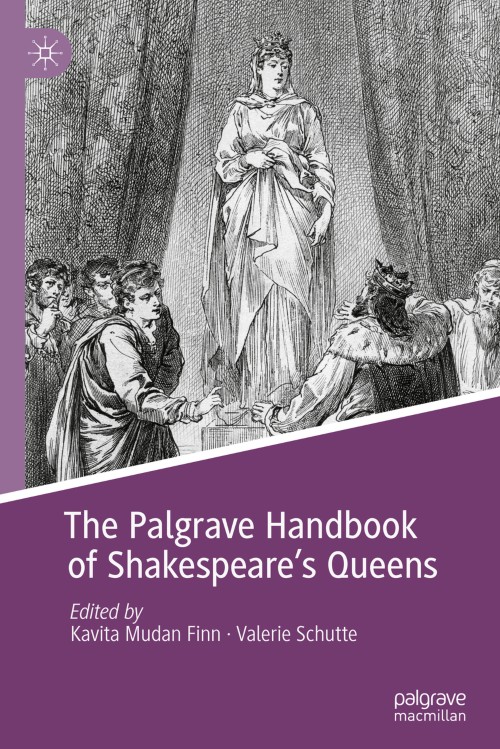
The Palgrave Handbook of Shakespeare's Queens [electronic resource] / edited by Kavita Mudan Finn, Valerie Schutte.
Erişim Adresi
ISBN
9783319745183
Dil Kodu
İngilizce
Yer Numarası
DK/2535
Basım Bildirimi
1st ed. 2018.
Yayın Bilgisi
Cham : Springer International Publishing : Imprint: Palgrave Macmillan, 2018.
Fiziksel Niteleme
XIX, 530 p. online resource.
Dizi
Queenship and Power, 2730-9398
İçindekiler Notu
1. Introduction -- I. General Studies -- 2. Stagecraft and Statecraft: Queenship and Theatricality on the Shakespearean Stage -- 3. Shakespeare's Queens and Collective Forces: Facing Aristocracy, Dealing with Crowds -- II. Queenship & Sovereignty -- 4. "I trust I may not trust thee": Queens and Royal Women's Visions of the World in King John -- 5. Cordelia, Foreign Queenship, and the Commonweal -- 6. "Tremble at patience": Constant Queens and Female Solidarity in The Two Noble Kinsmen and The Winter's Tale -- III. Queenship & Motherhood -- 7. "...to beare the name of a queene": Eleanor, Duchess of Gloucester, and Lady Macbeth: Queens and Motherhood -- 8. Womb Rhetoric: The Martial Maternity of Volumnia, Tamora, and Elizabeth I -- 9. "Good queen, my lord, good queen": Royal Mothers in Shakespeare's Plays -- IV. Queenship & Rhetoric -- 10. Margaret of Anjou and the Rhetoric of Sovereign Violence -- 11. "I can no longer hold me patient!": Margaret, Anger, and Political Voice in Richard III -- 12. Shakespeare's Cleopatra as Metatheatrical Monarch -- V. Absent/Missing Queens -- 13. "Nothing Hath Begot My Something Grief": Invisible Queenship in Shakespeare's Second Tetralogy -- 14. The Queen's Two Bodies in The Winter's Tale -- 15. The Political Aesthetics of Anne Boleyn's Queenship in Henry VIII, or All is True -- 16. The Fortification and Containment of Queen Elizabeth I's Rhetoric and Performance in Shakespeare and Fletcher's Henry VIII -- VI. Staging Queens & Contemporary Politics -- 17. The Princess' Political Mission in Love Labour's Lost: The Embassy to get Aquitaine and "all that is" Navarre's -- 18. Katherine of Aragon, Protestant Purity, and the Anxieties of Cultural Mixing in Shakespeare and Fletcher’s King Henry VIII -- 19. “The Ambition in my Love”: The Theatre of Courtly Conduct in All’s Well That Ends Well -- VII. Queenship & Intertextuality -- 20. As Wise as She is Beautiful: Reconciling Shakespeare’s Fairy Queen and Spenser’s Faerie Queene -- 21. The Princess of France: Difference and Dif(fé)rance in Love’s Labour’s Lost -- 22. “A gap in nature”: Re-writing Cleopatra Through Antony and Cleopatra’s Cosmology -- 23. En un infierno los dos: Catherine of Aragon and Anne Boleyn in Shakespeare & Fletcher’s Henry VIII and Calderón’s La cisma de Inglaterra -- VIII. Performing Queenship -- 24. Margaret of Anjou: Shakespeare's Adapted Heroine -- 25. The Bard, the Bride, and the Muse Bemused: Katherine de Valois on Film in Shakespeare’s Henry V -- 26. The “squeaking Cleopatra boy”: Performance of the Queen’s Two Bodies on the Early Modern Stage.
Özet, vb.
Of Shakespeare’s thirty-seven plays, fifteen include queens. This collection gives these characters their due as powerful early modern women and agents of change, bringing together new perspectives from scholars of literature, history, theater, and the fine arts. Essays span Shakespeare’s career and cover a range of famous and lesser-known queens, from the furious Margaret of Anjou in the Henry VI plays to the quietly powerful Hermione in The Winter’s Tale; from vengeful Tamora in Titus Andronicus to Lady Macbeth. Early chapters situate readers in the critical concerns underpinning any discussion of Shakespeare and queenship: the ambiguous figure of Elizabeth I, and the knotty issue of gender presentation. The focus then moves to analysis of issues such as motherhood, intertextuality, and contemporary political contexts; close readings of individual plays; and investigations of rhetoric and theatricality. Featuring twenty-five chapters witha rich variety of themes and methodologies, this handbook is an invaluable reference for students and scholars, and a unique addition to the fields of Shakespeare and queenship studies.
Konu
Europe __ History __ 1492-.
Literature __ History and criticism.
European literature __ Renaissance, 1450-1600.
Sex.
Theater __ History.
History of Early Modern Europe.
Literary History.
Early Modern and Renaissance Literature.
Gender Studies.
Theatre History.
Literature __ History and criticism.
European literature __ Renaissance, 1450-1600.
Sex.
Theater __ History.
History of Early Modern Europe.
Literary History.
Early Modern and Renaissance Literature.
Gender Studies.
Theatre History.
Diğer Yazarlar
Eseri Alıntıla
Referansları kullanmadan önce gözden geçirmeniz ve varsa gerekli düzeltmeleri yapmanız önerilir.
Dijital Kaynak
MARC Görünümü
LEADER 05863nam a22005895i 4500
001 609863
003 TR_AnAIT
005 20250627064448
007 cr nn 008mamaa
008 180720s2018 sz | s |||| 0|eng d
020 |a9783319745183|9978-3-319-74518-3
024 7 |a10.1007/978-3-319-74518-3|2doi
041 |aeng
049 |aTürk Tarih Kurumu Kütüphanesi
050 4|aD203.2-475
072 7|aHBJD|2bicssc
072 7|aHBLH|2bicssc
072 7|aHIS010000|2bisacsh
072 7|aNHD|x3M|2thema
082 04|a940.903|223
090 |aDK/2535
245 14|aThe Palgrave Handbook of Shakespeare's Queens|h[electronic resource] /|cedited by Kavita Mudan Finn, Valerie Schutte.
250 |a1st ed. 2018.
264 1|aCham :|bSpringer International Publishing :|bImprint: Palgrave Macmillan,|c2018.
300 |aXIX, 530 p.|bonline resource.
336 |atext|btxt|2rdacontent
337 |acomputer|bc|2rdamedia
338 |aonline resource|bcr|2rdacarrier
347 |atext file|bPDF|2rda
490 1 |aQueenship and Power,|x2730-9398
505 0 |a1. Introduction -- I. General Studies -- 2. Stagecraft and Statecraft: Queenship and Theatricality on the Shakespearean Stage -- 3. Shakespeare's Queens and Collective Forces: Facing Aristocracy, Dealing with Crowds -- II. Queenship & Sovereignty -- 4. "I trust I may not trust thee": Queens and Royal Women's Visions of the World in King John -- 5. Cordelia, Foreign Queenship, and the Commonweal -- 6. "Tremble at patience": Constant Queens and Female Solidarity in The Two Noble Kinsmen and The Winter's Tale -- III. Queenship & Motherhood -- 7. "...to beare the name of a queene": Eleanor, Duchess of Gloucester, and Lady Macbeth: Queens and Motherhood -- 8. Womb Rhetoric: The Martial Maternity of Volumnia, Tamora, and Elizabeth I -- 9. "Good queen, my lord, good queen": Royal Mothers in Shakespeare's Plays -- IV. Queenship & Rhetoric -- 10. Margaret of Anjou and the Rhetoric of Sovereign Violence -- 11. "I can no longer hold me patient!": Margaret, Anger, and Political Voice in Richard III -- 12. Shakespeare's Cleopatra as Metatheatrical Monarch -- V. Absent/Missing Queens -- 13. "Nothing Hath Begot My Something Grief": Invisible Queenship in Shakespeare's Second Tetralogy -- 14. The Queen's Two Bodies in The Winter's Tale -- 15. The Political Aesthetics of Anne Boleyn's Queenship in Henry VIII, or All is True -- 16. The Fortification and Containment of Queen Elizabeth I's Rhetoric and Performance in Shakespeare and Fletcher's Henry VIII -- VI. Staging Queens & Contemporary Politics -- 17. The Princess' Political Mission in Love Labour's Lost: The Embassy to get Aquitaine and "all that is" Navarre's -- 18. Katherine of Aragon, Protestant Purity, and the Anxieties of Cultural Mixing in Shakespeare and Fletcher’s King Henry VIII -- 19. “The Ambition in my Love”: The Theatre of Courtly Conduct in All’s Well That Ends Well -- VII. Queenship & Intertextuality -- 20. As Wise as She is Beautiful: Reconciling Shakespeare’s Fairy Queen and Spenser’s Faerie Queene -- 21. The Princess of France: Difference and Dif(fé)rance in Love’s Labour’s Lost -- 22. “A gap in nature”: Re-writing Cleopatra Through Antony and Cleopatra’s Cosmology -- 23. En un infierno los dos: Catherine of Aragon and Anne Boleyn in Shakespeare & Fletcher’s Henry VIII and Calderón’s La cisma de Inglaterra -- VIII. Performing Queenship -- 24. Margaret of Anjou: Shakespeare's Adapted Heroine -- 25. The Bard, the Bride, and the Muse Bemused: Katherine de Valois on Film in Shakespeare’s Henry V -- 26. The “squeaking Cleopatra boy”: Performance of the Queen’s Two Bodies on the Early Modern Stage.
520 |aOf Shakespeare’s thirty-seven plays, fifteen include queens. This collection gives these characters their due as powerful early modern women and agents of change, bringing together new perspectives from scholars of literature, history, theater, and the fine arts. Essays span Shakespeare’s career and cover a range of famous and lesser-known queens, from the furious Margaret of Anjou in the Henry VI plays to the quietly powerful Hermione in The Winter’s Tale; from vengeful Tamora in Titus Andronicus to Lady Macbeth. Early chapters situate readers in the critical concerns underpinning any discussion of Shakespeare and queenship: the ambiguous figure of Elizabeth I, and the knotty issue of gender presentation. The focus then moves to analysis of issues such as motherhood, intertextuality, and contemporary political contexts; close readings of individual plays; and investigations of rhetoric and theatricality. Featuring twenty-five chapters witha rich variety of themes and methodologies, this handbook is an invaluable reference for students and scholars, and a unique addition to the fields of Shakespeare and queenship studies.
650 0|aEurope|xHistory|x1492-.
650 0|aLiterature|xHistory and criticism.
650 0|aEuropean literature|xRenaissance, 1450-1600.
650 0|aSex.
650 0|aTheater|xHistory.
650 14|aHistory of Early Modern Europe.
650 24|aLiterary History.
650 24|aEarly Modern and Renaissance Literature.
650 24|aGender Studies.
650 24|aTheatre History.
700 1 |aFinn, Kavita Mudan.|eeditor.|4edt|4http://id.loc.gov/vocabulary/relators/edt
700 1 |aSchutte, Valerie.|eeditor.|4edt|4http://id.loc.gov/vocabulary/relators/edt
773 0 |tSpringer Nature eBook
776 08|iPrinted edition:|z9783319745176
776 08|iPrinted edition:|z9783319745190
776 08|iPrinted edition:|z9783030090111
830 0|aQueenship and Power,|x2730-9398
856 40|uhttps://doi.org/10.1007/978-3-319-74518-3
912 |aZDB-2-HTY
912 |aZDB-2-SXH
950 |aHistory (SpringerNature-41172)
950 |aHistory (R0) (SpringerNature-43722)
001 609863
003 TR_AnAIT
005 20250627064448
007 cr nn 008mamaa
008 180720s2018 sz | s |||| 0|eng d
020 |a9783319745183|9978-3-319-74518-3
024 7 |a10.1007/978-3-319-74518-3|2doi
041 |aeng
049 |aTürk Tarih Kurumu Kütüphanesi
050 4|aD203.2-475
072 7|aHBJD|2bicssc
072 7|aHBLH|2bicssc
072 7|aHIS010000|2bisacsh
072 7|aNHD|x3M|2thema
082 04|a940.903|223
090 |aDK/2535
245 14|aThe Palgrave Handbook of Shakespeare's Queens|h[electronic resource] /|cedited by Kavita Mudan Finn, Valerie Schutte.
250 |a1st ed. 2018.
264 1|aCham :|bSpringer International Publishing :|bImprint: Palgrave Macmillan,|c2018.
300 |aXIX, 530 p.|bonline resource.
336 |atext|btxt|2rdacontent
337 |acomputer|bc|2rdamedia
338 |aonline resource|bcr|2rdacarrier
347 |atext file|bPDF|2rda
490 1 |aQueenship and Power,|x2730-9398
505 0 |a1. Introduction -- I. General Studies -- 2. Stagecraft and Statecraft: Queenship and Theatricality on the Shakespearean Stage -- 3. Shakespeare's Queens and Collective Forces: Facing Aristocracy, Dealing with Crowds -- II. Queenship & Sovereignty -- 4. "I trust I may not trust thee": Queens and Royal Women's Visions of the World in King John -- 5. Cordelia, Foreign Queenship, and the Commonweal -- 6. "Tremble at patience": Constant Queens and Female Solidarity in The Two Noble Kinsmen and The Winter's Tale -- III. Queenship & Motherhood -- 7. "...to beare the name of a queene": Eleanor, Duchess of Gloucester, and Lady Macbeth: Queens and Motherhood -- 8. Womb Rhetoric: The Martial Maternity of Volumnia, Tamora, and Elizabeth I -- 9. "Good queen, my lord, good queen": Royal Mothers in Shakespeare's Plays -- IV. Queenship & Rhetoric -- 10. Margaret of Anjou and the Rhetoric of Sovereign Violence -- 11. "I can no longer hold me patient!": Margaret, Anger, and Political Voice in Richard III -- 12. Shakespeare's Cleopatra as Metatheatrical Monarch -- V. Absent/Missing Queens -- 13. "Nothing Hath Begot My Something Grief": Invisible Queenship in Shakespeare's Second Tetralogy -- 14. The Queen's Two Bodies in The Winter's Tale -- 15. The Political Aesthetics of Anne Boleyn's Queenship in Henry VIII, or All is True -- 16. The Fortification and Containment of Queen Elizabeth I's Rhetoric and Performance in Shakespeare and Fletcher's Henry VIII -- VI. Staging Queens & Contemporary Politics -- 17. The Princess' Political Mission in Love Labour's Lost: The Embassy to get Aquitaine and "all that is" Navarre's -- 18. Katherine of Aragon, Protestant Purity, and the Anxieties of Cultural Mixing in Shakespeare and Fletcher’s King Henry VIII -- 19. “The Ambition in my Love”: The Theatre of Courtly Conduct in All’s Well That Ends Well -- VII. Queenship & Intertextuality -- 20. As Wise as She is Beautiful: Reconciling Shakespeare’s Fairy Queen and Spenser’s Faerie Queene -- 21. The Princess of France: Difference and Dif(fé)rance in Love’s Labour’s Lost -- 22. “A gap in nature”: Re-writing Cleopatra Through Antony and Cleopatra’s Cosmology -- 23. En un infierno los dos: Catherine of Aragon and Anne Boleyn in Shakespeare & Fletcher’s Henry VIII and Calderón’s La cisma de Inglaterra -- VIII. Performing Queenship -- 24. Margaret of Anjou: Shakespeare's Adapted Heroine -- 25. The Bard, the Bride, and the Muse Bemused: Katherine de Valois on Film in Shakespeare’s Henry V -- 26. The “squeaking Cleopatra boy”: Performance of the Queen’s Two Bodies on the Early Modern Stage.
520 |aOf Shakespeare’s thirty-seven plays, fifteen include queens. This collection gives these characters their due as powerful early modern women and agents of change, bringing together new perspectives from scholars of literature, history, theater, and the fine arts. Essays span Shakespeare’s career and cover a range of famous and lesser-known queens, from the furious Margaret of Anjou in the Henry VI plays to the quietly powerful Hermione in The Winter’s Tale; from vengeful Tamora in Titus Andronicus to Lady Macbeth. Early chapters situate readers in the critical concerns underpinning any discussion of Shakespeare and queenship: the ambiguous figure of Elizabeth I, and the knotty issue of gender presentation. The focus then moves to analysis of issues such as motherhood, intertextuality, and contemporary political contexts; close readings of individual plays; and investigations of rhetoric and theatricality. Featuring twenty-five chapters witha rich variety of themes and methodologies, this handbook is an invaluable reference for students and scholars, and a unique addition to the fields of Shakespeare and queenship studies.
650 0|aEurope|xHistory|x1492-.
650 0|aLiterature|xHistory and criticism.
650 0|aEuropean literature|xRenaissance, 1450-1600.
650 0|aSex.
650 0|aTheater|xHistory.
650 14|aHistory of Early Modern Europe.
650 24|aLiterary History.
650 24|aEarly Modern and Renaissance Literature.
650 24|aGender Studies.
650 24|aTheatre History.
700 1 |aFinn, Kavita Mudan.|eeditor.|4edt|4http://id.loc.gov/vocabulary/relators/edt
700 1 |aSchutte, Valerie.|eeditor.|4edt|4http://id.loc.gov/vocabulary/relators/edt
773 0 |tSpringer Nature eBook
776 08|iPrinted edition:|z9783319745176
776 08|iPrinted edition:|z9783319745190
776 08|iPrinted edition:|z9783030090111
830 0|aQueenship and Power,|x2730-9398
856 40|uhttps://doi.org/10.1007/978-3-319-74518-3
912 |aZDB-2-HTY
912 |aZDB-2-SXH
950 |aHistory (SpringerNature-41172)
950 |aHistory (R0) (SpringerNature-43722)
Materyaller
Depodan talep edilen materyal sadece kütüphane içerisinde kullanılmaktadır.
Materyal dışarıya ödünç verilmemektedir.
Materyal dışarıya ödünç verilmemektedir.
