LEADER 03543nam a22005775i 4500
001 609891
003 TR_AnAIT
005 20250627064352
007 cr nn 008mamaa
008 211028s2021 sz | s |||| 0|eng d
020 |a9783030280994|9978-3-030-28099-4
024 7 |a10.1007/978-3-030-28099-4|2doi
041 |aeng
049 |aTürk Tarih Kurumu Kütüphanesi
050 4|aDT1-3415
072 7|aHBJH|2bicssc
072 7|aHIS001000|2bisacsh
072 7|aNHH|2thema
082 04|a960|223
090 |aDK/2563
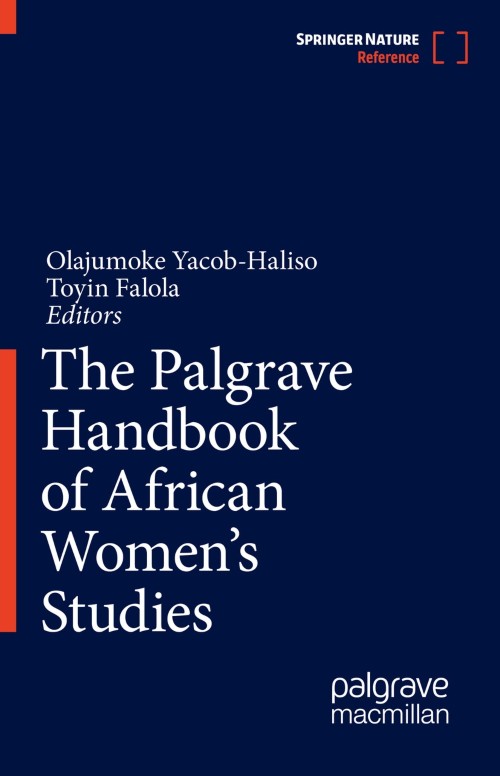
245 14|aThe Palgrave Handbook of African Women's Studies|h[electronic resource] /|cedited by Olajumoke Yacob-Haliso, Toyin Falola.
250 |a1st ed. 2021.
264 1|aCham :|bSpringer International Publishing :|bImprint: Palgrave Macmillan,|c2021.
300 |a54 illus., 37 illus. in color. eReference.|bonline resource.
336 |atext|btxt|2rdacontent
337 |acomputer|bc|2rdamedia
338 |aonline resource|bcr|2rdacarrier
347 |atext file|bPDF|2rda
520 |aThis definitive handbook is the first reference of its kind bringing together knowledge, scholarship, and debates on themes and issues concerning African women everywhere. It unearths, critiques, reviews, analyses, theorizes, synthesizes and evaluates African women’s historical, social, political, economic, local and global lives and experiences with a view to decolonizing the corpus. This Handbook questions the gendered roles and positions of African women and the structures, institutions, and processes of policy, politics, and knowledge production that continually construct, deconstruct, and reconstruct African women and the study of them. Contributors offer a consistent emphasis on debunking erroneous and misleading myths about African women's roles and positions, bringing their previously marginalized stories to relief, and ultimately re-writing their histories. Thus, this Handbook enlarges the scope of the field, challenges its orthodoxies, and engenders new subjects, theories,and approaches. This reference work includes, to the greatest extent possible, the voices of African women themselves as writers of their own stories. The detailed, rigorous and up-to-date analyses in the work represent a variety of theoretical, methodological, and transdisciplinary approaches. This reference work will prove vital in charting new directions for the study of African women, and will reverberate in future studies, generating new debates and engendering further interest.
650 0|aAfrica|xHistory.
650 0|aEthnology|xAfrica.
650 0|aCulture.
650 0|aAfrica|xPolitics and government.
650 0|aSex.
650 0|aIdentity politics.
650 0|aWomen|xHistory.
650 14|aAfrican History.
650 24|aAfrican Culture.
650 24|aAfrican Politics.
650 24|aGender Studies.
650 24|aPolitics and Gender.
650 24|aWomen's History / History of Gender.
700 1 |aYacob-Haliso, Olajumoke.|eeditor.|4edt|4http://id.loc.gov/vocabulary/relators/edt
700 1 |aFalola, Toyin.|eeditor.|4edt|4http://id.loc.gov/vocabulary/relators/edt
773 0 |tSpringer Nature eReference
776 08|iPrinted edition:|z9783030280987
856 40|uhttps://doi.org/10.1007/978-3-030-28099-4
912 |aZDB-2-HTY
912 |aZDB-2-SXRH
912 |aZDB-2-SXMH
950 |aHistory (SpringerNature-41172)
950 |aReference Module Humanities and Social Sciences (SpringerNature-43749)
950 |aReference Module Humanities (SpringerNature-85197)