LEADER 04126nam a22005655i 4500
001 609909
003 TR_AnAIT
005 20250627064318
007 cr nn 008mamaa
008 221029s2022 sz | s |||| 0|eng d
020 |a9783031101236|9978-3-031-10123-6
024 7 |a10.1007/978-3-031-10123-6|2doi
041 |aeng
049 |aTürk Tarih Kurumu Kütüphanesi
050 4|aDU1-950
072 7|aHBJQ|2bicssc
072 7|a1MBF|2bicssc
072 7|aHIS004000|2bisacsh
072 7|aNHQ|x1MBF|2thema
082 04|a994|223
090 |aDK/2581
100 1 |aKaiser, Max.|eauthor.|4aut|4http://id.loc.gov/vocabulary/relators/aut
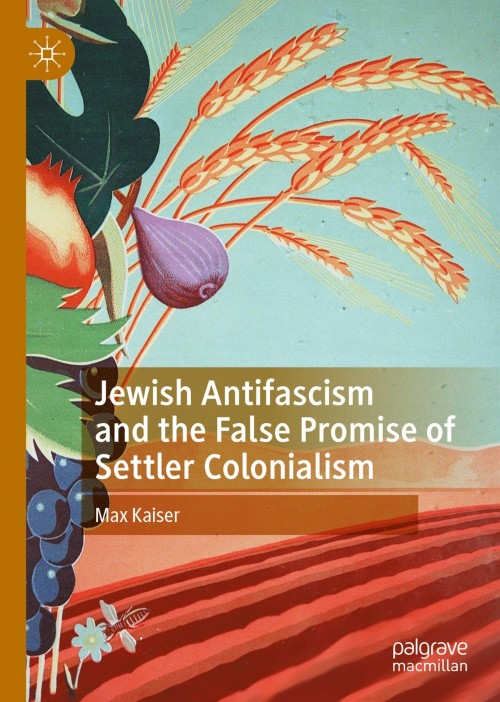
245 10|aJewish Antifascism and the False Promise of Settler Colonialism|h[electronic resource] /|cby Max Kaiser.
250 |a1st ed. 2022.
264 1|aCham :|bSpringer International Publishing :|bImprint: Palgrave Macmillan,|c2022.
300 |aIX, 302 p.|bonline resource.
336 |atext|btxt|2rdacontent
337 |acomputer|bc|2rdamedia
338 |aonline resource|bcr|2rdacarrier
347 |atext file|bPDF|2rda
505 0 |a1. Introduction -- 2. Remembering the Holocaust, Fighting Fascism -- 3. Jewish Antifascism, Communism, and Antisemitism -- 4. The Jewish Left, Zionism, and the Diaspora -- 5. The Anti-German Migration Campaign and the Fall of the Jewish Antifascist Left -- 6. Jewish Antifascism, Australian Cultural Nationalism, and Settler Colonialism -- 7. Defining a Jewish Antifascist Minor Literature -- 8. Conclusion.
520 |a‘Across the diaspora, young progressive Jews look at the institutions that run their communities and ask: How did they become morally corrupt? Max Kaiser answers that question for Australia. But, even more importantly, he excavates a lost anti-fascist past from which a younger Jewish generation can draw inspiration as it battles the resurgent fascism of our age.’ – Peter Beinart, editor-at-large, Jewish Currents ‘Jewish anti-fascism of the 1940s is a missing but important chapter in the history of Jews in Australia, as well as the history of the Left and Australian intellectuals’ attitudes to settler colonialism and Australia’s Indigenous population. Now Max Kaiser has written it in a sympathetic, erudite and readable narrative that brings back to life such colourful figures as the writer Judah Waten, artist Yosl Bergner and activists Norman and Evelyn Rothfield.’ – Sheila Fitzpatrick, Australian Catholic University This book takes a timely look at histories of radical Jewish movements, their modes of Holocaust memorialisation, and their relationships with broader anti-colonial and anti-racist struggles. Its primary focus is Australia, where Jewish antifascism was a major political and cultural force in Jewish communities in the 1940s and early 1950s. This cultural and intellectual history of Jewish antifascism utilises a transnational lens to provide an exploration of a Jewish antifascist ideology that took hold in the middle of the twentieth century across Jewish communities worldwide. It argues that Jewish antifascism offered an alternate path for Jewish politics that was foreclosed by mutually reinforcing ideologies of settler colonialism, both in Palestine and Australia. Max Kaiser lives on the land of the Wurundjeri people of the Kulin nation. He completed his PhD at the University of Melbourne, Australia.
650 0|aAustralasia.
650 0|aHistory.
650 0|aImperialism.
650 0|aWorld War, 1939-1945.
650 0|aJudaism|xHistory.
650 0|aWorld politics.
650 14|aAustralian History.
650 24|aImperialism and Colonialism.
650 24|aHistory of World War II and the Holocaust.
650 24|aJewish History.
650 24|aPolitical History.
773 0 |tSpringer Nature eBook
776 08|iPrinted edition:|z9783031101229
776 08|iPrinted edition:|z9783031101243
776 08|iPrinted edition:|z9783031101250
856 40|uhttps://doi.org/10.1007/978-3-031-10123-6
912 |aZDB-2-HTY
912 |aZDB-2-SXH
950 |aHistory (SpringerNature-41172)
950 |aHistory (R0) (SpringerNature-43722)