

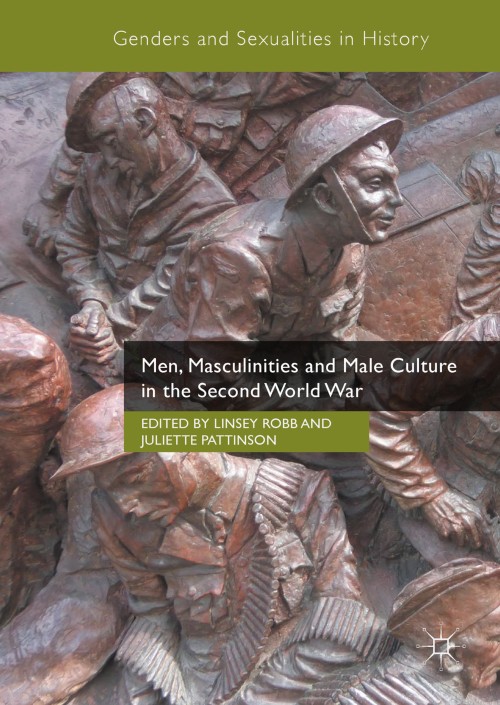
Men, Masculinities and Male Culture in the Second World War [electronic resource] / edited by Linsey Robb, Juliette Pattinson.
Erişim Adresi
ISBN
9781349952908
Dil Kodu
İngilizce
Yer Numarası
DK/2636
Basım Bildirimi
1st ed. 2018.
Yayın Bilgisi
London : Palgrave Macmillan UK : Imprint: Palgrave Macmillan, 2018.
Fiziksel Niteleme
XXII, 218 p. 9 illus., 5 illus. in color. online resource.
Dizi
Genders and Sexualities in History, 2730-9487
İçindekiler Notu
Chapter 1. ‘Masculinities at war: men and male culture in the Second World War’; Linsey Robb and Juliette Pattinson.- Part One: The ‘Soldier Hero’ -- Chapter 2. ‘Fantasies of the “soldier hero”, frustrations of the Jedburghs'; Juliette Pattinson.- Chapter 3. ‘“Man, lunatic or corpse”: fear, wounding and death in the British Army, 1939-45’; Emma Newlands.- Chapter 4. ‘“Pinky Smith looks gorgeous!”: female impersonators and male bonding in prisoner of war camps for British servicemen in Europe’; Clare Makepeace.- Chapter 5. ‘Becoming “A Man” during the Battle of Britain: combat, masculinity and rites of passage in the memoirs of “The Few”’; Frances Houghton.- Part Two: The Home Front Man.- Chapter 6. ‘Rebuilding “real men”: work and working class male civilian bodies in wartime’; Arthur McIvor -- Chapter 7. ‘“Bright chaps for hush-hush jobs”: masculinity, class and civilians in uniform at Bletchley Park’; Chris Smith.- Chapter 8. ‘“The Cushy Number”: civilian men in British post-war representations of the Second World War’; Linsey Robb.- Chapter 9. ‘Commemorating invisible men: reserved occupations in bronze and stone’; Corinna Peniston-Bird -- Index.
Özet, vb.
This edited collection brings together cutting-edge research on British masculinities and male culture, considering the myriad ways British men experienced, understood and remembered their exploits during the Second World War, as active combatants, prisoners and as civilian workers. It examines male identities, roles and representations in the armed forces, with particular focus on the RAF, army, volunteers for dangerous duties and prisoners of war, and on the home front, with case studies of reserved occupations and Bletchley Park, and examines the ways such roles have been remembered in post-war years in memoirs, film and memorials. As such this analysis of previously underexplored male experiences makes a major contribution to the historiography of Britain in the Second World War, as well as to socio-cultural history, cultural studies and gender studies.
Konu
World War, 1939-1945.
Social history.
Military history.
Civilization __ History.
Sex.
History of World War II and the Holocaust.
Social History.
Military History.
Cultural History.
Gender Studies.
Social history.
Military history.
Civilization __ History.
Sex.
History of World War II and the Holocaust.
Social History.
Military History.
Cultural History.
Gender Studies.
Diğer Yazarlar
