LEADER 03460nam a22005295i 4500
001 610024
003 TR_AnAIT
005 20250627063933
007 cr nn 008mamaa
008 220822s2022 sz | s |||| 0|eng d
020 |a9783030996888|9978-3-030-99688-8
024 7 |a10.1007/978-3-030-99688-8|2doi
041 |aeng
049 |aTürk Tarih Kurumu Kütüphanesi
050 4|aD16.14
072 7|aHBTD|2bicssc
072 7|aHIS016000|2bisacsh
072 7|aNHTD|2thema
082 04|a907.2|223
090 |aDK/2696
100 1 |aXu, Youwei.|eauthor.|4aut|4http://id.loc.gov/vocabulary/relators/aut
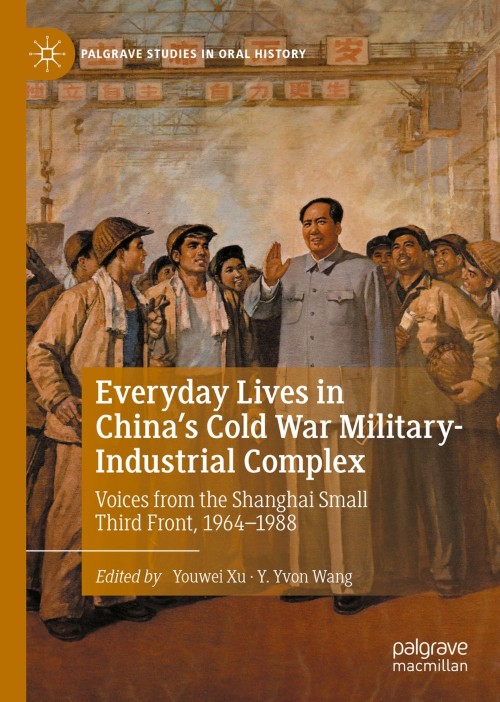
245 10|aEveryday Lives in China's Cold War Military-Industrial Complex|h[electronic resource] :|bVoices from the Shanghai Small Third Front, 1964-1988 /|cby Youwei Xu, Y. Yvon Wang.
250 |a1st ed. 2022.
264 1|aCham :|bSpringer International Publishing :|bImprint: Palgrave Macmillan,|c2022.
300 |aXXVII, 371 p. 29 illus., 12 illus. in color.|bonline resource.
336 |atext|btxt|2rdacontent
337 |acomputer|bc|2rdamedia
338 |aonline resource|bcr|2rdacarrier
347 |atext file|bPDF|2rda
490 1 |aPalgrave Studies in Oral History,|x2731-5681
505 0 |a1. Translator's Introduction -- 2. Units, Measures, Currency, Ages, and Names -- 3. An Official Account of the Small Third Front in Guichi, Anhui -- 4. Going to the Small Third Front -- 5. On the Job -- 6. Material Life and Healthcare -- 7. Education, Media and Culture -- 8. Gender and Sex -- 9. Marriage, Reproduction, Family -- 10. Politics, Social Order, and Military Affairs -- 11. Shanghainese vs. Locals -- 12. Appraisals and Critiques.
520 |aThis book translates and contextualizes the recollections of men and women who built, lived, and worked in some of the factory compounds relocated from China’s most cosmopolitan city—Shanghai. Small Third Line factories became oases of relatively prosperous urban life among more impoverished agricultural communities. These accounts, plus the guiding questions, contextual notes, and further readings accompanying them, show how everyday lives fit into the sweeping geopolitical changes in China and the world during the Cold War era. Furthermore, they reveal how the Chinese Communist Party’s military-industrial strategies have shaped China’s economy and society in the post-Mao era. The approachable translations and insight into areas of life rarely covered by political or diplomatic histories like sexuality and popular culture make this book highly accessible for classroom use and the general-interest reader. Xu Youwei is Professor of History at Shanghai University, China. Y. Yvon Wang is Associate Professor of History at the University of Toronto, Canada. .
650 0|aOral history.
650 0|aChina|xHistory.
650 0|aMilitary history.
650 14|aOral History.
650 24|aHistory of China.
650 24|aMilitary History.
700 1 |aWang, Y. Yvon.|eauthor.|4aut|4http://id.loc.gov/vocabulary/relators/aut
773 0 |tSpringer Nature eBook
776 08|iPrinted edition:|z9783030996871
776 08|iPrinted edition:|z9783030996895
776 08|iPrinted edition:|z9783030996901
830 0|aPalgrave Studies in Oral History,|x2731-5681
856 40|uhttps://doi.org/10.1007/978-3-030-99688-8
912 |aZDB-2-HTY
912 |aZDB-2-SXH
950 |aHistory (SpringerNature-41172)
950 |aHistory (R0) (SpringerNature-43722)