LEADER 03117nam a22005415i 4500
001 610101
003 TR_AnAIT
005 20250627063702
007 cr nn 008mamaa
008 180823s2018 sz | s |||| 0|eng d
020 |a9783319941653|9978-3-319-94165-3
024 7 |a10.1007/978-3-319-94165-3|2doi
041 |aeng
049 |aTürk Tarih Kurumu Kütüphanesi
050 4|aDT1-3415
072 7|aHBJH|2bicssc
072 7|aHIS001000|2bisacsh
072 7|aNHH|2thema
082 04|a960|223
090 |aDK/2773
100 1 |aSerels, Steven.|eauthor.|4aut|4http://id.loc.gov/vocabulary/relators/aut
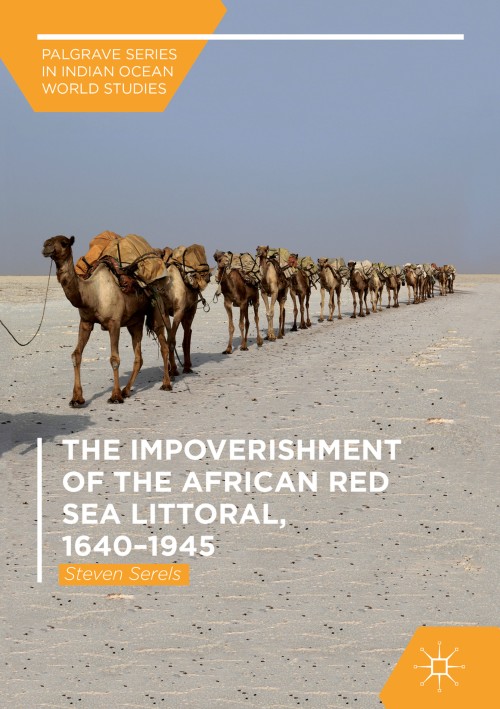
245 14|aThe Impoverishment of the African Red Sea Littoral, 1640–1945|h[electronic resource] /|cby Steven Serels.
250 |a1st ed. 2018.
264 1|aCham :|bSpringer International Publishing :|bImprint: Palgrave Macmillan,|c2018.
300 |aXV, 204 p. 3 illus.|bonline resource.
336 |atext|btxt|2rdacontent
337 |acomputer|bc|2rdamedia
338 |aonline resource|bcr|2rdacarrier
347 |atext file|bPDF|2rda
490 1 |aPalgrave Series in Indian Ocean World Studies,|x2730-9711
505 0 |a1. Introduction: Becoming Poor -- 2. Survival by Conversion, 1640–1840 -- 3. Divided and Conquered, 1840–1883 -- 4. War, Disease, Famine, Destruction, 1883–1893 -- 5. An Unequal Recovery, 1893–1913 -- 6. The Cost of Living Becomes Unaffordable, 1913–1945 -- 7. Conclusion: Being Poor.
520 |aThe African Red Sea Littoral, currently divided between Sudan, Eritrea, Ethiopia, and Djibouti, is one of the poorest regions in the world. But the pastoralist communities indigenous to this region were not always poor—historically, they had access to a variety of resources that allowed them to prosper in the harsh, arid environment. This access was mediated by a robust moral economy of pastoralism that acted as a social safety net. Steven Serels charts the erosion of this moral economy, a slow-moving process that began during the Little Ice Age mega-drought of the seventeenth and eighteenth centuries and continued through the devastating famines of the twentieth century. By examining mass sedentarization after the Second World War as merely the latest manifestation of an inter-generational environmental and economic crisis, this book offers an innovative lens for understanding poverty in northeastern Africa.
650 0|aAfrica|xHistory.
650 0|aImperialism.
650 0|aWorld history.
650 0|aEconomic history.
650 14|aAfrican History.
650 24|aImperialism and Colonialism.
650 24|aWorld History, Global and Transnational History.
650 24|aEconomic History.
773 0 |tSpringer Nature eBook
776 08|iPrinted edition:|z9783319941646
776 08|iPrinted edition:|z9783319941660
776 08|iPrinted edition:|z9783030068073
830 0|aPalgrave Series in Indian Ocean World Studies,|x2730-9711
856 40|uhttps://doi.org/10.1007/978-3-319-94165-3
912 |aZDB-2-HTY
912 |aZDB-2-SXH
950 |aHistory (SpringerNature-41172)
950 |aHistory (R0) (SpringerNature-43722)