

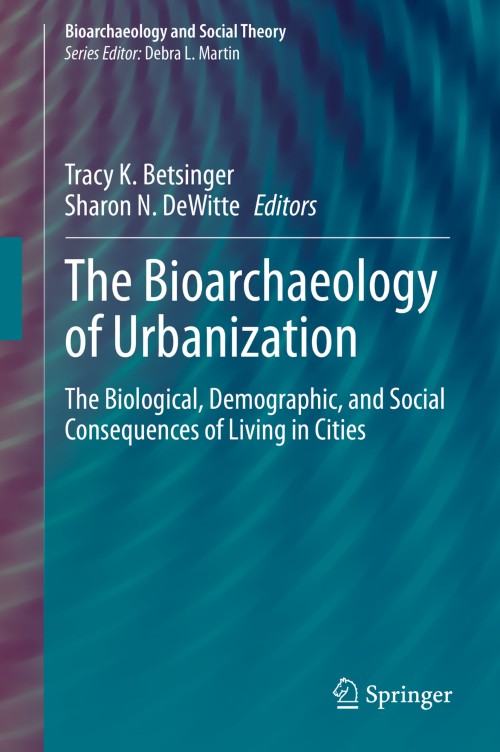
The Bioarchaeology of Urbanization [electronic resource] : The Biological, Demographic, and Social Consequences of Living in Cities / edited by Tracy K. Betsinger, Sharon N. DeWitte.
Erişim Adresi
ISBN
9783030534172
Dil Kodu
İngilizce
Yer Numarası
DK/2837
Basım Bildirimi
1st ed. 2020.
Yayın Bilgisi
Cham : Springer International Publishing : Imprint: Springer, 2020.
Fiziksel Niteleme
XIX, 538 p. 100 illus., 48 illus. in color. online resource.
Dizi
Bioarchaeology and Social Theory, 2567-6814
İçindekiler Notu
Chapter 1. Introduction to the Bioarchaeology of Urbanization (Sharon N. DeWitte and Tracy K. Betsinger) -- Part I: Early Urban Centers -- Chapter 2. Changing People, Changing Settlements? A Perspective on Urbanization from Roman Britain (Rebecca C. Redfern) -- Chapter 3. Ritual, Urbanism and the Everyday: Mortuary Behavior in the Indus Civilization (Gwen Robbins Schug) -- Chapter 4. Urbanization and Parasitism: Archaeoparisitology of South Korea (Dong Hoon Shin, Min Seo, Sang-Yuck Shim, Jong Ha Hong and Jieun Kim) -- Part II Medieval and Post-medieval Cities -- Chapter 5. Dietary Variation in an Urbanizing City: A Temporal Analysis of Diet in Late Medieval London Using Stable Isotopes (Brittany S. Walter, Sharon N. DeWitte, Tosha Dupras and Julia Beaumont) -- Chapter 6. Bioarchaeological Aspects of the Early Stage of Urbanization in Sigtuna, Sweden (Anna Kjellström_ -- Chapter 7. Markets and Mycobacteria: A Comprehensive Analysis of the Influence of Urbanization on Leprosy and TuberculosisPrevalence in Denmark (AD 1200-1536) (K. Saige Kelmelis, Vicki R.L. Kristensen, Mette Alexandersen and Dorthe Dangvard Pedersen) -- Chapter 8. The Bioarchaeology of Urbanization in Denmark (Julia A. Gamble) -- Chapter 9. Frailty, Survivorship, and Stress in Medieval Poland: A Comparison of Urban and Rural Populations (Tracy K. Betsinger, Sharon N. DeWitte, Amanda M. Agnew and Hedy Justus) -- Chapter 10. Urban-Rural Differences in Respiratory Tract Infections in Medieval and Early Modern Polish Subadult Samples (Marta Krenz-Niedbała and Sylwia Łukasik) -- Part III: Premodern and Industrial Cities -- Chapter 11. Colonial Urbanism: A Comparative Exploration of Skeletal Stress in the Two Eighteenth Century North American Colonies (Amy B. Scott, Marie Danforth, Sarah MacInnes, Nicole Hughes and Mattia Fonzo) -- Chapter 12. Eighteenth Century Urban Growth and Parasites at the Fotress of Louisbourg, Nova Scotia, Canada (Mattia Fonzo, Amy B. Scott and Mike Duffy) -- Chapter 13. Exploring Patterns of Appositional Growth Amongst Urban Children (Rachel Ives and Louise Humphrey) -- Chapter 14. Childhood Morbidity and Mortality in Europe’s Industrial Era (Sarah C. Reedy) -- Chapter 15. Respiratory Stress at the Periphery of Industrial-Era London: Insight from Parishes Within and Outside the City (Derek A. Boyd) -- Chapter 16. Is the Pen Mightier Than the Sword? Exploring Urban and Rural Health in Victorian England and Wales Using the Registrar General Reports (Gillian Crane-Kramer and Jo Buckberry) -- Chapter 17. The Nabataean Urban Experiment and Dental Disease and Childhood Stress (Megan Perry and Alysha Lieurance) -- Chapter 18. Reconstructed Weaning Ages in Urbanized Cities of Premodern Japan: Insight into the Relationship Between Employment and Fertility (Takumi Tsutaya, Yukari Kakinuma and Minoru Yoneda) -- Chapter 19. "What Lies Beneath Those Urban Settings? The Value of Bioarchaeology in Understanding the Complexities of Urban Health and Well-Being" (Charlotte Ann Roberts) -- Index.
Özet, vb.
Urbanization has long been a focus of bioarchaeological research, but what is missing from the literature is an exploration of the geographic and temporal range of human biological, demographic, and sociocultural responses to this major shift in settlement pattern. Urbanization is characterized by increased population size and density, and is frequently assumed to produce negative biological effects. However, the relationship between urbanization and human “health” requires careful examination given the heterogeneity that exists within and between urban contexts. Studies of contemporary urbanization have found both positive and negative outcomes, which likely have parallels in past human societies. This volume is unique as there is no current bioarchaeological book addressing urbanization, despite various studies of urbanization having been conducted. Collectively, this volume provides a more holistic understanding of the relationships between urbanization and various aspectsof human population health. The insight gained from this volume will provide not only a better understanding of urbanization in our past, but it will also have potential implications for those studying urbanization in contemporary communities.
Konu
Archaeology.
Archaeology.
Archaeology.
Diğer Yazarlar
Eseri Alıntıla
Referansları kullanmadan önce gözden geçirmeniz ve varsa gerekli düzeltmeleri yapmanız önerilir.
Dijital Kaynak
MARC Görünümü
LEADER 06072nam a22004815i 4500
001 610165
003 TR_AnAIT
005 20250627063459
007 cr nn 008mamaa
008 201105s2020 sz | s |||| 0|eng d
020 |a9783030534172|9978-3-030-53417-2
024 7 |a10.1007/978-3-030-53417-2|2doi
041 |aeng
049 |aTürk Tarih Kurumu Kütüphanesi
050 4|aCC1-960
072 7|aHD|2bicssc
072 7|aSOC003000|2bisacsh
072 7|aNK|2thema
082 04|a930.1|223
090 |aDK/2837
245 14|aThe Bioarchaeology of Urbanization|h[electronic resource] :|bThe Biological, Demographic, and Social Consequences of Living in Cities /|cedited by Tracy K. Betsinger, Sharon N. DeWitte.
250 |a1st ed. 2020.
264 1|aCham :|bSpringer International Publishing :|bImprint: Springer,|c2020.
300 |aXIX, 538 p. 100 illus., 48 illus. in color.|bonline resource.
336 |atext|btxt|2rdacontent
337 |acomputer|bc|2rdamedia
338 |aonline resource|bcr|2rdacarrier
347 |atext file|bPDF|2rda
490 1 |aBioarchaeology and Social Theory,|x2567-6814
505 0 |aChapter 1. Introduction to the Bioarchaeology of Urbanization (Sharon N. DeWitte and Tracy K. Betsinger) -- Part I: Early Urban Centers -- Chapter 2. Changing People, Changing Settlements? A Perspective on Urbanization from Roman Britain (Rebecca C. Redfern) -- Chapter 3. Ritual, Urbanism and the Everyday: Mortuary Behavior in the Indus Civilization (Gwen Robbins Schug) -- Chapter 4. Urbanization and Parasitism: Archaeoparisitology of South Korea (Dong Hoon Shin, Min Seo, Sang-Yuck Shim, Jong Ha Hong and Jieun Kim) -- Part II Medieval and Post-medieval Cities -- Chapter 5. Dietary Variation in an Urbanizing City: A Temporal Analysis of Diet in Late Medieval London Using Stable Isotopes (Brittany S. Walter, Sharon N. DeWitte, Tosha Dupras and Julia Beaumont) -- Chapter 6. Bioarchaeological Aspects of the Early Stage of Urbanization in Sigtuna, Sweden (Anna Kjellström_ -- Chapter 7. Markets and Mycobacteria: A Comprehensive Analysis of the Influence of Urbanization on Leprosy and TuberculosisPrevalence in Denmark (AD 1200-1536) (K. Saige Kelmelis, Vicki R.L. Kristensen, Mette Alexandersen and Dorthe Dangvard Pedersen) -- Chapter 8. The Bioarchaeology of Urbanization in Denmark (Julia A. Gamble) -- Chapter 9. Frailty, Survivorship, and Stress in Medieval Poland: A Comparison of Urban and Rural Populations (Tracy K. Betsinger, Sharon N. DeWitte, Amanda M. Agnew and Hedy Justus) -- Chapter 10. Urban-Rural Differences in Respiratory Tract Infections in Medieval and Early Modern Polish Subadult Samples (Marta Krenz-Niedbała and Sylwia Łukasik) -- Part III: Premodern and Industrial Cities -- Chapter 11. Colonial Urbanism: A Comparative Exploration of Skeletal Stress in the Two Eighteenth Century North American Colonies (Amy B. Scott, Marie Danforth, Sarah MacInnes, Nicole Hughes and Mattia Fonzo) -- Chapter 12. Eighteenth Century Urban Growth and Parasites at the Fotress of Louisbourg, Nova Scotia, Canada (Mattia Fonzo, Amy B. Scott and Mike Duffy) -- Chapter 13. Exploring Patterns of Appositional Growth Amongst Urban Children (Rachel Ives and Louise Humphrey) -- Chapter 14. Childhood Morbidity and Mortality in Europe’s Industrial Era (Sarah C. Reedy) -- Chapter 15. Respiratory Stress at the Periphery of Industrial-Era London: Insight from Parishes Within and Outside the City (Derek A. Boyd) -- Chapter 16. Is the Pen Mightier Than the Sword? Exploring Urban and Rural Health in Victorian England and Wales Using the Registrar General Reports (Gillian Crane-Kramer and Jo Buckberry) -- Chapter 17. The Nabataean Urban Experiment and Dental Disease and Childhood Stress (Megan Perry and Alysha Lieurance) -- Chapter 18. Reconstructed Weaning Ages in Urbanized Cities of Premodern Japan: Insight into the Relationship Between Employment and Fertility (Takumi Tsutaya, Yukari Kakinuma and Minoru Yoneda) -- Chapter 19. "What Lies Beneath Those Urban Settings? The Value of Bioarchaeology in Understanding the Complexities of Urban Health and Well-Being" (Charlotte Ann Roberts) -- Index.
520 |aUrbanization has long been a focus of bioarchaeological research, but what is missing from the literature is an exploration of the geographic and temporal range of human biological, demographic, and sociocultural responses to this major shift in settlement pattern. Urbanization is characterized by increased population size and density, and is frequently assumed to produce negative biological effects. However, the relationship between urbanization and human “health” requires careful examination given the heterogeneity that exists within and between urban contexts. Studies of contemporary urbanization have found both positive and negative outcomes, which likely have parallels in past human societies. This volume is unique as there is no current bioarchaeological book addressing urbanization, despite various studies of urbanization having been conducted. Collectively, this volume provides a more holistic understanding of the relationships between urbanization and various aspectsof human population health. The insight gained from this volume will provide not only a better understanding of urbanization in our past, but it will also have potential implications for those studying urbanization in contemporary communities.
650 0|aArchaeology.
650 14|aArchaeology.
700 1 |aBetsinger, Tracy K.|eeditor.|4edt|4http://id.loc.gov/vocabulary/relators/edt
700 1 |aDeWitte, Sharon N.|eeditor.|4edt|4http://id.loc.gov/vocabulary/relators/edt
773 0 |tSpringer Nature eBook
776 08|iPrinted edition:|z9783030534165
776 08|iPrinted edition:|z9783030534189
776 08|iPrinted edition:|z9783030534196
830 0|aBioarchaeology and Social Theory,|x2567-6814
856 40|uhttps://doi.org/10.1007/978-3-030-53417-2
912 |aZDB-2-HTY
912 |aZDB-2-SXH
950 |aHistory (SpringerNature-41172)
950 |aHistory (R0) (SpringerNature-43722)
001 610165
003 TR_AnAIT
005 20250627063459
007 cr nn 008mamaa
008 201105s2020 sz | s |||| 0|eng d
020 |a9783030534172|9978-3-030-53417-2
024 7 |a10.1007/978-3-030-53417-2|2doi
041 |aeng
049 |aTürk Tarih Kurumu Kütüphanesi
050 4|aCC1-960
072 7|aHD|2bicssc
072 7|aSOC003000|2bisacsh
072 7|aNK|2thema
082 04|a930.1|223
090 |aDK/2837
245 14|aThe Bioarchaeology of Urbanization|h[electronic resource] :|bThe Biological, Demographic, and Social Consequences of Living in Cities /|cedited by Tracy K. Betsinger, Sharon N. DeWitte.
250 |a1st ed. 2020.
264 1|aCham :|bSpringer International Publishing :|bImprint: Springer,|c2020.
300 |aXIX, 538 p. 100 illus., 48 illus. in color.|bonline resource.
336 |atext|btxt|2rdacontent
337 |acomputer|bc|2rdamedia
338 |aonline resource|bcr|2rdacarrier
347 |atext file|bPDF|2rda
490 1 |aBioarchaeology and Social Theory,|x2567-6814
505 0 |aChapter 1. Introduction to the Bioarchaeology of Urbanization (Sharon N. DeWitte and Tracy K. Betsinger) -- Part I: Early Urban Centers -- Chapter 2. Changing People, Changing Settlements? A Perspective on Urbanization from Roman Britain (Rebecca C. Redfern) -- Chapter 3. Ritual, Urbanism and the Everyday: Mortuary Behavior in the Indus Civilization (Gwen Robbins Schug) -- Chapter 4. Urbanization and Parasitism: Archaeoparisitology of South Korea (Dong Hoon Shin, Min Seo, Sang-Yuck Shim, Jong Ha Hong and Jieun Kim) -- Part II Medieval and Post-medieval Cities -- Chapter 5. Dietary Variation in an Urbanizing City: A Temporal Analysis of Diet in Late Medieval London Using Stable Isotopes (Brittany S. Walter, Sharon N. DeWitte, Tosha Dupras and Julia Beaumont) -- Chapter 6. Bioarchaeological Aspects of the Early Stage of Urbanization in Sigtuna, Sweden (Anna Kjellström_ -- Chapter 7. Markets and Mycobacteria: A Comprehensive Analysis of the Influence of Urbanization on Leprosy and TuberculosisPrevalence in Denmark (AD 1200-1536) (K. Saige Kelmelis, Vicki R.L. Kristensen, Mette Alexandersen and Dorthe Dangvard Pedersen) -- Chapter 8. The Bioarchaeology of Urbanization in Denmark (Julia A. Gamble) -- Chapter 9. Frailty, Survivorship, and Stress in Medieval Poland: A Comparison of Urban and Rural Populations (Tracy K. Betsinger, Sharon N. DeWitte, Amanda M. Agnew and Hedy Justus) -- Chapter 10. Urban-Rural Differences in Respiratory Tract Infections in Medieval and Early Modern Polish Subadult Samples (Marta Krenz-Niedbała and Sylwia Łukasik) -- Part III: Premodern and Industrial Cities -- Chapter 11. Colonial Urbanism: A Comparative Exploration of Skeletal Stress in the Two Eighteenth Century North American Colonies (Amy B. Scott, Marie Danforth, Sarah MacInnes, Nicole Hughes and Mattia Fonzo) -- Chapter 12. Eighteenth Century Urban Growth and Parasites at the Fotress of Louisbourg, Nova Scotia, Canada (Mattia Fonzo, Amy B. Scott and Mike Duffy) -- Chapter 13. Exploring Patterns of Appositional Growth Amongst Urban Children (Rachel Ives and Louise Humphrey) -- Chapter 14. Childhood Morbidity and Mortality in Europe’s Industrial Era (Sarah C. Reedy) -- Chapter 15. Respiratory Stress at the Periphery of Industrial-Era London: Insight from Parishes Within and Outside the City (Derek A. Boyd) -- Chapter 16. Is the Pen Mightier Than the Sword? Exploring Urban and Rural Health in Victorian England and Wales Using the Registrar General Reports (Gillian Crane-Kramer and Jo Buckberry) -- Chapter 17. The Nabataean Urban Experiment and Dental Disease and Childhood Stress (Megan Perry and Alysha Lieurance) -- Chapter 18. Reconstructed Weaning Ages in Urbanized Cities of Premodern Japan: Insight into the Relationship Between Employment and Fertility (Takumi Tsutaya, Yukari Kakinuma and Minoru Yoneda) -- Chapter 19. "What Lies Beneath Those Urban Settings? The Value of Bioarchaeology in Understanding the Complexities of Urban Health and Well-Being" (Charlotte Ann Roberts) -- Index.
520 |aUrbanization has long been a focus of bioarchaeological research, but what is missing from the literature is an exploration of the geographic and temporal range of human biological, demographic, and sociocultural responses to this major shift in settlement pattern. Urbanization is characterized by increased population size and density, and is frequently assumed to produce negative biological effects. However, the relationship between urbanization and human “health” requires careful examination given the heterogeneity that exists within and between urban contexts. Studies of contemporary urbanization have found both positive and negative outcomes, which likely have parallels in past human societies. This volume is unique as there is no current bioarchaeological book addressing urbanization, despite various studies of urbanization having been conducted. Collectively, this volume provides a more holistic understanding of the relationships between urbanization and various aspectsof human population health. The insight gained from this volume will provide not only a better understanding of urbanization in our past, but it will also have potential implications for those studying urbanization in contemporary communities.
650 0|aArchaeology.
650 14|aArchaeology.
700 1 |aBetsinger, Tracy K.|eeditor.|4edt|4http://id.loc.gov/vocabulary/relators/edt
700 1 |aDeWitte, Sharon N.|eeditor.|4edt|4http://id.loc.gov/vocabulary/relators/edt
773 0 |tSpringer Nature eBook
776 08|iPrinted edition:|z9783030534165
776 08|iPrinted edition:|z9783030534189
776 08|iPrinted edition:|z9783030534196
830 0|aBioarchaeology and Social Theory,|x2567-6814
856 40|uhttps://doi.org/10.1007/978-3-030-53417-2
912 |aZDB-2-HTY
912 |aZDB-2-SXH
950 |aHistory (SpringerNature-41172)
950 |aHistory (R0) (SpringerNature-43722)
Materyaller
Depodan talep edilen materyal sadece kütüphane içerisinde kullanılmaktadır.
Materyal dışarıya ödünç verilmemektedir.
Materyal dışarıya ödünç verilmemektedir.
