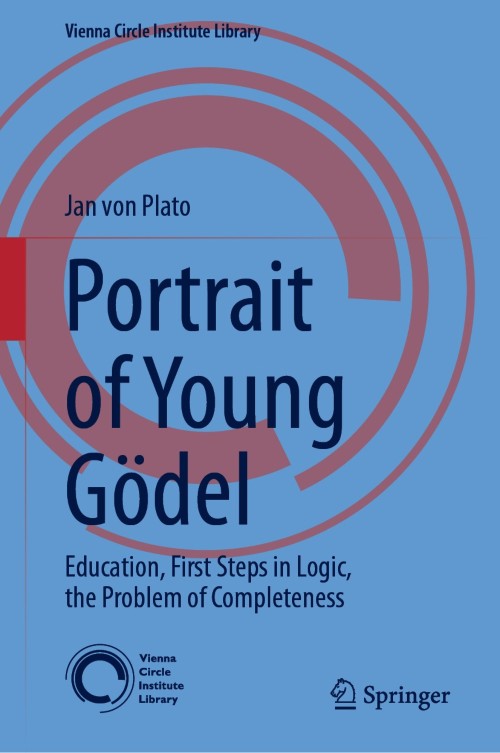
Portrait of Young Gödel [electronic resource] : Education, First Steps in Logic, the Problem of Completeness / by Jan von Plato.
Erişim Adresi
ISBN
9783031519710
Dil Kodu
İngilizce
Yer Numarası
DK/2943
Basım Bildirimi
1st ed. 2024.
Yayın Bilgisi
Cham : Springer Nature Switzerland : Imprint: Springer, 2024.
Fiziksel Niteleme
IX, 307 p. online resource.
Dizi
Vienna Circle Institute Library ; 9
İçindekiler Notu
PART I: AT HIGH SCHOOL AND UNIVERSITY -- 1. At high school -- 1.1. High school extraordinary -- 1.2. The activity of the human mind -- 1.3. Molecular theory -- 1.4. G¨odel’s esoteric side -- At university: from physics to mathematics -- 2.1. The physics student -- 2.2. Mathematics and philosophy -- PART II: FIRST STEPS IN LOGIC -- 1. First encounters with foundational problems -- 2. The Weber-Heft -- 3. The U¨ bungsheft Logik -- 3.1. Exercise in constitutional analysis -- 3.2. Formal derivations in second-order arithmetic and set theory -- 3.3. Beautiful syntax trees and other diversions -- 3.4. Summary overview of the U¨ bungsheft -- 4. Punktmengenlehre -- 4.1. Hilbert’s geometry -- 4.2. Hausdorff’s point set topology -- PART III: THE PROBLEM OF COMPLETENESS -- 1. From Carnap’s exercises to the problem of completeness -- 2. Dissertation draft -- 2.1. Generality -- 2.2. First-order logic -- 2.3. The proof of completeness -- 3. Completeness of the axioms of the narrower function calculus -- 4. Lectures and seminars on completeness. -- 5. Anticipations of incompleteness -- PART IV: THE SHORTHAND NOTEBOOKS -- 1. The Weber-Heft -- 2. U¨ bungsheft Logik: formal derivations -- 3. Punktmengenlehre: Hilbert’s geometry -- 4. Punktmengenlehre and U¨ bungsheft: set theory and topology -- 6. Completeness of the axioms of the narrower function calculus -- PART V: LECTURES AND SEMINARS ON COMPLETENESS -- 1. On the completeness of the axioms of the logical function calculus -- 2. Lecture in K¨onigsberg -- 3. Lecture in Vienna (plan of contents) -- 4. Report on G¨odel’s work -- 5. Completeness of the function calculus.
Özet, vb.
In the summer of 1928, Kurt Gödel (1906–1978) embarked on his logical journey that would bring him world fame in a mere three years. By early 1929, he had solved an outstanding problem in logic, namely the question of the completeness of the axioms and rules of quantificational logic. He then went on to extend the result to the axiom system of arithmetic but found, instead of completeness, his famous incompleteness theorem that got published in 1931. It belongs to the most iconic achievements of 20th century science and has been instrumental in the development of theories of formal languages and algorithmic computability – two essential components in the birth of the information society. This book explores Gödel’s way from an exceptional high-school student to a firmly established young logician. Essays in Gödel’s hand from the high school show that his central philosophical and scientific convictions were formed early on, before his university studies. Particular emphasis is laid on the course that made Gödel one of the foremost logicians of all times. The scientific biography of young Gödel is followed by English translations from Gödel’s German Gabelsberger shorthand of all his early preserved notebooks on logic and related topics.
Konu
Intellectual life __ History.
Logic.
Physicists __ Biography.
Astronomers __ Biography.
Intellectual History.
Logic.
Biographies of Physicists and Astronomers.

Logic.
Physicists __ Biography.
Astronomers __ Biography.
Intellectual History.
Logic.
Biographies of Physicists and Astronomers.
Eseri Alıntıla
Referansları kullanmadan önce gözden geçirmeniz ve varsa gerekli düzeltmeleri yapmanız önerilir.
Dijital Kaynak
MARC Görünümü
LEADER 04809nam a22005295i 4500
001 610271
003 TR_AnAIT
005 20250627063140
007 cr nn 008mamaa
008 240206s2024 sz | s |||| 0|eng d
020 |a9783031519710|9978-3-031-51971-0
024 7 |a10.1007/978-3-031-51971-0|2doi
041 |aeng
049 |aTürk Tarih Kurumu Kütüphanesi
050 4|aD1-2027
072 7|aJFCX|2bicssc
072 7|aHIS000000|2bisacsh
072 7|aJBCC9|2thema
082 04|a001.09|223
090 |aDK/2943
100 1 |avon Plato, Jan.|eauthor.|0(orcid)0000-0002-8370-9255|1https://orcid.org/0000-0002-8370-9255|4aut|4http://id.loc.gov/vocabulary/relators/aut
245 10|aPortrait of Young Gödel|h[electronic resource] :|bEducation, First Steps in Logic, the Problem of Completeness /|cby Jan von Plato.
250 |a1st ed. 2024.
264 1|aCham :|bSpringer Nature Switzerland :|bImprint: Springer,|c2024.
300 |aIX, 307 p.|bonline resource.
336 |atext|btxt|2rdacontent
337 |acomputer|bc|2rdamedia
338 |aonline resource|bcr|2rdacarrier
347 |atext file|bPDF|2rda
490 1 |aVienna Circle Institute Library ;|v9
505 0 |aPART I: AT HIGH SCHOOL AND UNIVERSITY -- 1. At high school -- 1.1. High school extraordinary -- 1.2. The activity of the human mind -- 1.3. Molecular theory -- 1.4. G¨odel’s esoteric side -- At university: from physics to mathematics -- 2.1. The physics student -- 2.2. Mathematics and philosophy -- PART II: FIRST STEPS IN LOGIC -- 1. First encounters with foundational problems -- 2. The Weber-Heft -- 3. The U¨ bungsheft Logik -- 3.1. Exercise in constitutional analysis -- 3.2. Formal derivations in second-order arithmetic and set theory -- 3.3. Beautiful syntax trees and other diversions -- 3.4. Summary overview of the U¨ bungsheft -- 4. Punktmengenlehre -- 4.1. Hilbert’s geometry -- 4.2. Hausdorff’s point set topology -- PART III: THE PROBLEM OF COMPLETENESS -- 1. From Carnap’s exercises to the problem of completeness -- 2. Dissertation draft -- 2.1. Generality -- 2.2. First-order logic -- 2.3. The proof of completeness -- 3. Completeness of the axioms of the narrower function calculus -- 4. Lectures and seminars on completeness. -- 5. Anticipations of incompleteness -- PART IV: THE SHORTHAND NOTEBOOKS -- 1. The Weber-Heft -- 2. U¨ bungsheft Logik: formal derivations -- 3. Punktmengenlehre: Hilbert’s geometry -- 4. Punktmengenlehre and U¨ bungsheft: set theory and topology -- 6. Completeness of the axioms of the narrower function calculus -- PART V: LECTURES AND SEMINARS ON COMPLETENESS -- 1. On the completeness of the axioms of the logical function calculus -- 2. Lecture in K¨onigsberg -- 3. Lecture in Vienna (plan of contents) -- 4. Report on G¨odel’s work -- 5. Completeness of the function calculus.
520 |aIn the summer of 1928, Kurt Gödel (1906–1978) embarked on his logical journey that would bring him world fame in a mere three years. By early 1929, he had solved an outstanding problem in logic, namely the question of the completeness of the axioms and rules of quantificational logic. He then went on to extend the result to the axiom system of arithmetic but found, instead of completeness, his famous incompleteness theorem that got published in 1931. It belongs to the most iconic achievements of 20th century science and has been instrumental in the development of theories of formal languages and algorithmic computability – two essential components in the birth of the information society. This book explores Gödel’s way from an exceptional high-school student to a firmly established young logician. Essays in Gödel’s hand from the high school show that his central philosophical and scientific convictions were formed early on, before his university studies. Particular emphasis is laid on the course that made Gödel one of the foremost logicians of all times. The scientific biography of young Gödel is followed by English translations from Gödel’s German Gabelsberger shorthand of all his early preserved notebooks on logic and related topics.
650 0|aIntellectual life|xHistory.
650 0|aLogic.
650 0|aPhysicists|xBiography.
650 0|aAstronomers|xBiography.
650 14|aIntellectual History.
650 24|aLogic.
650 24|aBiographies of Physicists and Astronomers.
773 0 |tSpringer Nature eBook
776 08|iPrinted edition:|z9783031519703
776 08|iPrinted edition:|z9783031519727
776 08|iPrinted edition:|z9783031519734
830 0|aVienna Circle Institute Library ;|v9
856 40|uhttps://doi.org/10.1007/978-3-031-51971-0
912 |aZDB-2-HTY
912 |aZDB-2-SXH
950 |aHistory (SpringerNature-41172)
950 |aHistory (R0) (SpringerNature-43722)
001 610271
003 TR_AnAIT
005 20250627063140
007 cr nn 008mamaa
008 240206s2024 sz | s |||| 0|eng d
020 |a9783031519710|9978-3-031-51971-0
024 7 |a10.1007/978-3-031-51971-0|2doi
041 |aeng
049 |aTürk Tarih Kurumu Kütüphanesi
050 4|aD1-2027
072 7|aJFCX|2bicssc
072 7|aHIS000000|2bisacsh
072 7|aJBCC9|2thema
082 04|a001.09|223
090 |aDK/2943
100 1 |avon Plato, Jan.|eauthor.|0(orcid)0000-0002-8370-9255|1https://orcid.org/0000-0002-8370-9255|4aut|4http://id.loc.gov/vocabulary/relators/aut
245 10|aPortrait of Young Gödel|h[electronic resource] :|bEducation, First Steps in Logic, the Problem of Completeness /|cby Jan von Plato.
250 |a1st ed. 2024.
264 1|aCham :|bSpringer Nature Switzerland :|bImprint: Springer,|c2024.
300 |aIX, 307 p.|bonline resource.
336 |atext|btxt|2rdacontent
337 |acomputer|bc|2rdamedia
338 |aonline resource|bcr|2rdacarrier
347 |atext file|bPDF|2rda
490 1 |aVienna Circle Institute Library ;|v9
505 0 |aPART I: AT HIGH SCHOOL AND UNIVERSITY -- 1. At high school -- 1.1. High school extraordinary -- 1.2. The activity of the human mind -- 1.3. Molecular theory -- 1.4. G¨odel’s esoteric side -- At university: from physics to mathematics -- 2.1. The physics student -- 2.2. Mathematics and philosophy -- PART II: FIRST STEPS IN LOGIC -- 1. First encounters with foundational problems -- 2. The Weber-Heft -- 3. The U¨ bungsheft Logik -- 3.1. Exercise in constitutional analysis -- 3.2. Formal derivations in second-order arithmetic and set theory -- 3.3. Beautiful syntax trees and other diversions -- 3.4. Summary overview of the U¨ bungsheft -- 4. Punktmengenlehre -- 4.1. Hilbert’s geometry -- 4.2. Hausdorff’s point set topology -- PART III: THE PROBLEM OF COMPLETENESS -- 1. From Carnap’s exercises to the problem of completeness -- 2. Dissertation draft -- 2.1. Generality -- 2.2. First-order logic -- 2.3. The proof of completeness -- 3. Completeness of the axioms of the narrower function calculus -- 4. Lectures and seminars on completeness. -- 5. Anticipations of incompleteness -- PART IV: THE SHORTHAND NOTEBOOKS -- 1. The Weber-Heft -- 2. U¨ bungsheft Logik: formal derivations -- 3. Punktmengenlehre: Hilbert’s geometry -- 4. Punktmengenlehre and U¨ bungsheft: set theory and topology -- 6. Completeness of the axioms of the narrower function calculus -- PART V: LECTURES AND SEMINARS ON COMPLETENESS -- 1. On the completeness of the axioms of the logical function calculus -- 2. Lecture in K¨onigsberg -- 3. Lecture in Vienna (plan of contents) -- 4. Report on G¨odel’s work -- 5. Completeness of the function calculus.
520 |aIn the summer of 1928, Kurt Gödel (1906–1978) embarked on his logical journey that would bring him world fame in a mere three years. By early 1929, he had solved an outstanding problem in logic, namely the question of the completeness of the axioms and rules of quantificational logic. He then went on to extend the result to the axiom system of arithmetic but found, instead of completeness, his famous incompleteness theorem that got published in 1931. It belongs to the most iconic achievements of 20th century science and has been instrumental in the development of theories of formal languages and algorithmic computability – two essential components in the birth of the information society. This book explores Gödel’s way from an exceptional high-school student to a firmly established young logician. Essays in Gödel’s hand from the high school show that his central philosophical and scientific convictions were formed early on, before his university studies. Particular emphasis is laid on the course that made Gödel one of the foremost logicians of all times. The scientific biography of young Gödel is followed by English translations from Gödel’s German Gabelsberger shorthand of all his early preserved notebooks on logic and related topics.
650 0|aIntellectual life|xHistory.
650 0|aLogic.
650 0|aPhysicists|xBiography.
650 0|aAstronomers|xBiography.
650 14|aIntellectual History.
650 24|aLogic.
650 24|aBiographies of Physicists and Astronomers.
773 0 |tSpringer Nature eBook
776 08|iPrinted edition:|z9783031519703
776 08|iPrinted edition:|z9783031519727
776 08|iPrinted edition:|z9783031519734
830 0|aVienna Circle Institute Library ;|v9
856 40|uhttps://doi.org/10.1007/978-3-031-51971-0
912 |aZDB-2-HTY
912 |aZDB-2-SXH
950 |aHistory (SpringerNature-41172)
950 |aHistory (R0) (SpringerNature-43722)
Materyaller
Depodan talep edilen materyal sadece kütüphane içerisinde kullanılmaktadır.
Materyal dışarıya ödünç verilmemektedir.
