

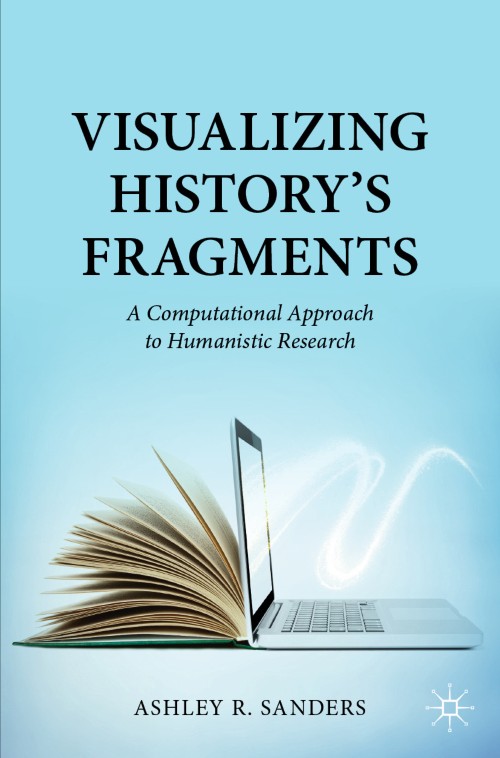
Visualizing History’s Fragments [electronic resource] : A Computational Approach to Humanistic Research / by Ashley R. Sanders.
Erişim Adresi
ISBN
9783031469763
Dil Kodu
İngilizce
Yer Numarası
DK/3026
Yazar
Basım Bildirimi
1st ed. 2024.
Yayın Bilgisi
Cham : Springer International Publishing : Imprint: Palgrave Macmillan, 2024.
Fiziksel Niteleme
XXXI, 345 p. 118 illus., 108 illus. in color. online resource.
İçindekiler Notu
1. Getting Started -- 2. Understanding the Context -- 3. Detecting Bias in Textual Sources -- 4. Humanistic Data—Classifying Individuals & Visualizing Silences -- 5. Data Aggregation and Exploratory Visualization -- 6. Descriptive Statistics—Investigating Questions of Representativeness -- 7. Testing Relationships between Categorical Variables -- 8. Social Network Analysis—Identifying Women’s Socio-Political Roles -- 9. Where do We Go from Here?
Özet, vb.
"Visualizing History’s Fragments is ostensibly about Ottoman Algeria, but it teaches us so much more: about how to ethically account for silences in the archive, how to intentionally approach the production of history, and how to creatively imagine what the future of digital humanities research can be." — Lauren Klein, Winship Distinguished Research Professor and Associate Professor in the Departments of Quantitative Theory and Methods and English at Emory University, USA "This was the textbook that I wish I had had, either as a graduate student or even as a new faculty member. This is not exaggeration: I can't think of a comparable work that weaves such an engaging historical case study together with such a breadth of methodological material, whether applied statistics, computational methods, source bias, or different levels of measurement. A must read." — Ian Milligan, Professor and Associate Vice-President, Research Oversight and Analysis in the University of Waterloo’s Office of Research, Canada This book combines a methodological guide with an extended case study to show how digital research methods can be used to explore how ethnicity, gender, and kinship shaped early modern Algerian society and politics. However, the approaches presented have applications far beyond this specific study. More broadly, these methods are relevant for those interested in identifying and studying relational data, demographics, politics, discourse, authorial bias, and social networks of both known and unnamed actors. Ashley R. Sanders explores how digital research methods can be used to study archival specters – people who lived, breathed, and made their mark on history, but whose presence in the archives and extant documents remains limited, at best, if not altogether lost. Although digital tools cannot metaphorically resurrect the dead nor fill archival gaps, they can help us excavate the people-shaped outlines of those who might have filled these spaces. The six methodological chapters explain why and how each research method is used, present the visual and quantitative results, and analyze them within the context of the historical case study. In addition, every dataset is available on SpringerLink as Electronic Supplementary Material (ESM), and each chapter is accompanied by one or more video tutorials that demonstrate how to apply each of the techniques described (accessed via the SN More Media App). Ashley R. Sanders is Vice Chair of the Digital Humanities Program at UCLA, USA. Her teaching interests include applied statistics, computational text analysis, and social media data analytics. Sanders has taught both introductory and advanced Digital Humanities courses for both undergraduate and graduate students.
Konu
Historiography.
History __ Methodology.
Women __ History.
Middle East __ History.
Africa __ History.
Digital humanities.
Historiography and Method.
Women's History / History of Gender.
History of the Middle East.
African History.
Digital Humanities.
History __ Methodology.
Women __ History.
Middle East __ History.
Africa __ History.
Digital humanities.
Historiography and Method.
Women's History / History of Gender.
History of the Middle East.
African History.
Digital Humanities.
Eseri Alıntıla
Referansları kullanmadan önce gözden geçirmeniz ve varsa gerekli düzeltmeleri yapmanız önerilir.
Dijital Kaynak
MARC Görünümü
LEADER 05113nam a22005535i 4500
001 610354
003 TR_AnAIT
005 20250627062852
007 cr nn 008mamaa
008 240619s2024 sz | s |||| 0|eng d
020 |a9783031469763|9978-3-031-46976-3
024 7 |a10.1007/978-3-031-46976-3|2doi
041 |aeng
049 |aTürk Tarih Kurumu Kütüphanesi
050 4|aD13-15
050 4|aD16-16.18
072 7|aHBAH|2bicssc
072 7|aHIS016000|2bisacsh
072 7|aNHAH|2thema
082 04|a907.2|223
090 |aDK/3026
100 1 |aSanders, Ashley R.|eauthor.|4aut|4http://id.loc.gov/vocabulary/relators/aut
245 10|aVisualizing History’s Fragments|h[electronic resource] :|bA Computational Approach to Humanistic Research /|cby Ashley R. Sanders.
250 |a1st ed. 2024.
264 1|aCham :|bSpringer International Publishing :|bImprint: Palgrave Macmillan,|c2024.
300 |aXXXI, 345 p. 118 illus., 108 illus. in color.|bonline resource.
336 |atext|btxt|2rdacontent
337 |acomputer|bc|2rdamedia
338 |aonline resource|bcr|2rdacarrier
347 |atext file|bPDF|2rda
505 0 |a1. Getting Started -- 2. Understanding the Context -- 3. Detecting Bias in Textual Sources -- 4. Humanistic Data—Classifying Individuals & Visualizing Silences -- 5. Data Aggregation and Exploratory Visualization -- 6. Descriptive Statistics—Investigating Questions of Representativeness -- 7. Testing Relationships between Categorical Variables -- 8. Social Network Analysis—Identifying Women’s Socio-Political Roles -- 9. Where do We Go from Here?
520 |a"Visualizing History’s Fragments is ostensibly about Ottoman Algeria, but it teaches us so much more: about how to ethically account for silences in the archive, how to intentionally approach the production of history, and how to creatively imagine what the future of digital humanities research can be." — Lauren Klein, Winship Distinguished Research Professor and Associate Professor in the Departments of Quantitative Theory and Methods and English at Emory University, USA "This was the textbook that I wish I had had, either as a graduate student or even as a new faculty member. This is not exaggeration: I can't think of a comparable work that weaves such an engaging historical case study together with such a breadth of methodological material, whether applied statistics, computational methods, source bias, or different levels of measurement. A must read." — Ian Milligan, Professor and Associate Vice-President, Research Oversight and Analysis in the University of Waterloo’s Office of Research, Canada This book combines a methodological guide with an extended case study to show how digital research methods can be used to explore how ethnicity, gender, and kinship shaped early modern Algerian society and politics. However, the approaches presented have applications far beyond this specific study. More broadly, these methods are relevant for those interested in identifying and studying relational data, demographics, politics, discourse, authorial bias, and social networks of both known and unnamed actors. Ashley R. Sanders explores how digital research methods can be used to study archival specters – people who lived, breathed, and made their mark on history, but whose presence in the archives and extant documents remains limited, at best, if not altogether lost. Although digital tools cannot metaphorically resurrect the dead nor fill archival gaps, they can help us excavate the people-shaped outlines of those who might have filled these spaces. The six methodological chapters explain why and how each research method is used, present the visual and quantitative results, and analyze them within the context of the historical case study. In addition, every dataset is available on SpringerLink as Electronic Supplementary Material (ESM), and each chapter is accompanied by one or more video tutorials that demonstrate how to apply each of the techniques described (accessed via the SN More Media App). Ashley R. Sanders is Vice Chair of the Digital Humanities Program at UCLA, USA. Her teaching interests include applied statistics, computational text analysis, and social media data analytics. Sanders has taught both introductory and advanced Digital Humanities courses for both undergraduate and graduate students.
650 0|aHistoriography.
650 0|aHistory|xMethodology.
650 0|aWomen|xHistory.
650 0|aMiddle East|xHistory.
650 0|aAfrica|xHistory.
650 0|aDigital humanities.
650 14|aHistoriography and Method.
650 24|aWomen's History / History of Gender.
650 24|aHistory of the Middle East.
650 24|aAfrican History.
650 24|aDigital Humanities.
773 0 |tSpringer Nature eBook
776 08|iPrinted edition:|z9783031469756
776 08|iPrinted edition:|z9783031469770
856 40|uhttps://doi.org/10.1007/978-3-031-46976-3
912 |aZDB-2-HTY
912 |aZDB-2-SXH
950 |aHistory (SpringerNature-41172)
950 |aHistory (R0) (SpringerNature-43722)
001 610354
003 TR_AnAIT
005 20250627062852
007 cr nn 008mamaa
008 240619s2024 sz | s |||| 0|eng d
020 |a9783031469763|9978-3-031-46976-3
024 7 |a10.1007/978-3-031-46976-3|2doi
041 |aeng
049 |aTürk Tarih Kurumu Kütüphanesi
050 4|aD13-15
050 4|aD16-16.18
072 7|aHBAH|2bicssc
072 7|aHIS016000|2bisacsh
072 7|aNHAH|2thema
082 04|a907.2|223
090 |aDK/3026
100 1 |aSanders, Ashley R.|eauthor.|4aut|4http://id.loc.gov/vocabulary/relators/aut
245 10|aVisualizing History’s Fragments|h[electronic resource] :|bA Computational Approach to Humanistic Research /|cby Ashley R. Sanders.
250 |a1st ed. 2024.
264 1|aCham :|bSpringer International Publishing :|bImprint: Palgrave Macmillan,|c2024.
300 |aXXXI, 345 p. 118 illus., 108 illus. in color.|bonline resource.
336 |atext|btxt|2rdacontent
337 |acomputer|bc|2rdamedia
338 |aonline resource|bcr|2rdacarrier
347 |atext file|bPDF|2rda
505 0 |a1. Getting Started -- 2. Understanding the Context -- 3. Detecting Bias in Textual Sources -- 4. Humanistic Data—Classifying Individuals & Visualizing Silences -- 5. Data Aggregation and Exploratory Visualization -- 6. Descriptive Statistics—Investigating Questions of Representativeness -- 7. Testing Relationships between Categorical Variables -- 8. Social Network Analysis—Identifying Women’s Socio-Political Roles -- 9. Where do We Go from Here?
520 |a"Visualizing History’s Fragments is ostensibly about Ottoman Algeria, but it teaches us so much more: about how to ethically account for silences in the archive, how to intentionally approach the production of history, and how to creatively imagine what the future of digital humanities research can be." — Lauren Klein, Winship Distinguished Research Professor and Associate Professor in the Departments of Quantitative Theory and Methods and English at Emory University, USA "This was the textbook that I wish I had had, either as a graduate student or even as a new faculty member. This is not exaggeration: I can't think of a comparable work that weaves such an engaging historical case study together with such a breadth of methodological material, whether applied statistics, computational methods, source bias, or different levels of measurement. A must read." — Ian Milligan, Professor and Associate Vice-President, Research Oversight and Analysis in the University of Waterloo’s Office of Research, Canada This book combines a methodological guide with an extended case study to show how digital research methods can be used to explore how ethnicity, gender, and kinship shaped early modern Algerian society and politics. However, the approaches presented have applications far beyond this specific study. More broadly, these methods are relevant for those interested in identifying and studying relational data, demographics, politics, discourse, authorial bias, and social networks of both known and unnamed actors. Ashley R. Sanders explores how digital research methods can be used to study archival specters – people who lived, breathed, and made their mark on history, but whose presence in the archives and extant documents remains limited, at best, if not altogether lost. Although digital tools cannot metaphorically resurrect the dead nor fill archival gaps, they can help us excavate the people-shaped outlines of those who might have filled these spaces. The six methodological chapters explain why and how each research method is used, present the visual and quantitative results, and analyze them within the context of the historical case study. In addition, every dataset is available on SpringerLink as Electronic Supplementary Material (ESM), and each chapter is accompanied by one or more video tutorials that demonstrate how to apply each of the techniques described (accessed via the SN More Media App). Ashley R. Sanders is Vice Chair of the Digital Humanities Program at UCLA, USA. Her teaching interests include applied statistics, computational text analysis, and social media data analytics. Sanders has taught both introductory and advanced Digital Humanities courses for both undergraduate and graduate students.
650 0|aHistoriography.
650 0|aHistory|xMethodology.
650 0|aWomen|xHistory.
650 0|aMiddle East|xHistory.
650 0|aAfrica|xHistory.
650 0|aDigital humanities.
650 14|aHistoriography and Method.
650 24|aWomen's History / History of Gender.
650 24|aHistory of the Middle East.
650 24|aAfrican History.
650 24|aDigital Humanities.
773 0 |tSpringer Nature eBook
776 08|iPrinted edition:|z9783031469756
776 08|iPrinted edition:|z9783031469770
856 40|uhttps://doi.org/10.1007/978-3-031-46976-3
912 |aZDB-2-HTY
912 |aZDB-2-SXH
950 |aHistory (SpringerNature-41172)
950 |aHistory (R0) (SpringerNature-43722)
Materyaller
Depodan talep edilen materyal sadece kütüphane içerisinde kullanılmaktadır.
Materyal dışarıya ödünç verilmemektedir.
Materyal dışarıya ödünç verilmemektedir.
