LEADER 03474nam a22004935i 4500
001 610403
003 TR_AnAIT
005 20250627062717
007 cr nn 008mamaa
008 240829s2024 sz | s |||| 0|eng d
020 |a9783031698286|9978-3-031-69828-6
024 7 |a10.1007/978-3-031-69828-6|2doi
041 |aeng
049 |aTürk Tarih Kurumu Kütüphanesi
050 4|aCC1-960
072 7|aHD|2bicssc
072 7|aSOC003000|2bisacsh
072 7|aNK|2thema
082 04|a930.1|223
090 |aDK/3075
100 1 |aCarman, John.|eauthor.|4aut|4http://id.loc.gov/vocabulary/relators/aut
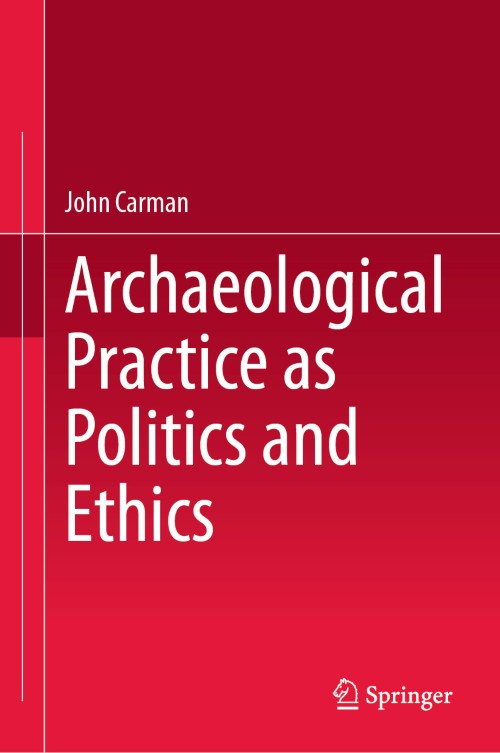
245 10|aArchaeological Practice as Politics and Ethics|h[electronic resource] /|cby John Carman.
250 |a1st ed. 2024.
264 1|aCham :|bSpringer International Publishing :|bImprint: Springer,|c2024.
300 |aXVII, 197 p.|bonline resource.
336 |atext|btxt|2rdacontent
337 |acomputer|bc|2rdamedia
338 |aonline resource|bcr|2rdacarrier
347 |atext file|bPDF|2rda
505 0 |aChapter 1. Introduction: Archaeology as Performance -- Chapter 2. Archaeology as Fieldwork -- Chapter 3. Archaeology as Product -- Chapter 4. Archaeology as Communication -- Chapter 5. Archaeology as Public Service -- Chapter 6. Archaeology as Politics -- Chapter 7. Archaeology as Social Engagement -- Chapter 8. Conclusion: Archaeology as Archaeology.
520 |aThis book is of relevance to all archaeologists and all others concerned with how an interest in the past impacts on the present. This book explores the manner in which archaeology as a discipline and a field of endeavour contributes to the modern world. The focus throughout the book is on practices - the range of different things that archaeologists do and how they do and have done it in order to explore the field as a distinctive aspect of social practice over time. It also concerns the structures – social, political, economic, professional, philosophical – in which archaeology is performed and the consequences for the discipline and its practitioners. Throughout there is a concern especially with archaeology as a field of political and ethical decision-making, aspects well recognised by practitioners but rarely emphasised. The book both asks and answers questions about the perception of archaeology from both within and outside the field. The book draws widely on previous work by the author and others – looking at the techniques of the field, the people involved, the political and social impacts both on and by the field. In doing so it seeks to bring these different perspectives together to create a more holistic idea of what archaeology is, has been, and could be. The book is offered to those outside the field as a justification for archaeology – a field coming under increasing pressure from those who consider it (as so many humanities and social science disciplines) as an expensive luxury.
650 0|aArchaeology.
650 0|aScience|xHistory.
650 0|aAnthropology.
650 14|aArchaeology.
650 24|aHistory of Science.
650 24|aAnthropology.
773 0 |tSpringer Nature eBook
776 08|iPrinted edition:|z9783031698279
776 08|iPrinted edition:|z9783031698293
776 08|iPrinted edition:|z9783031698309
856 40|uhttps://doi.org/10.1007/978-3-031-69828-6
912 |aZDB-2-HTY
912 |aZDB-2-SXH
950 |aHistory (SpringerNature-41172)
950 |aHistory (R0) (SpringerNature-43722)