

Transformative Practices in Archaeology [electronic resource] : Empowering Communities and Shaping Sustainable Futures / edited by Alok Kumar Kanungo, Claire Smith, Nishaant Choksi.
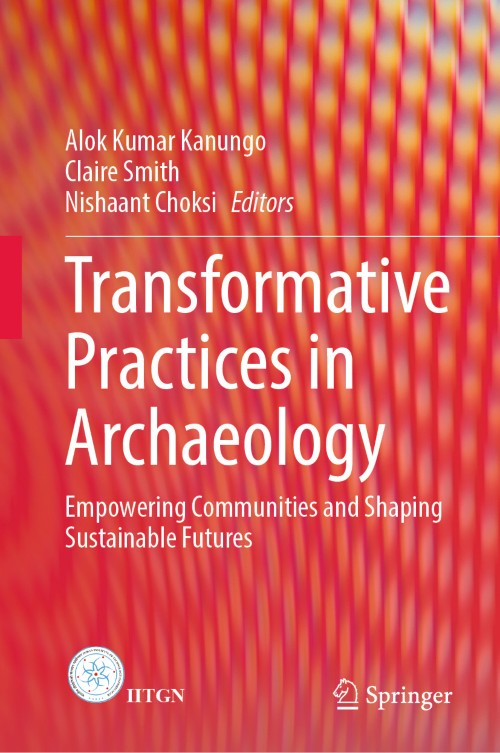
Erişim Adresi
ISBN
9789819731237
Dil Kodu
İngilizce
Yer Numarası
DK/3104
Basım Bildirimi
1st ed. 2024.
Yayın Bilgisi
Singapore : Springer Nature Singapore : Imprint: Springer, 2024.
Fiziksel Niteleme
XXVII, 343 p. 130 illus., 114 illus. in color. online resource.
İçindekiler Notu
Foreword -- Preface -- Introduction -- I. UNSETTLING ARCHAEOLOGY IN THEORY AND PRACTICE -- Chapter 1: Unsettling Archaeology as a Tool to Raise Self-Respect and Well-Being -- Chapter 2: Traditional Knowledge Systems and Archaeology in India: Problems and Perspectives -- Chapter 3: Cultural Heritage and Public Responsibility: Can We Create Citizen Archaeologists? -- Chapter 4 : Memory and Material Culture among the Displaced Indigenous Communities of the Narmada Valley, Western India -- Chapter 5 :Interplay of Archaeological Numismatic and Articulation of Agency Practise: Narratives of Care -- Chapter 6: Data and their ‘After Lives’: Knowledge Production and Consumption in Community-based Research -- Chapter 7:Braiding Knowledge: Developing an Interpretative Theoretical Agenda that Integrates Indigenous Worldviews -- Chapter 8:Engaging with the Heritage of Maritime Populations of the Lanta Bay: A Community-based Archaeological and Ethnographic Project (the Lanta Bay Project, Thailand) -- Chapter 9: The Discreet Charm of Things: An Archaeo-anthropological Perspective -- Chapter 10:Archaeology and Cultural Policy for the Indian Ocean Region: The Past, Present and Implications for the Future -- II. HERITAGE SUSTAINABILITY AND MANAGEMENT -- Chapter 11:The Case of Hatra in the Iraqi Jazira -- Chapter 12: Monumental Heritage of Mandu: Challenges for Archaeology in South Asia -- Chapter 13; Evolving a Sustainable Collaborative Mechanism for Management of Built Heritage of India: The Case of 'Adopt a Heritage Project’ -- Chapter 14:Commodification and Illicit Trade of Indian Antique Coins: Narrative of Cultural Heritage Sustainability -- Chapter 15: Living Megalithic Culture: Descriptive Study of Ossuaries among the Khasis in Ummat and Sohbar Villages, Meghalaya -- Chapter 16:Indigenous Water Management System in Pudukkōṭṭai Region – A Case Study of Sluice Technology Karaigowder Rajan, Academic and Research Advisor, Tamil Nadu State Archaeology Department -- Chapter 17:Nagas and Megaliths: A Knowledge System -- Chapter 18:Beyond Salt as Food: Artisanal Salt Making in Matikhrü, Nagaland -- Chapter 19:Deking Piichang: Vanishing Clay pottery tradition among The Apatani of Arunachal Pradesh -- Chapter 20:From Coal to Culture: Archaeological Investigations in “India’s Energy Capital” Singrauli, Madhya Pradesh and Sustainable Development in the Region -- Chapter 21:More than a Country Liquor: Madhuca longifolia as a Facilitator of SDGs.
Özet, vb.
The volume introduces a diverse range of themes and practices relating to sustainable heritage management. Each paper delves into the challenges, successes, and failures of preserving precious cultural heritage. It discusses various strategies, such as the early inclusion of archaeology in UNESCO frameworks to leveraging archaeological findings and indigenous knowledge for sustainable development goals. The chapters explore the evolution of autoarchaeology as a tool for empowering Indigenous communities to assert their human rights and integrating oral histories and local ecological knowledge to interpret ancient remains. Additionally, it highlights the value of archaeologists working more closely with Indigenous peoples, local communities, and other disciplines in identifying, preserving, conserving and managing heritage sites. It appeals to archaeologists, anthropologists, cultural geographers, cultural heritage professionals and others seeking new ways to protect cultural heritage.
Konu
Cultural property.
Archaeology.
Ethnology.
Archaeology and Heritage.
Cultural Heritage.
Ethnography.
Ethnology.
Archaeology.
Ethnology.
Archaeology and Heritage.
Cultural Heritage.
Ethnography.
Ethnology.
Eseri Alıntıla
Referansları kullanmadan önce gözden geçirmeniz ve varsa gerekli düzeltmeleri yapmanız önerilir.
Dijital Kaynak
MARC Görünümü
LEADER 05645nam a22005295i 4500
001 610432
003 TR_AnAIT
005 20250627062622
007 cr nn 008mamaa
008 241003s2024 si | s |||| 0|eng d
020 |a9789819731237|9978-981-97-3123-7
024 7 |a10.1007/978-981-97-3123-7|2doi
041 |aeng
049 |aTürk Tarih Kurumu Kütüphanesi
050 4|aCC135-137
072 7|aHD|2bicssc
072 7|aSOC003000|2bisacsh
072 7|aNK|2thema
082 04|a930.1|223
090 |aDK/3104
245 10|aTransformative Practices in Archaeology|h[electronic resource] :|bEmpowering Communities and Shaping Sustainable Futures /|cedited by Alok Kumar Kanungo, Claire Smith, Nishaant Choksi.
250 |a1st ed. 2024.
264 1|aSingapore :|bSpringer Nature Singapore :|bImprint: Springer,|c2024.
300 |aXXVII, 343 p. 130 illus., 114 illus. in color.|bonline resource.
336 |atext|btxt|2rdacontent
337 |acomputer|bc|2rdamedia
338 |aonline resource|bcr|2rdacarrier
347 |atext file|bPDF|2rda
505 0 |aForeword -- Preface -- Introduction -- I. UNSETTLING ARCHAEOLOGY IN THEORY AND PRACTICE -- Chapter 1: Unsettling Archaeology as a Tool to Raise Self-Respect and Well-Being -- Chapter 2: Traditional Knowledge Systems and Archaeology in India: Problems and Perspectives -- Chapter 3: Cultural Heritage and Public Responsibility: Can We Create Citizen Archaeologists? -- Chapter 4 : Memory and Material Culture among the Displaced Indigenous Communities of the Narmada Valley, Western India -- Chapter 5 :Interplay of Archaeological Numismatic and Articulation of Agency Practise: Narratives of Care -- Chapter 6: Data and their ‘After Lives’: Knowledge Production and Consumption in Community-based Research -- Chapter 7:Braiding Knowledge: Developing an Interpretative Theoretical Agenda that Integrates Indigenous Worldviews -- Chapter 8:Engaging with the Heritage of Maritime Populations of the Lanta Bay: A Community-based Archaeological and Ethnographic Project (the Lanta Bay Project, Thailand) -- Chapter 9: The Discreet Charm of Things: An Archaeo-anthropological Perspective -- Chapter 10:Archaeology and Cultural Policy for the Indian Ocean Region: The Past, Present and Implications for the Future -- II. HERITAGE SUSTAINABILITY AND MANAGEMENT -- Chapter 11:The Case of Hatra in the Iraqi Jazira -- Chapter 12: Monumental Heritage of Mandu: Challenges for Archaeology in South Asia -- Chapter 13; Evolving a Sustainable Collaborative Mechanism for Management of Built Heritage of India: The Case of 'Adopt a Heritage Project’ -- Chapter 14:Commodification and Illicit Trade of Indian Antique Coins: Narrative of Cultural Heritage Sustainability -- Chapter 15: Living Megalithic Culture: Descriptive Study of Ossuaries among the Khasis in Ummat and Sohbar Villages, Meghalaya -- Chapter 16:Indigenous Water Management System in Pudukkōṭṭai Region – A Case Study of Sluice Technology Karaigowder Rajan, Academic and Research Advisor, Tamil Nadu State Archaeology Department -- Chapter 17:Nagas and Megaliths: A Knowledge System -- Chapter 18:Beyond Salt as Food: Artisanal Salt Making in Matikhrü, Nagaland -- Chapter 19:Deking Piichang: Vanishing Clay pottery tradition among The Apatani of Arunachal Pradesh -- Chapter 20:From Coal to Culture: Archaeological Investigations in “India’s Energy Capital” Singrauli, Madhya Pradesh and Sustainable Development in the Region -- Chapter 21:More than a Country Liquor: Madhuca longifolia as a Facilitator of SDGs.
520 |aThe volume introduces a diverse range of themes and practices relating to sustainable heritage management. Each paper delves into the challenges, successes, and failures of preserving precious cultural heritage. It discusses various strategies, such as the early inclusion of archaeology in UNESCO frameworks to leveraging archaeological findings and indigenous knowledge for sustainable development goals. The chapters explore the evolution of autoarchaeology as a tool for empowering Indigenous communities to assert their human rights and integrating oral histories and local ecological knowledge to interpret ancient remains. Additionally, it highlights the value of archaeologists working more closely with Indigenous peoples, local communities, and other disciplines in identifying, preserving, conserving and managing heritage sites. It appeals to archaeologists, anthropologists, cultural geographers, cultural heritage professionals and others seeking new ways to protect cultural heritage.
650 0|aCultural property.
650 0|aArchaeology.
650 0|aEthnology.
650 14|aArchaeology and Heritage.
650 24|aCultural Heritage.
650 24|aEthnography.
650 24|aEthnology.
700 1 |aKanungo, Alok Kumar.|eeditor.|0(orcid)0000-0001-7215-455X|1https://orcid.org/0000-0001-7215-455X|4edt|4http://id.loc.gov/vocabulary/relators/edt
700 1 |aSmith, Claire.|eeditor.|0(orcid)0000-0001-9028-6687|1https://orcid.org/0000-0001-9028-6687|4edt|4http://id.loc.gov/vocabulary/relators/edt
700 1 |aChoksi, Nishaant.|eeditor.|0(orcid)0000-0002-6755-9488|1https://orcid.org/0000-0002-6755-9488|4edt|4http://id.loc.gov/vocabulary/relators/edt
773 0 |tSpringer Nature eBook
776 08|iPrinted edition:|z9789819731220
776 08|iPrinted edition:|z9789819731244
776 08|iPrinted edition:|z9789819731251
856 40|uhttps://doi.org/10.1007/978-981-97-3123-7
912 |aZDB-2-HTY
912 |aZDB-2-SXH
950 |aHistory (SpringerNature-41172)
950 |aHistory (R0) (SpringerNature-43722)
001 610432
003 TR_AnAIT
005 20250627062622
007 cr nn 008mamaa
008 241003s2024 si | s |||| 0|eng d
020 |a9789819731237|9978-981-97-3123-7
024 7 |a10.1007/978-981-97-3123-7|2doi
041 |aeng
049 |aTürk Tarih Kurumu Kütüphanesi
050 4|aCC135-137
072 7|aHD|2bicssc
072 7|aSOC003000|2bisacsh
072 7|aNK|2thema
082 04|a930.1|223
090 |aDK/3104
245 10|aTransformative Practices in Archaeology|h[electronic resource] :|bEmpowering Communities and Shaping Sustainable Futures /|cedited by Alok Kumar Kanungo, Claire Smith, Nishaant Choksi.
250 |a1st ed. 2024.
264 1|aSingapore :|bSpringer Nature Singapore :|bImprint: Springer,|c2024.
300 |aXXVII, 343 p. 130 illus., 114 illus. in color.|bonline resource.
336 |atext|btxt|2rdacontent
337 |acomputer|bc|2rdamedia
338 |aonline resource|bcr|2rdacarrier
347 |atext file|bPDF|2rda
505 0 |aForeword -- Preface -- Introduction -- I. UNSETTLING ARCHAEOLOGY IN THEORY AND PRACTICE -- Chapter 1: Unsettling Archaeology as a Tool to Raise Self-Respect and Well-Being -- Chapter 2: Traditional Knowledge Systems and Archaeology in India: Problems and Perspectives -- Chapter 3: Cultural Heritage and Public Responsibility: Can We Create Citizen Archaeologists? -- Chapter 4 : Memory and Material Culture among the Displaced Indigenous Communities of the Narmada Valley, Western India -- Chapter 5 :Interplay of Archaeological Numismatic and Articulation of Agency Practise: Narratives of Care -- Chapter 6: Data and their ‘After Lives’: Knowledge Production and Consumption in Community-based Research -- Chapter 7:Braiding Knowledge: Developing an Interpretative Theoretical Agenda that Integrates Indigenous Worldviews -- Chapter 8:Engaging with the Heritage of Maritime Populations of the Lanta Bay: A Community-based Archaeological and Ethnographic Project (the Lanta Bay Project, Thailand) -- Chapter 9: The Discreet Charm of Things: An Archaeo-anthropological Perspective -- Chapter 10:Archaeology and Cultural Policy for the Indian Ocean Region: The Past, Present and Implications for the Future -- II. HERITAGE SUSTAINABILITY AND MANAGEMENT -- Chapter 11:The Case of Hatra in the Iraqi Jazira -- Chapter 12: Monumental Heritage of Mandu: Challenges for Archaeology in South Asia -- Chapter 13; Evolving a Sustainable Collaborative Mechanism for Management of Built Heritage of India: The Case of 'Adopt a Heritage Project’ -- Chapter 14:Commodification and Illicit Trade of Indian Antique Coins: Narrative of Cultural Heritage Sustainability -- Chapter 15: Living Megalithic Culture: Descriptive Study of Ossuaries among the Khasis in Ummat and Sohbar Villages, Meghalaya -- Chapter 16:Indigenous Water Management System in Pudukkōṭṭai Region – A Case Study of Sluice Technology Karaigowder Rajan, Academic and Research Advisor, Tamil Nadu State Archaeology Department -- Chapter 17:Nagas and Megaliths: A Knowledge System -- Chapter 18:Beyond Salt as Food: Artisanal Salt Making in Matikhrü, Nagaland -- Chapter 19:Deking Piichang: Vanishing Clay pottery tradition among The Apatani of Arunachal Pradesh -- Chapter 20:From Coal to Culture: Archaeological Investigations in “India’s Energy Capital” Singrauli, Madhya Pradesh and Sustainable Development in the Region -- Chapter 21:More than a Country Liquor: Madhuca longifolia as a Facilitator of SDGs.
520 |aThe volume introduces a diverse range of themes and practices relating to sustainable heritage management. Each paper delves into the challenges, successes, and failures of preserving precious cultural heritage. It discusses various strategies, such as the early inclusion of archaeology in UNESCO frameworks to leveraging archaeological findings and indigenous knowledge for sustainable development goals. The chapters explore the evolution of autoarchaeology as a tool for empowering Indigenous communities to assert their human rights and integrating oral histories and local ecological knowledge to interpret ancient remains. Additionally, it highlights the value of archaeologists working more closely with Indigenous peoples, local communities, and other disciplines in identifying, preserving, conserving and managing heritage sites. It appeals to archaeologists, anthropologists, cultural geographers, cultural heritage professionals and others seeking new ways to protect cultural heritage.
650 0|aCultural property.
650 0|aArchaeology.
650 0|aEthnology.
650 14|aArchaeology and Heritage.
650 24|aCultural Heritage.
650 24|aEthnography.
650 24|aEthnology.
700 1 |aKanungo, Alok Kumar.|eeditor.|0(orcid)0000-0001-7215-455X|1https://orcid.org/0000-0001-7215-455X|4edt|4http://id.loc.gov/vocabulary/relators/edt
700 1 |aSmith, Claire.|eeditor.|0(orcid)0000-0001-9028-6687|1https://orcid.org/0000-0001-9028-6687|4edt|4http://id.loc.gov/vocabulary/relators/edt
700 1 |aChoksi, Nishaant.|eeditor.|0(orcid)0000-0002-6755-9488|1https://orcid.org/0000-0002-6755-9488|4edt|4http://id.loc.gov/vocabulary/relators/edt
773 0 |tSpringer Nature eBook
776 08|iPrinted edition:|z9789819731220
776 08|iPrinted edition:|z9789819731244
776 08|iPrinted edition:|z9789819731251
856 40|uhttps://doi.org/10.1007/978-981-97-3123-7
912 |aZDB-2-HTY
912 |aZDB-2-SXH
950 |aHistory (SpringerNature-41172)
950 |aHistory (R0) (SpringerNature-43722)
Materyaller
Depodan talep edilen materyal sadece kütüphane içerisinde kullanılmaktadır.
Materyal dışarıya ödünç verilmemektedir.
Materyal dışarıya ödünç verilmemektedir.
