

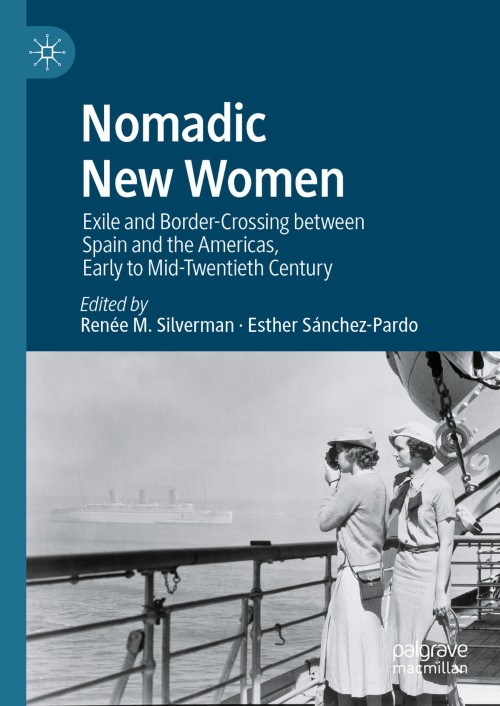
Nomadic New Women [electronic resource] : Exile and Border-Crossing between Spain and the Americas, Early to Mid-Twentieth Century / edited by Renée M. Silverman, Esther Sánchez-Pardo.
Erişim Adresi
ISBN
9783031624827
Dil Kodu
İngilizce
Yer Numarası
DK/3133
Basım Bildirimi
1st ed. 2024.
Yayın Bilgisi
Cham : Springer Nature Switzerland : Imprint: Palgrave Macmillan, 2024.
Fiziksel Niteleme
XV, 362 p. 3 illus., 1 illus. in color. online resource.
İçindekiler Notu
1. Introduction: Nomadic New Women: Border-Crossing and Inter-Cultural Encounter -- Section I. Women writing (in) Exile. Art, Life, Politics -- 2. Ana Eire, “The Intimacy of Distance: Homelessness and Homecoming in the Poetry of Marina Romero” -- 3. Javier Sánchez, “A Voice in the Margins: Ana María Martínez Sagi’s Poetry in Exile” -- 4.Leonor María Martínez Serrano, “Words in Space: The Exile Diary of Zenobia Camprubí” -- 5. Lisa Nalbone, “‘A Gem of Many Colors’: Articulating Migration in Isabel de Palencia’s I Must Have Liberty (1940)” -- 6. Esther Sánchez-Pardo, “María Zambrano’s Caribbean Imaginings: Philosophy from Island to Continent and Back” -- 7. Juli Highfill, “The Scene of the Firing Squad: Zambrano’s Delirium and Destiny and Goya’s Third of May” -- Section II. Border-Crossing: Displacement and Creativity -- 8. Anett K. Jessop, “Gertrude Stein Off Center in Spain (1901-1916)” -- 9. Maria Labbato, “La Americanita: Janet Riesenfeld’s Nomadic Crossings of The Spanish Civil War and Exile” -- 10. Javier Martín Párraga, “From British Sorcery to El Mundo Mágico De Los Mayas: Leonora Carrington’s Cultural Hybridity” -- Section III. New Women, New Art Forms -- 11. Aránzazu Díaz-Regañón Labajo, “How to Narrate a War: Kati Horna’s Photography during the Spanish Civil War (1936–1939). Moving Across the Real and the Symbolic” -- 12. R. Hernández-Rodríguez, “‘It’s where she belongs, isn’t it?’ Lupe Vélez and Dolores del Río in Hollywood” -- 13. Renée M. Silverman, “A Double Exile: Crossing the Female Figure in Maruja Mallo’s Art. From Spain to America”.
Özet, vb.
Nomadic New Women: Exile and Border-Crossing between Spain and the Americas, Early to Mid-Twentieth Century examines how gender and sexuality, border-crossing and exile intersect in women’s intellectual and artistic practices during the volatile historical period of the first half of the twentieth century, in and around Spain and the Americas. Each of the twelve chapters in this highly interdisciplinary volume analyzes the combined impact of gender and sexual identity, and the traversing of particular national and world-regional boundaries, on creative work. Together and separately, the contributors push the limits of past and present research on exile and migration, displacement and nomadism to reveal how the complex interrelationships among gender, sexuality, and cultural production come under intense pressure by the crossing of borders. Renée M. Silverman is Associate Professor of Spanish, Florida International University, USA. She is author of Mapping the Landscape, Remapping the Text: Spanish Poetry from Antonio Machado’s Campos de Castilla to the First AvantGarde (1909–1925) (2014), and editor/co-editor of The Popular Avant-Garde (2010) and Mediterranean Modernism: Intercultural Exchange and Aesthetic Development (2016). Esther Sánchez-Pardo is Professor of English at Complutense University of Madrid, Spain. She is author of Cultures of the Death Drive (2003) and Mina Loy. Anthology (2009), editor of Poéticas Comparadas de Mujeres (2022), and coeditor of Women Poets and Myth in the 20th and 21st Centuries (2018) and Myth and Environmentalism (2023).
Konu
America __ History.
Europe __ History.
Women __ History.
Emigration and immigration.
Sex.
History of the Americas.
European History.
Women's History / History of Gender.
Human Migration.
Gender Studies.
Europe __ History.
Women __ History.
Emigration and immigration.
Sex.
History of the Americas.
European History.
Women's History / History of Gender.
Human Migration.
Gender Studies.
Diğer Yazarlar
Eseri Alıntıla
Referansları kullanmadan önce gözden geçirmeniz ve varsa gerekli düzeltmeleri yapmanız önerilir.
Dijital Kaynak
MARC Görünümü
LEADER 05269nam a22005535i 4500
001 610461
003 TR_AnAIT
005 20250627062529
007 cr nn 008mamaa
008 241109s2024 sz | s |||| 0|eng d
020 |a9783031624827|9978-3-031-62482-7
024 7 |a10.1007/978-3-031-62482-7|2doi
041 |aeng
049 |aTürk Tarih Kurumu Kütüphanesi
050 4|aE16-18.85
072 7|aHBJK|2bicssc
072 7|aHIS038000|2bisacsh
072 7|aNHK|2thema
082 04|a900|223
090 |aDK/3133
245 10|aNomadic New Women|h[electronic resource] :|bExile and Border-Crossing between Spain and the Americas, Early to Mid-Twentieth Century /|cedited by Renée M. Silverman, Esther Sánchez-Pardo.
250 |a1st ed. 2024.
264 1|aCham :|bSpringer Nature Switzerland :|bImprint: Palgrave Macmillan,|c2024.
300 |aXV, 362 p. 3 illus., 1 illus. in color.|bonline resource.
336 |atext|btxt|2rdacontent
337 |acomputer|bc|2rdamedia
338 |aonline resource|bcr|2rdacarrier
347 |atext file|bPDF|2rda
505 0 |a1. Introduction: Nomadic New Women: Border-Crossing and Inter-Cultural Encounter -- Section I. Women writing (in) Exile. Art, Life, Politics -- 2. Ana Eire, “The Intimacy of Distance: Homelessness and Homecoming in the Poetry of Marina Romero” -- 3. Javier Sánchez, “A Voice in the Margins: Ana María Martínez Sagi’s Poetry in Exile” -- 4.Leonor María Martínez Serrano, “Words in Space: The Exile Diary of Zenobia Camprubí” -- 5. Lisa Nalbone, “‘A Gem of Many Colors’: Articulating Migration in Isabel de Palencia’s I Must Have Liberty (1940)” -- 6. Esther Sánchez-Pardo, “María Zambrano’s Caribbean Imaginings: Philosophy from Island to Continent and Back” -- 7. Juli Highfill, “The Scene of the Firing Squad: Zambrano’s Delirium and Destiny and Goya’s Third of May” -- Section II. Border-Crossing: Displacement and Creativity -- 8. Anett K. Jessop, “Gertrude Stein Off Center in Spain (1901-1916)” -- 9. Maria Labbato, “La Americanita: Janet Riesenfeld’s Nomadic Crossings of The Spanish Civil War and Exile” -- 10. Javier Martín Párraga, “From British Sorcery to El Mundo Mágico De Los Mayas: Leonora Carrington’s Cultural Hybridity” -- Section III. New Women, New Art Forms -- 11. Aránzazu Díaz-Regañón Labajo, “How to Narrate a War: Kati Horna’s Photography during the Spanish Civil War (1936–1939). Moving Across the Real and the Symbolic” -- 12. R. Hernández-Rodríguez, “‘It’s where she belongs, isn’t it?’ Lupe Vélez and Dolores del Río in Hollywood” -- 13. Renée M. Silverman, “A Double Exile: Crossing the Female Figure in Maruja Mallo’s Art. From Spain to America”.
520 |aNomadic New Women: Exile and Border-Crossing between Spain and the Americas, Early to Mid-Twentieth Century examines how gender and sexuality, border-crossing and exile intersect in women’s intellectual and artistic practices during the volatile historical period of the first half of the twentieth century, in and around Spain and the Americas. Each of the twelve chapters in this highly interdisciplinary volume analyzes the combined impact of gender and sexual identity, and the traversing of particular national and world-regional boundaries, on creative work. Together and separately, the contributors push the limits of past and present research on exile and migration, displacement and nomadism to reveal how the complex interrelationships among gender, sexuality, and cultural production come under intense pressure by the crossing of borders. Renée M. Silverman is Associate Professor of Spanish, Florida International University, USA. She is author of Mapping the Landscape, Remapping the Text: Spanish Poetry from Antonio Machado’s Campos de Castilla to the First AvantGarde (1909–1925) (2014), and editor/co-editor of The Popular Avant-Garde (2010) and Mediterranean Modernism: Intercultural Exchange and Aesthetic Development (2016). Esther Sánchez-Pardo is Professor of English at Complutense University of Madrid, Spain. She is author of Cultures of the Death Drive (2003) and Mina Loy. Anthology (2009), editor of Poéticas Comparadas de Mujeres (2022), and coeditor of Women Poets and Myth in the 20th and 21st Centuries (2018) and Myth and Environmentalism (2023).
650 0|aAmerica|xHistory.
650 0|aEurope|xHistory.
650 0|aWomen|xHistory.
650 0|aEmigration and immigration.
650 0|aSex.
650 14|aHistory of the Americas.
650 24|aEuropean History.
650 24|aWomen's History / History of Gender.
650 24|aHuman Migration.
650 24|aGender Studies.
700 1 |aSilverman, Renée M.|eeditor.|4edt|4http://id.loc.gov/vocabulary/relators/edt
700 1 |aSánchez-Pardo, Esther.|eeditor.|4edt|4http://id.loc.gov/vocabulary/relators/edt
773 0 |tSpringer Nature eBook
776 08|iPrinted edition:|z9783031624810
776 08|iPrinted edition:|z9783031624834
776 08|iPrinted edition:|z9783031624841
856 40|uhttps://doi.org/10.1007/978-3-031-62482-7
912 |aZDB-2-HTY
912 |aZDB-2-SXH
950 |aHistory (SpringerNature-41172)
950 |aHistory (R0) (SpringerNature-43722)
001 610461
003 TR_AnAIT
005 20250627062529
007 cr nn 008mamaa
008 241109s2024 sz | s |||| 0|eng d
020 |a9783031624827|9978-3-031-62482-7
024 7 |a10.1007/978-3-031-62482-7|2doi
041 |aeng
049 |aTürk Tarih Kurumu Kütüphanesi
050 4|aE16-18.85
072 7|aHBJK|2bicssc
072 7|aHIS038000|2bisacsh
072 7|aNHK|2thema
082 04|a900|223
090 |aDK/3133
245 10|aNomadic New Women|h[electronic resource] :|bExile and Border-Crossing between Spain and the Americas, Early to Mid-Twentieth Century /|cedited by Renée M. Silverman, Esther Sánchez-Pardo.
250 |a1st ed. 2024.
264 1|aCham :|bSpringer Nature Switzerland :|bImprint: Palgrave Macmillan,|c2024.
300 |aXV, 362 p. 3 illus., 1 illus. in color.|bonline resource.
336 |atext|btxt|2rdacontent
337 |acomputer|bc|2rdamedia
338 |aonline resource|bcr|2rdacarrier
347 |atext file|bPDF|2rda
505 0 |a1. Introduction: Nomadic New Women: Border-Crossing and Inter-Cultural Encounter -- Section I. Women writing (in) Exile. Art, Life, Politics -- 2. Ana Eire, “The Intimacy of Distance: Homelessness and Homecoming in the Poetry of Marina Romero” -- 3. Javier Sánchez, “A Voice in the Margins: Ana María Martínez Sagi’s Poetry in Exile” -- 4.Leonor María Martínez Serrano, “Words in Space: The Exile Diary of Zenobia Camprubí” -- 5. Lisa Nalbone, “‘A Gem of Many Colors’: Articulating Migration in Isabel de Palencia’s I Must Have Liberty (1940)” -- 6. Esther Sánchez-Pardo, “María Zambrano’s Caribbean Imaginings: Philosophy from Island to Continent and Back” -- 7. Juli Highfill, “The Scene of the Firing Squad: Zambrano’s Delirium and Destiny and Goya’s Third of May” -- Section II. Border-Crossing: Displacement and Creativity -- 8. Anett K. Jessop, “Gertrude Stein Off Center in Spain (1901-1916)” -- 9. Maria Labbato, “La Americanita: Janet Riesenfeld’s Nomadic Crossings of The Spanish Civil War and Exile” -- 10. Javier Martín Párraga, “From British Sorcery to El Mundo Mágico De Los Mayas: Leonora Carrington’s Cultural Hybridity” -- Section III. New Women, New Art Forms -- 11. Aránzazu Díaz-Regañón Labajo, “How to Narrate a War: Kati Horna’s Photography during the Spanish Civil War (1936–1939). Moving Across the Real and the Symbolic” -- 12. R. Hernández-Rodríguez, “‘It’s where she belongs, isn’t it?’ Lupe Vélez and Dolores del Río in Hollywood” -- 13. Renée M. Silverman, “A Double Exile: Crossing the Female Figure in Maruja Mallo’s Art. From Spain to America”.
520 |aNomadic New Women: Exile and Border-Crossing between Spain and the Americas, Early to Mid-Twentieth Century examines how gender and sexuality, border-crossing and exile intersect in women’s intellectual and artistic practices during the volatile historical period of the first half of the twentieth century, in and around Spain and the Americas. Each of the twelve chapters in this highly interdisciplinary volume analyzes the combined impact of gender and sexual identity, and the traversing of particular national and world-regional boundaries, on creative work. Together and separately, the contributors push the limits of past and present research on exile and migration, displacement and nomadism to reveal how the complex interrelationships among gender, sexuality, and cultural production come under intense pressure by the crossing of borders. Renée M. Silverman is Associate Professor of Spanish, Florida International University, USA. She is author of Mapping the Landscape, Remapping the Text: Spanish Poetry from Antonio Machado’s Campos de Castilla to the First AvantGarde (1909–1925) (2014), and editor/co-editor of The Popular Avant-Garde (2010) and Mediterranean Modernism: Intercultural Exchange and Aesthetic Development (2016). Esther Sánchez-Pardo is Professor of English at Complutense University of Madrid, Spain. She is author of Cultures of the Death Drive (2003) and Mina Loy. Anthology (2009), editor of Poéticas Comparadas de Mujeres (2022), and coeditor of Women Poets and Myth in the 20th and 21st Centuries (2018) and Myth and Environmentalism (2023).
650 0|aAmerica|xHistory.
650 0|aEurope|xHistory.
650 0|aWomen|xHistory.
650 0|aEmigration and immigration.
650 0|aSex.
650 14|aHistory of the Americas.
650 24|aEuropean History.
650 24|aWomen's History / History of Gender.
650 24|aHuman Migration.
650 24|aGender Studies.
700 1 |aSilverman, Renée M.|eeditor.|4edt|4http://id.loc.gov/vocabulary/relators/edt
700 1 |aSánchez-Pardo, Esther.|eeditor.|4edt|4http://id.loc.gov/vocabulary/relators/edt
773 0 |tSpringer Nature eBook
776 08|iPrinted edition:|z9783031624810
776 08|iPrinted edition:|z9783031624834
776 08|iPrinted edition:|z9783031624841
856 40|uhttps://doi.org/10.1007/978-3-031-62482-7
912 |aZDB-2-HTY
912 |aZDB-2-SXH
950 |aHistory (SpringerNature-41172)
950 |aHistory (R0) (SpringerNature-43722)
Materyaller
Depodan talep edilen materyal sadece kütüphane içerisinde kullanılmaktadır.
Materyal dışarıya ödünç verilmemektedir.
Materyal dışarıya ödünç verilmemektedir.
