

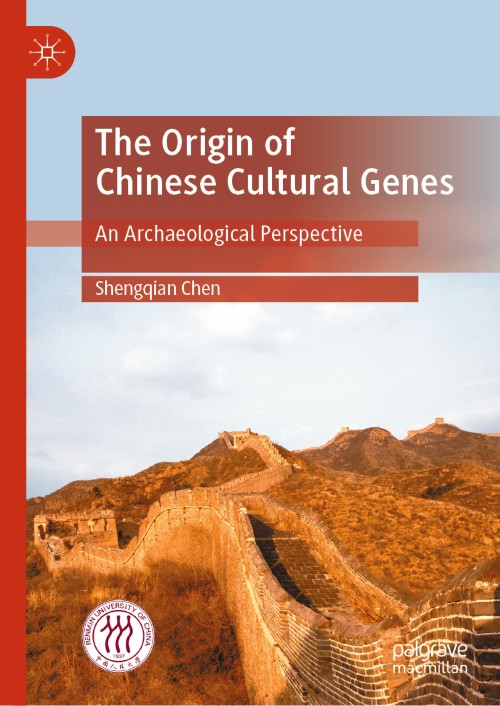
The Origin of Chinese Cultural Genes [electronic resource] : An Archaeological Perspective / by Shengqian Chen.
Erişim Adresi
ISBN
9789819709830
Dil Kodu
İngilizce
Yer Numarası
DK/3144
Yazar
Basım Bildirimi
1st ed. 2024.
Yayın Bilgisi
Singapore : Springer Nature Singapore : Imprint: Palgrave Macmillan, 2024.
Fiziksel Niteleme
XI, 364 p. 54 illus., 50 illus. in color. online resource.
İçindekiler Notu
Part I: An Archaeological Perspective -- Chapter 1: The Mindset of Archaeology -- Chapter 2: The Secret of Archaeological Inference -- Chapter 3: What are Inside Objects? -- Chapter 4: Long Duration’s Charm -- Part II Cultural Origins -- Chapter 5: Insights from Prehistory: How Did Humans Evolve? -- Chapter 6: Back to the Mousterian Puzzle: The Mystery of Stone Tools -- Chapter 7: Crossing Eurasia: The Altai Paleolithic -- Chapter 8: The Origin of Division of Labor and Exchange -- Chapter 9: The Story of Longquan Cave -- Chapter 10: The Drunken Archaeologist -- Chapter 11: Return from Tongtian Cave: Reflections on Cultural Modernity -- Chapter 12: Contemplating the Origin of Spirituality -- Chapter 13: Archaeological Reflections on Plagues -- Chapter 14: Technology, Society, and Consequences -- Part III: Agriculture and the Origins of Civilization -- Chapter 15: Looking Back at the Agricultural Age -- Chapter 16: Reflections on Sociality -- Chapter 17: The Archaeology of Social Networks -- Chapter 18: TheSocial Evolution of the Feast -- Chapter 19: Yumin: The Beginning of the Steppe Neolithic -- Chapter 20: Diffusion, Exchange, and Competition in Prehistoric Chinese Agriculture -- Chapter 21: Reflections on Prehistoric Economics: Social Conflicts and the Origins of Agriculture -- Chapter 22: The Spatial Expression of Social Power -- Chapter 23: Tracing Chinese Civilization as a System -- Chapter 24: Why is Xia a problem? -- Chapter 25: The Cultural Ecotones: An Important Link in the Cultural Landscape of Prehistoric China -- Chapter 26: The Origins of Chinese Civilization from a Pluralistic Perspective -- Part IV: The Formation and Inheritance of Cultural Genes -- Chapter 27: What Makes Cultural Genes Possible? -- Chapter 28: General Trends -- Chapter 29: The Cultural Genes of Prehistoric China -- Chapter 30: The Early Roots of Chinese Cultural Genes -- Chapter 31: The Spiritual Core of the Cultural Gene -- Chapter 32: Culture as a Form -- Chapter 33: Materiality and Material Consumption -- Chapter 34: Cloud Broadcasting and the Inheritance of Traditional Culture -- Chapter 35: Traveling Through Time and Space -- Chapter 36: The Chinese-Style Wonderful Life -- Chapter 37: Sjara-osso-gol: The Sustainable Development of a Resource-Based Region -- Chapter 38: Why is Involution Not a Problem -- Chapter 39: Archaeology as Cultural Construction.
Özet, vb.
This book first traces the evolution of Chinese culture, which has a triple structure. It traces back to the economic basis of the formation of Chinese culture and analyzes the pattern of the formation of Chinese civilization. The book goes deep into the level of cultural genes, explores the origin of Chinese culture, and discusses the construction of contemporary Chinese culture in combination with the general trend of historical process. Shengqian Chen is a professor and doctoral supervisor of the Department of Archaeology and Museum at the School of History, Renmin University of China. Born in Jiayu, Hubei in 1972. In 1993, he graduated from the School of Archaeology, Jilin University with a bachelor's degree. In 1996, he graduated from the Department of Archaeology of Peking University with a master's degree. In 1998, he went to the Southern Methodist University of the United States to study for a doctor's degree under Dr. Fred Wendorf, former president of Society for American Archaeology , and Dr. Lewis R. Binford, the leader of "New Archaeology". In 2004, he received a doctor's degree. His main research fields include archaeological theory, prehistoric archaeology, stone tools analysis, etc. His works include Prehistoric Modernization, Thinking Archaeology, Learning Archaeology, Human Questioning, etc., and his translations include In Pursuit of the Past: Decoding the Archaeological Record , Archaeology: Key Concepts, Thinking Small: Global Perspectives on Microlithization, etc.
Konu
Archaeology __ Philosophy.
Archaeology.
Cultural property.
Archaeology and Social Issues.
Archaeology in Society.
Cultural Heritage.
Archaeology.
Cultural property.
Archaeology and Social Issues.
Archaeology in Society.
Cultural Heritage.
Eseri Alıntıla
Referansları kullanmadan önce gözden geçirmeniz ve varsa gerekli düzeltmeleri yapmanız önerilir.
Dijital Kaynak
MARC Görünümü
LEADER 05593nam a22004935i 4500
001 610472
003 TR_AnAIT
005 20250627062508
007 cr nn 008mamaa
008 241120s2024 si | s |||| 0|eng d
020 |a9789819709830|9978-981-97-0983-0
024 7 |a10.1007/978-981-97-0983-0|2doi
041 |aeng
049 |aTürk Tarih Kurumu Kütüphanesi
050 4|aCC72-81
072 7|aHD|2bicssc
072 7|aSOC003000|2bisacsh
072 7|aNK|2thema
082 04|a930.101|223
090 |aDK/3144
100 1 |aChen, Shengqian.|eauthor.|4aut|4http://id.loc.gov/vocabulary/relators/aut
245 14|aThe Origin of Chinese Cultural Genes|h[electronic resource] :|bAn Archaeological Perspective /|cby Shengqian Chen.
250 |a1st ed. 2024.
264 1|aSingapore :|bSpringer Nature Singapore :|bImprint: Palgrave Macmillan,|c2024.
300 |aXI, 364 p. 54 illus., 50 illus. in color.|bonline resource.
336 |atext|btxt|2rdacontent
337 |acomputer|bc|2rdamedia
338 |aonline resource|bcr|2rdacarrier
347 |atext file|bPDF|2rda
505 0 |aPart I: An Archaeological Perspective -- Chapter 1: The Mindset of Archaeology -- Chapter 2: The Secret of Archaeological Inference -- Chapter 3: What are Inside Objects? -- Chapter 4: Long Duration’s Charm -- Part II Cultural Origins -- Chapter 5: Insights from Prehistory: How Did Humans Evolve? -- Chapter 6: Back to the Mousterian Puzzle: The Mystery of Stone Tools -- Chapter 7: Crossing Eurasia: The Altai Paleolithic -- Chapter 8: The Origin of Division of Labor and Exchange -- Chapter 9: The Story of Longquan Cave -- Chapter 10: The Drunken Archaeologist -- Chapter 11: Return from Tongtian Cave: Reflections on Cultural Modernity -- Chapter 12: Contemplating the Origin of Spirituality -- Chapter 13: Archaeological Reflections on Plagues -- Chapter 14: Technology, Society, and Consequences -- Part III: Agriculture and the Origins of Civilization -- Chapter 15: Looking Back at the Agricultural Age -- Chapter 16: Reflections on Sociality -- Chapter 17: The Archaeology of Social Networks -- Chapter 18: TheSocial Evolution of the Feast -- Chapter 19: Yumin: The Beginning of the Steppe Neolithic -- Chapter 20: Diffusion, Exchange, and Competition in Prehistoric Chinese Agriculture -- Chapter 21: Reflections on Prehistoric Economics: Social Conflicts and the Origins of Agriculture -- Chapter 22: The Spatial Expression of Social Power -- Chapter 23: Tracing Chinese Civilization as a System -- Chapter 24: Why is Xia a problem? -- Chapter 25: The Cultural Ecotones: An Important Link in the Cultural Landscape of Prehistoric China -- Chapter 26: The Origins of Chinese Civilization from a Pluralistic Perspective -- Part IV: The Formation and Inheritance of Cultural Genes -- Chapter 27: What Makes Cultural Genes Possible? -- Chapter 28: General Trends -- Chapter 29: The Cultural Genes of Prehistoric China -- Chapter 30: The Early Roots of Chinese Cultural Genes -- Chapter 31: The Spiritual Core of the Cultural Gene -- Chapter 32: Culture as a Form -- Chapter 33: Materiality and Material Consumption -- Chapter 34: Cloud Broadcasting and the Inheritance of Traditional Culture -- Chapter 35: Traveling Through Time and Space -- Chapter 36: The Chinese-Style Wonderful Life -- Chapter 37: Sjara-osso-gol: The Sustainable Development of a Resource-Based Region -- Chapter 38: Why is Involution Not a Problem -- Chapter 39: Archaeology as Cultural Construction.
520 |aThis book first traces the evolution of Chinese culture, which has a triple structure. It traces back to the economic basis of the formation of Chinese culture and analyzes the pattern of the formation of Chinese civilization. The book goes deep into the level of cultural genes, explores the origin of Chinese culture, and discusses the construction of contemporary Chinese culture in combination with the general trend of historical process. Shengqian Chen is a professor and doctoral supervisor of the Department of Archaeology and Museum at the School of History, Renmin University of China. Born in Jiayu, Hubei in 1972. In 1993, he graduated from the School of Archaeology, Jilin University with a bachelor's degree. In 1996, he graduated from the Department of Archaeology of Peking University with a master's degree. In 1998, he went to the Southern Methodist University of the United States to study for a doctor's degree under Dr. Fred Wendorf, former president of Society for American Archaeology , and Dr. Lewis R. Binford, the leader of "New Archaeology". In 2004, he received a doctor's degree. His main research fields include archaeological theory, prehistoric archaeology, stone tools analysis, etc. His works include Prehistoric Modernization, Thinking Archaeology, Learning Archaeology, Human Questioning, etc., and his translations include In Pursuit of the Past: Decoding the Archaeological Record , Archaeology: Key Concepts, Thinking Small: Global Perspectives on Microlithization, etc.
650 0|aArchaeology|xPhilosophy.
650 0|aArchaeology.
650 0|aCultural property.
650 14|aArchaeology and Social Issues.
650 24|aArchaeology in Society.
650 24|aCultural Heritage.
773 0 |tSpringer Nature eBook
776 08|iPrinted edition:|z9789819709823
776 08|iPrinted edition:|z9789819709847
776 08|iPrinted edition:|z9789819709854
856 40|uhttps://doi.org/10.1007/978-981-97-0983-0
912 |aZDB-2-HTY
912 |aZDB-2-SXH
950 |aHistory (SpringerNature-41172)
950 |aHistory (R0) (SpringerNature-43722)
001 610472
003 TR_AnAIT
005 20250627062508
007 cr nn 008mamaa
008 241120s2024 si | s |||| 0|eng d
020 |a9789819709830|9978-981-97-0983-0
024 7 |a10.1007/978-981-97-0983-0|2doi
041 |aeng
049 |aTürk Tarih Kurumu Kütüphanesi
050 4|aCC72-81
072 7|aHD|2bicssc
072 7|aSOC003000|2bisacsh
072 7|aNK|2thema
082 04|a930.101|223
090 |aDK/3144
100 1 |aChen, Shengqian.|eauthor.|4aut|4http://id.loc.gov/vocabulary/relators/aut
245 14|aThe Origin of Chinese Cultural Genes|h[electronic resource] :|bAn Archaeological Perspective /|cby Shengqian Chen.
250 |a1st ed. 2024.
264 1|aSingapore :|bSpringer Nature Singapore :|bImprint: Palgrave Macmillan,|c2024.
300 |aXI, 364 p. 54 illus., 50 illus. in color.|bonline resource.
336 |atext|btxt|2rdacontent
337 |acomputer|bc|2rdamedia
338 |aonline resource|bcr|2rdacarrier
347 |atext file|bPDF|2rda
505 0 |aPart I: An Archaeological Perspective -- Chapter 1: The Mindset of Archaeology -- Chapter 2: The Secret of Archaeological Inference -- Chapter 3: What are Inside Objects? -- Chapter 4: Long Duration’s Charm -- Part II Cultural Origins -- Chapter 5: Insights from Prehistory: How Did Humans Evolve? -- Chapter 6: Back to the Mousterian Puzzle: The Mystery of Stone Tools -- Chapter 7: Crossing Eurasia: The Altai Paleolithic -- Chapter 8: The Origin of Division of Labor and Exchange -- Chapter 9: The Story of Longquan Cave -- Chapter 10: The Drunken Archaeologist -- Chapter 11: Return from Tongtian Cave: Reflections on Cultural Modernity -- Chapter 12: Contemplating the Origin of Spirituality -- Chapter 13: Archaeological Reflections on Plagues -- Chapter 14: Technology, Society, and Consequences -- Part III: Agriculture and the Origins of Civilization -- Chapter 15: Looking Back at the Agricultural Age -- Chapter 16: Reflections on Sociality -- Chapter 17: The Archaeology of Social Networks -- Chapter 18: TheSocial Evolution of the Feast -- Chapter 19: Yumin: The Beginning of the Steppe Neolithic -- Chapter 20: Diffusion, Exchange, and Competition in Prehistoric Chinese Agriculture -- Chapter 21: Reflections on Prehistoric Economics: Social Conflicts and the Origins of Agriculture -- Chapter 22: The Spatial Expression of Social Power -- Chapter 23: Tracing Chinese Civilization as a System -- Chapter 24: Why is Xia a problem? -- Chapter 25: The Cultural Ecotones: An Important Link in the Cultural Landscape of Prehistoric China -- Chapter 26: The Origins of Chinese Civilization from a Pluralistic Perspective -- Part IV: The Formation and Inheritance of Cultural Genes -- Chapter 27: What Makes Cultural Genes Possible? -- Chapter 28: General Trends -- Chapter 29: The Cultural Genes of Prehistoric China -- Chapter 30: The Early Roots of Chinese Cultural Genes -- Chapter 31: The Spiritual Core of the Cultural Gene -- Chapter 32: Culture as a Form -- Chapter 33: Materiality and Material Consumption -- Chapter 34: Cloud Broadcasting and the Inheritance of Traditional Culture -- Chapter 35: Traveling Through Time and Space -- Chapter 36: The Chinese-Style Wonderful Life -- Chapter 37: Sjara-osso-gol: The Sustainable Development of a Resource-Based Region -- Chapter 38: Why is Involution Not a Problem -- Chapter 39: Archaeology as Cultural Construction.
520 |aThis book first traces the evolution of Chinese culture, which has a triple structure. It traces back to the economic basis of the formation of Chinese culture and analyzes the pattern of the formation of Chinese civilization. The book goes deep into the level of cultural genes, explores the origin of Chinese culture, and discusses the construction of contemporary Chinese culture in combination with the general trend of historical process. Shengqian Chen is a professor and doctoral supervisor of the Department of Archaeology and Museum at the School of History, Renmin University of China. Born in Jiayu, Hubei in 1972. In 1993, he graduated from the School of Archaeology, Jilin University with a bachelor's degree. In 1996, he graduated from the Department of Archaeology of Peking University with a master's degree. In 1998, he went to the Southern Methodist University of the United States to study for a doctor's degree under Dr. Fred Wendorf, former president of Society for American Archaeology , and Dr. Lewis R. Binford, the leader of "New Archaeology". In 2004, he received a doctor's degree. His main research fields include archaeological theory, prehistoric archaeology, stone tools analysis, etc. His works include Prehistoric Modernization, Thinking Archaeology, Learning Archaeology, Human Questioning, etc., and his translations include In Pursuit of the Past: Decoding the Archaeological Record , Archaeology: Key Concepts, Thinking Small: Global Perspectives on Microlithization, etc.
650 0|aArchaeology|xPhilosophy.
650 0|aArchaeology.
650 0|aCultural property.
650 14|aArchaeology and Social Issues.
650 24|aArchaeology in Society.
650 24|aCultural Heritage.
773 0 |tSpringer Nature eBook
776 08|iPrinted edition:|z9789819709823
776 08|iPrinted edition:|z9789819709847
776 08|iPrinted edition:|z9789819709854
856 40|uhttps://doi.org/10.1007/978-981-97-0983-0
912 |aZDB-2-HTY
912 |aZDB-2-SXH
950 |aHistory (SpringerNature-41172)
950 |aHistory (R0) (SpringerNature-43722)
Materyaller
Depodan talep edilen materyal sadece kütüphane içerisinde kullanılmaktadır.
Materyal dışarıya ödünç verilmemektedir.
Materyal dışarıya ödünç verilmemektedir.
