LEADER 03424nam a22005655i 4500
001 610482
003 TR_AnAIT
005 20250627062450
007 cr nn 008mamaa
008 241206s2024 sz | s |||| 0|eng d
020 |a9783031586347|9978-3-031-58634-7
024 7 |a10.1007/978-3-031-58634-7|2doi
041 |aeng
049 |aTürk Tarih Kurumu Kütüphanesi
050 4|aHQ1121-1154
072 7|aHBTB|2bicssc
072 7|aJFSJ|2bicssc
072 7|aHIS058000|2bisacsh
072 7|aNHTB|2thema
072 7|aJBSF|2thema
082 04|a305.309|223
090 |aDK/3154
100 1 |aZe’evi, Dror.|eauthor.|4aut|4http://id.loc.gov/vocabulary/relators/aut
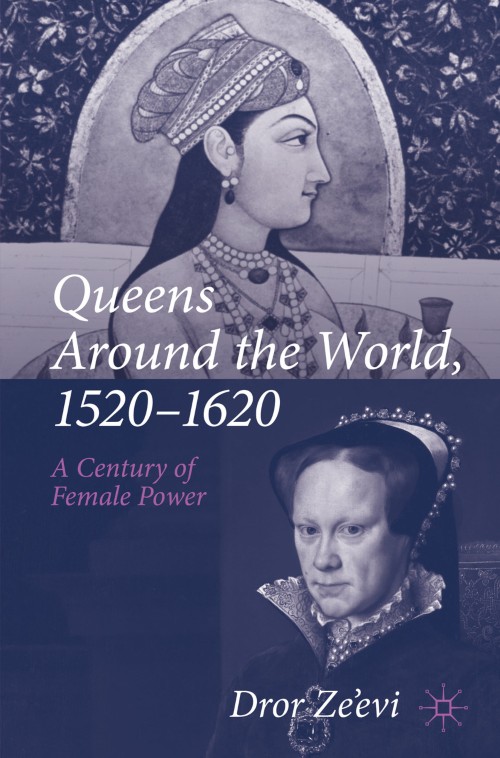
245 10|aQueens Around the World, 1520–1620|h[electronic resource] :|bA Century of Female Power /|cby Dror Ze’evi.
250 |a1st ed. 2024.
264 1|aCham :|bSpringer Nature Switzerland :|bImprint: Palgrave Macmillan,|c2024.
300 |aXV, 297 p.|bonline resource.
336 |atext|btxt|2rdacontent
337 |acomputer|bc|2rdamedia
338 |aonline resource|bcr|2rdacarrier
347 |atext file|bPDF|2rda
505 0 |a1. Introduction -- 2. Sultanas of the Ottoman Empire -- 3. Mughal Queens of Hindustan -- 4. The Safavid Queens of Iran -- 5. Queens of the Jews -- 6. Queens of France -- 7. Queens of the British Isles and Ireland -- 8. The Three Phases of 16th Century Female Rule -- 9. Conclusion: How and Why did it End?.
520 |aThis textbook explores the histories of royal women in Europe, the Middle East, and parts of Asia in the sixteenth and early seventeenth centuries. It argues that by dint of an unprecedented conjunction of historical shifts and powerful personalities, it was these women, and not men, who sat at the helm of global politics; moreover, it was they who in truth steered our world’s transition from the Middle Ages to modernity. Organized into chapters devoted to each of the era’s great states, the book sets out to challenge several historical premises. First, it shows that women were the actual, if not always formally crowned, sovereigns of these states, or at least played a decisive role in shaping their policies. Second, the book dissolves the conventional dichotomy between East and West, showing that in both Christian Europe and Islamdom, women achieved their high status by means of similar strategies and at similar periods in history. Third, by demonstrating that there was a precedent for female authority long before the first harbingers of the women’s movement in the eighteenth century, the book calls into question received ideas about historical progress and the evolution of women’s liberation.
650 0|aWomen|xHistory.
650 0|aWorld history.
650 0|aAsia|xHistory.
650 0|aEurope|xHistory.
650 0|aEurope|xHistory|x1492-.
650 14|aWomen's History / History of Gender.
650 24|aWorld History, Global and Transnational History.
650 24|aAsian History.
650 24|aEuropean History.
650 24|aHistory of Early Modern Europe.
773 0 |tSpringer Nature eBook
776 08|iPrinted edition:|z9783031586330
776 08|iPrinted edition:|z9783031586354
776 08|iPrinted edition:|z9783031586361
856 40|uhttps://doi.org/10.1007/978-3-031-58634-7
912 |aZDB-2-HTY
912 |aZDB-2-SXH
950 |aHistory (SpringerNature-41172)
950 |aHistory (R0) (SpringerNature-43722)