LEADER 02363nam a22005895i 4500
001 610726
003 TR_AnAIT
005 20250627061722
007 cr nn 008mamaa
008 151126s2012 xxk| s |||| 0|eng d
020 |a9780230362161|9978-0-230-36216-1
024 7 |a10.1057/9780230362161|2doi
041 |aeng
049 |aTürk Tarih Kurumu Kütüphanesi
050 4|aDA1-995
072 7|aHBJD1|2bicssc
072 7|aHIS015000|2bisacsh
072 7|aNHD|x1DD|2thema
082 04|a941|223
090 |aDK/3397
100 1 |aUsher, R.|eauthor.|4aut|4http://id.loc.gov/vocabulary/relators/aut
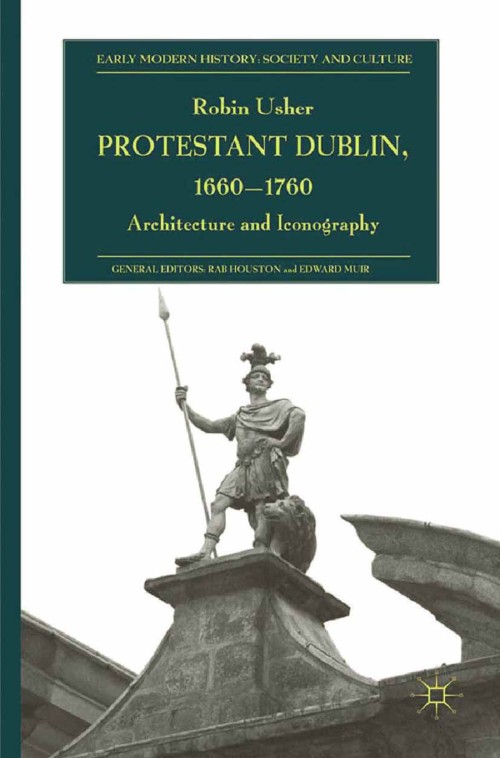
245 10|aProtestant Dublin, 1660-1760|h[electronic resource] :|bArchitecture and Iconography /|cby R. Usher.
250 |a1st ed. 2012.
264 1|aLondon :|bPalgrave Macmillan UK :|bImprint: Palgrave Macmillan,|c2012.
300 |aX, 250 p.|bonline resource.
336 |atext|btxt|2rdacontent
337 |acomputer|bc|2rdamedia
338 |aonline resource|bcr|2rdacarrier
347 |atext file|bPDF|2rda
490 1 |aEarly Modern History: Society and Culture,|x2947-907X
520 |aThis innovative urban history of Dublin explores the symbols and spaces of the Irish capital between the Restoration in 1660 and the advent of neoclassical public architecture in the 1770s. The meanings ascribed to statues, churches, houses, and public buildings are traced in detail, using a wide range of visual and written sources.
650 0|aGreat Britain|xHistory.
650 0|aArchitecture.
650 0|aCivilization|xHistory.
650 0|aSocial history.
650 0|aConservation biology.
650 0|aEcology .
650 0|aEurope|xHistory|x1492-.
650 14|aHistory of Britain and Ireland.
650 24|aArchitecture.
650 24|aCultural History.
650 24|aSocial History.
650 24|aConservation Biology.
650 24|aHistory of Early Modern Europe.
773 0 |tSpringer Nature eBook
776 08|iPrinted edition:|z9780230223899
776 08|iPrinted edition:|z9781349308798
776 08|iPrinted edition:|z9781349308804
830 0|aEarly Modern History: Society and Culture,|x2947-907X
856 40|uhttps://doi.org/10.1057/9780230362161
912 |aZDB-2-PHC
912 |aZDB-2-SXH
950 |aPalgrave History Collection (SpringerNature-41138)
950 |aHistory (R0) (SpringerNature-43722)