LEADER 02246nam a22005775i 4500
001 610808
003 TR_AnAIT
005 20250627061451
007 cr nn 008mamaa
008 151130s2011 xxu| s |||| 0|eng d
020 |a9780230339354|9978-0-230-33935-4
024 7 |a10.1057/9780230339354|2doi
041 |aeng
049 |aTürk Tarih Kurumu Kütüphanesi
050 4|aJQ1-1852
072 7|aJP|2bicssc
072 7|a1F|2bicssc
072 7|aPOL054000|2bisacsh
072 7|aJP|x1F|2thema
082 04|a320.95|223
090 |aDK/3479
100 1 |aItoh, M.|eauthor.|4aut|4http://id.loc.gov/vocabulary/relators/aut
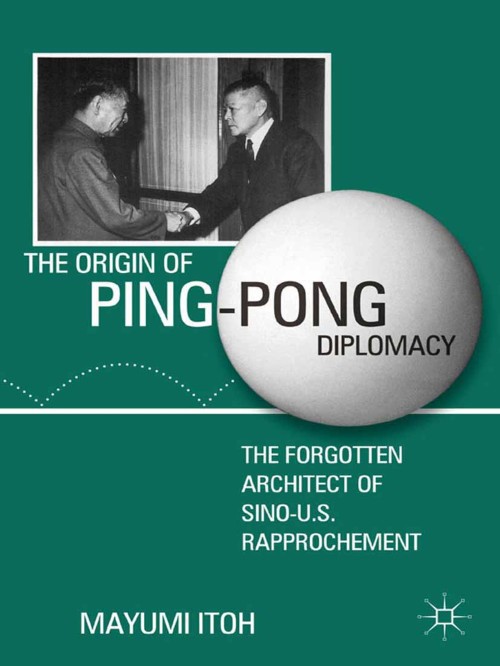
245 14|aThe Origin of Ping-Pong Diplomacy|h[electronic resource] :|bThe Forgotten Architect of Sino-U.S. Rapprochement /|cby M. Itoh.
250 |a1st ed. 2011.
264 1|aNew York :|bPalgrave Macmillan US :|bImprint: Palgrave Macmillan,|c2011.
300 |aXXII, 244 p.|bonline resource.
336 |atext|btxt|2rdacontent
337 |acomputer|bc|2rdamedia
338 |aonline resource|bcr|2rdacarrier
347 |atext file|bPDF|2rda
520 |aWhy and how did Japan Table Tennis Association President Goto Koji invite China to participate in the World Table Tennis Championships in Nagoya, Japan, in 1971 (the Nagoya World's)? Against strong opposition at home and abroad, Goto Koji created a stage for Premier Zhou Enlai to launch Ping-Pong Diplomacy, which changed world history forever.
650 0|aAsia|xPolitics and government.
650 0|aEthnology|xAsia.
650 0|aCulture.
650 0|aInternational relations.
650 0|aAsia|xHistory.
650 0|aDiplomacy.
650 0|aJapan|xHistory.
650 14|aAsian Politics.
650 24|aAsian Culture.
650 24|aInternational Relations.
650 24|aAsian History.
650 24|aDiplomacy.
650 24|aHistory of Japan.
773 0 |tSpringer Nature eBook
776 08|iPrinted edition:|z9780230118133
776 08|iPrinted edition:|z9781349298112
776 08|iPrinted edition:|z9781349298129
856 40|uhttps://doi.org/10.1057/9780230339354
912 |aZDB-2-PHC
912 |aZDB-2-SXH
950 |aPalgrave History Collection (SpringerNature-41138)
950 |aHistory (R0) (SpringerNature-43722)