LEADER 01986nam a22004815i 4500
001 611410
003 TR_AnAIT
005 20250627055558
007 cr nn 008mamaa
008 160406s2007 xxu| s |||| 0|eng d
020 |a9781137098849|9978-1-137-09884-9
024 7 |a10.1007/978-1-137-09884-9|2doi
041 |aeng
049 |aTürk Tarih Kurumu Kütüphanesi
050 4|aDS1-937
072 7|aHBJF|2bicssc
072 7|aHIS003000|2bisacsh
072 7|aNHF|2thema
082 04|a950|223
090 |aDK/4081
100 1 |aLeibold, J.|eauthor.|4aut|4http://id.loc.gov/vocabulary/relators/aut
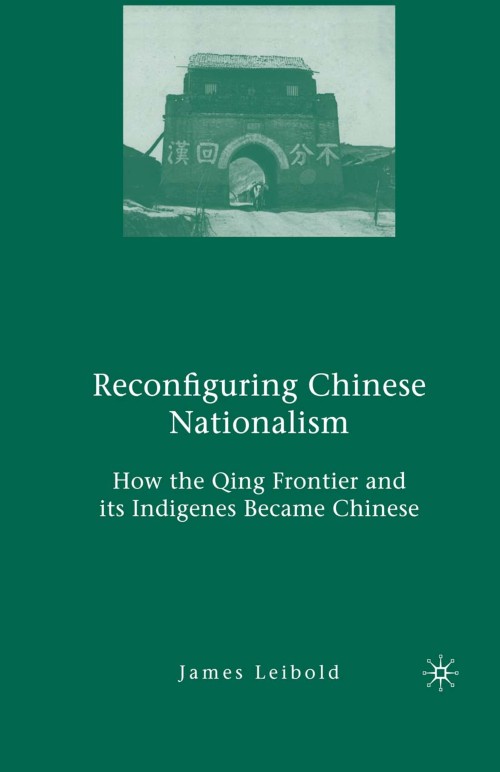
245 10|aReconfiguring Chinese Nationalism|h[electronic resource] :|bHow the Qing Frontier and its Indigenes Became Chinese /|cby J. Leibold.
250 |a1st ed. 2007.
264 1|aNew York :|bPalgrave Macmillan US :|bImprint: Palgrave Macmillan,|c2007.
300 |aXI, 271 p.|bonline resource.
336 |atext|btxt|2rdacontent
337 |acomputer|bc|2rdamedia
338 |aonline resource|bcr|2rdacarrier
347 |atext file|bPDF|2rda
520 |aThe first full length treatment of ethnic and national identity in early Twentieth-century China, Leibold traces the political and cultural strategies employed by Han Chinese elites in the process of incorporating, both discursively and physically, the diverse inhabitants of the last Qing dynasty into a new, homogenous national community.
650 0|aAsia|xHistory.
650 0|aChina|xHistory.
650 0|aHistory, Modern.
650 14|aAsian History.
650 24|aHistory of China.
650 24|aModern History.
773 0 |tSpringer Nature eBook
776 08|iPrinted edition:|z9781403974792
776 08|iPrinted edition:|z9781349737338
776 08|iPrinted edition:|z9781349737321
856 40|uhttps://doi.org/10.1007/978-1-137-09884-9
912 |aZDB-2-PHC
912 |aZDB-2-SXH
950 |aPalgrave History Collection (SpringerNature-41138)
950 |aHistory (R0) (SpringerNature-43722)