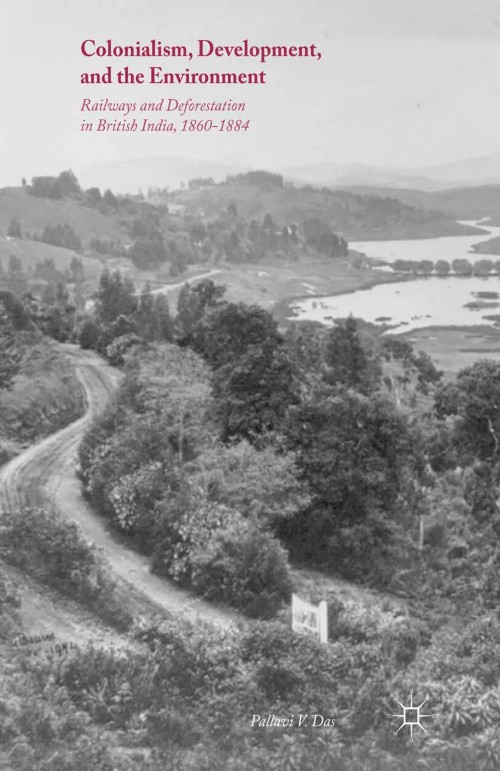
LEADER 02154nam a22005175i 4500
001 611734
003 TR_AnAIT
005 20250627054537
007 cr nn 008mamaa
008 160314s2015 xxu| s |||| 0|eng d
020 |a9781137494580|9978-1-137-49458-0
024 7 |a10.1007/978-1-137-49458-0|2doi
041 |aeng
049 |aTürk Tarih Kurumu Kütüphanesi
050 4|aJV61-152
072 7|aHBTQ|2bicssc
072 7|aHIS000000|2bisacsh
072 7|aNHTQ|2thema
082 04|a325.3|223
090 |aDK/4404
100 1 |aDas, Pallavi V.|eauthor.|4aut|4http://id.loc.gov/vocabulary/relators/aut
245 10|aColonialism, Development, and the Environment|h[electronic resource] :|bRailways and Deforestation in British India, 1860–1884 /|cby Pallavi V. Das.
250 |a1st ed. 2015.
264 1|aNew York :|bPalgrave Macmillan US :|bImprint: Palgrave Macmillan,|c2015.
300 |aXIX, 189 p. 2 illus.|bonline resource.
336 |atext|btxt|2rdacontent
337 |acomputer|bc|2rdamedia
338 |aonline resource|bcr|2rdacarrier
347 |atext file|bPDF|2rda
520 |aThis study explores the confluence of economy and ecology in British India, showing that Britain initiated economic development strategies in India in order to efficiently extract resources from it. It looks specifically at how state railway construction and forest conservation efforts took on a cyclical, almost symbiotic relationship.
650 0|aImperialism.
650 0|aGreat Britain|xHistory.
650 0|aAsia|xHistory.
650 0|aHistory, Modern.
650 14|aImperialism and Colonialism.
650 24|aHistory of Britain and Ireland.
650 24|aAsian History.
650 24|aHistory of South Asia.
650 24|aModern History.
773 0 |tSpringer Nature eBook
776 08|iPrinted edition:|z9781137494566
776 08|iPrinted edition:|z9781349556441
776 08|iPrinted edition:|z9781349556458
856 40|uhttps://doi.org/10.1007/978-1-137-49458-0
912 |aZDB-2-PHC
912 |aZDB-2-SXH
950 |aPalgrave History Collection (SpringerNature-41138)
950 |aHistory (R0) (SpringerNature-43722)