LEADER 03239nam a22005775i 4500
001 612142
003 TR_AnAIT
005 20250627053311
007 cr nn 008mamaa
008 151230s2002 xxu| s |||| 0|eng d
020 |a9781403970046|9978-1-4039-7004-6
024 7 |a10.1057/9781403970046|2doi
041 |aeng
049 |aTürk Tarih Kurumu Kütüphanesi
050 4|aD31-34
072 7|aJPA|2bicssc
072 7|aHBT|2bicssc
072 7|aPOL010000|2bisacsh
072 7|aJPA|2thema
072 7|aNHT|2thema
082 04|a320.09|223
090 |aDK/4812
100 1 |aAmbrosius, L.|eauthor.|4aut|4http://id.loc.gov/vocabulary/relators/aut
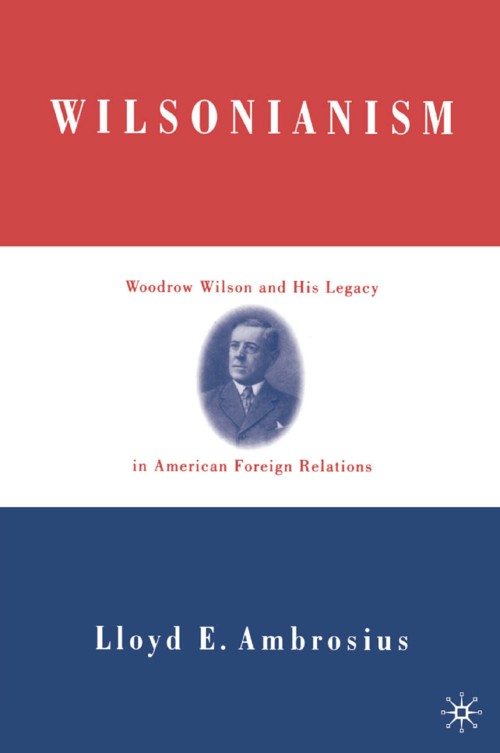
245 10|aWilsonianism|h[electronic resource] :|bWoodrow Wilson and His Legacy in American Foreign Relations /|cby L. Ambrosius.
250 |a1st ed. 2002.
264 1|aNew York :|bPalgrave Macmillan US :|bImprint: Palgrave Macmillan,|c2002.
300 |aVIII, 233 p.|bonline resource.
336 |atext|btxt|2rdacontent
337 |acomputer|bc|2rdamedia
338 |aonline resource|bcr|2rdacarrier
347 |atext file|bPDF|2rda
520 |aIn Wilsonianism , American foreign relations specialist Lloyd E. Ambrosius has compiled his published and unpublished essays on Woodrow Wilson's liberal ideology and statecraft during and after World War I. Although the president failed in his pursuit of a new world order, his legacy of Wilsonianism - the principles of national self-determination, economic globalization, collective security, and progressive historicism - continued to shape U.S. foreign relations throughout the American Century. Ambrosius examines the American roots of Wilson's liberal internationalism, the dilemmas and contradictions in his principles, and the problematic consequences of U.S. efforts to implement Wilsonian ideals without fully appreciating the world's cultural pluralism as well as its economic and political interdependence. Offering a pluralist variant of the realist tradition in international relations, Ambrosius stresses the centrality of power; but maintains that culture and political economy as well as military strength determine the balance of power within and among nations or empires. Consequently, he concludes, making the world safe for democracy has been more problematic in practice, both at home and abroad, than proclaiming Wilsonian principles in the abstract.
650 0|aWorld politics.
650 0|aInternational economic relations.
650 0|aEurope|xPolitics and government.
650 0|aPolitical science.
650 0|aPolitical science|xPhilosophy.
650 0|aUnited States|xHistory.
650 14|aPolitical History.
650 24|aInternational Political Economy’.
650 24|aEuropean Politics.
650 24|aPolitical Theory.
650 24|aPolitical Philosophy.
650 24|aUS History.
773 0 |tSpringer Nature eBook
776 08|iPrinted edition:|z9781403960085
776 08|iPrinted edition:|z9781403960092
776 08|iPrinted edition:|z9781349526130
856 40|uhttps://doi.org/10.1057/9781403970046
912 |aZDB-2-PHC
912 |aZDB-2-SXH
950 |aPalgrave History Collection (SpringerNature-41138)
950 |aHistory (R0) (SpringerNature-43722)