

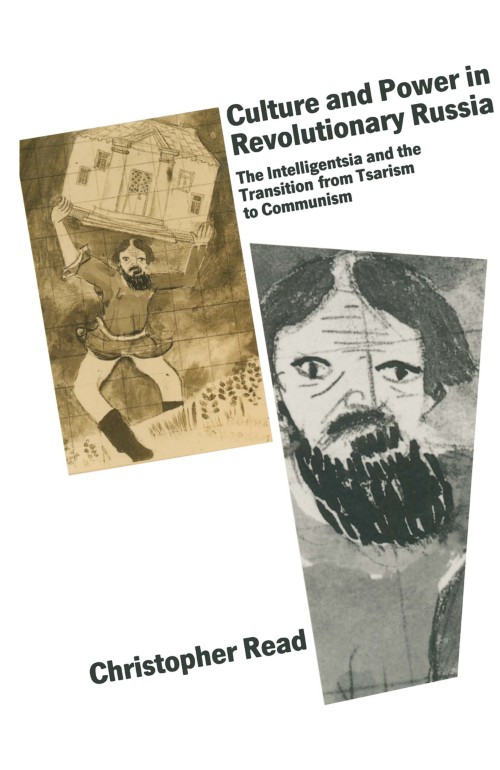
Culture and Power in Revolutionary Russia [electronic resource] / by Christopher Read.
Erişim Adresi
ISBN
9781349110032
Dil Kodu
İngilizce
Yer Numarası
DK/4978
Yazar
Basım Bildirimi
1st ed. 1990.
Yayın Bilgisi
London : Palgrave Macmillan UK : Imprint: Palgrave Macmillan, 1990.
Fiziksel Niteleme
XII, 266 p. online resource.
Özet, vb.
This book shows that the rise of the intelligentsia occurred earlier than is normally thought, and that by 1922, rather than 1932, the underlying principles of the new Soviet government's policies towards culture had already emerged and "proto-Stalinism" was increasingly important.
Konu
Europe __ History.
History, Modern.
Political science.
Culture __ Study and teaching.
European History.
Modern History.
Political Science.
Cultural Studies.
History, Modern.
Political science.
Culture __ Study and teaching.
European History.
Modern History.
Political Science.
Cultural Studies.
