LEADER 02881nam a22004455i 4500
001 612932
003 TR_AnAIT
005 20250627050900
007 cr nn 008mamaa
008 150827s1992 xxk| s |||| 0|eng d
020 |a9781349222995|9978-1-349-22299-5
024 7 |a10.1007/978-1-349-22299-5|2doi
041 |aeng
049 |aTürk Tarih Kurumu Kütüphanesi
050 4|aJZ2-6530
072 7|aJPS|2bicssc
072 7|aPOL011000|2bisacsh
072 7|aJPS|2thema
082 04|a327|223
090 |aDK/5601
100 1 |aMorison, John.|eauthor.|4aut|4http://id.loc.gov/vocabulary/relators/aut
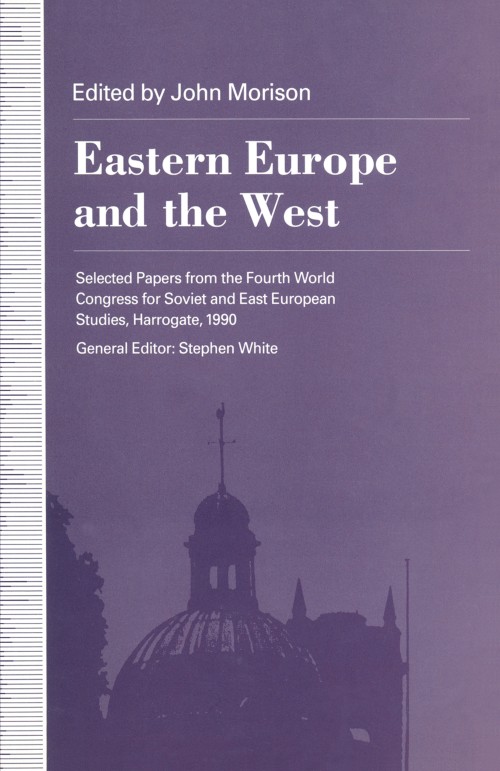
245 10|aEastern Europe and the West|h[electronic resource] :|bSelected Papers from the Fourth World Congress for Soviet and East European Studies, Harrogate, 1990 /|cby John Morison.
250 |a1st ed. 1992.
264 1|aLondon :|bPalgrave Macmillan UK :|bImprint: Palgrave Macmillan,|c1992.
300 |aXIX, 271 p.|bonline resource.
336 |atext|btxt|2rdacontent
337 |acomputer|bc|2rdamedia
338 |aonline resource|bcr|2rdacarrier
347 |atext file|bPDF|2rda
520 |aThis book explores the rich and complex relationship between Eastern Europe and the West in the nineteenth and twentieth centuries. Hans Henning Hahn, Robert Berry and Frank Thackeray elucidate Polish emigre diplomacy in the Partition years. Thomas Sakmyster reveals the British contribution to the establishment of the Horthy regime in Hungary. Peter Pastor chronicles the fate of the Hungarian community in wartime Britain, and Gyula Juhasz and Peter Hidas investigate the activities of Hungarian diplomats in the Second World War. Bernd Fischer looks at the role of British intelligence in Albania in the Second World War, while Osvaldo Croci investigates the diplomatic return of Trieste to Italy in 1953. Lech Trzeciakowski, John Kulczycki and Adam Walaszek discuss the experiences of Polish miners in Germany, German settlers in Poland and Polish returnees from the USA. Robert Blobaum reinterprets the Polish Marxists' policy towards the Polish question, and Richard Lewis reviews the fate of Polish historians under Marxism. Alan Foster analyzes the sympathy of The Times and the Beaverbrook Press for the Soviet Union in the interwar period, and Paul Latawski scrutinises the idiosyncratic views of Sir Lewis Namier on Poland and Czechoslovakia.
650 0|aInternational relations.
650 14|aInternational Relations.
773 0 |tSpringer Nature eBook
776 08|iPrinted edition:|z9780333553299
776 08|iPrinted edition:|z9780312080402
776 08|iPrinted edition:|z9781349223008
776 08|iPrinted edition:|z9781349223015
856 40|uhttps://doi.org/10.1007/978-1-349-22299-5
912 |aZDB-2-PHC
912 |aZDB-2-SXH
950 |aPalgrave History Collection (SpringerNature-41138)
950 |aHistory (R0) (SpringerNature-43722)